



Industrial AI: How Siemens and Global Leaders Redefine Production
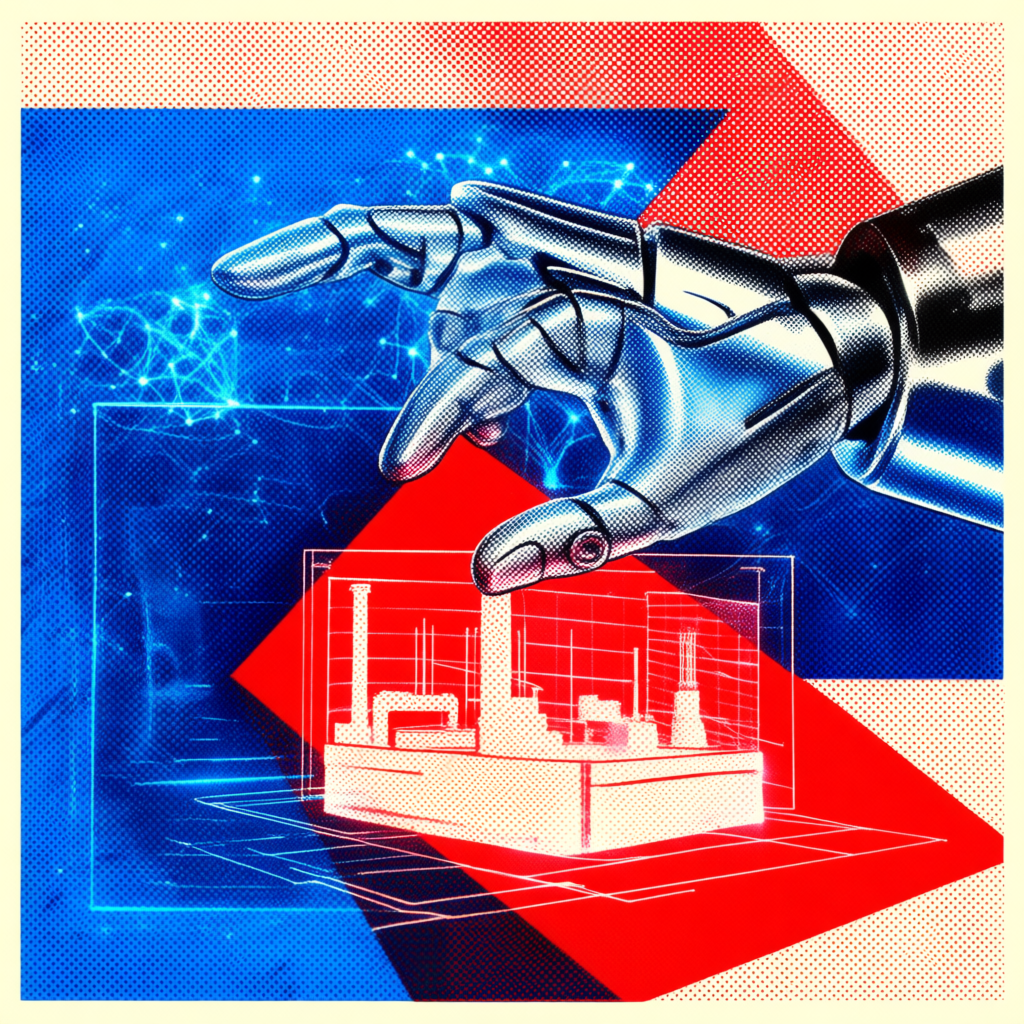
- Siemens is implementing an end-to-end Industrial AI approach to connect design, production, and optimization.
- The industry is shifting toward a software-centric model to counter geopolitical instability and supply chain volatility.
- Critical sectors like Oil & Gas are urged to abandon legacy systems in favor of digital twins to ensure long-term resilience.
- The transition to AI-driven autonomy faces human challenges, specifically regarding trust and human-AI collaboration.
The global industrial landscape is currently navigating a profound structural pivot. For decades, automation was defined by hardware efficiency and isolated programmable logic controllers. Today, the frontier has shifted toward a software-defined reality where Industrial AI acts as the connective tissue between the physical shop floor and strategic business intelligence. This evolution is not merely a technical upgrade but a fundamental repositioning of how value is created across the entire industrial chain.
The architecture of a Digital Enterprise
To move beyond the hype of generative AI, industrial leaders are focusing on the concept of the Digital Enterprise. The goal is to establish a continuous, connected flow of data that spans from the initial design phase to final realization and ongoing optimization. Central to this strategy is the implementation of a unified data fabric.
This semantic layer allows data to be fully contextualized across different domains. Instead of having siloed information—where the design team uses one set of metrics and the production team another—a unified fabric ensures that intelligence is cross-domain. By collecting data from the shop floor, connecting it, and contextualizing it, companies can transform raw information into secure, real-world actions. This approach accelerates engineering workflows and enables adaptive production, allowing factories to pivot their output based on real-time demand or supply constraints.
Bridging the gap between potential and business value
While the technical capabilities of AI are expanding, the transition from a successful pilot project to large-scale business value remains a significant hurdle. Research conducted by Siemens in collaboration with Longitude Research, involving over 500 senior executives across heavy industry, energy, and transport, highlights that the primary obstacles are often more human than technical.
The core of the challenge lies in trust. In an industrial setting, a wrong decision by an algorithm can lead to catastrophic equipment failure or safety hazards. This raises critical questions about the hierarchy of decision-making: when a senior engineer disagrees with an AI recommendation, who holds the final authority? As AI evolves from a simple tool into a digital colleague, organizations must redefine the parameters of human-AI collaboration and establish rigorous safety frameworks for autonomous machines and vehicles.
Strategic pivots in the North American market
The shift toward AI and software is particularly evident in the North American automation market. Recent analysis indicates that the top 50 global and North American suppliers are aggressively repositioning themselves around AI, simulation, and lifecycle management. This pivot is partly a response to severe headwinds, including geopolitical tensions, shifting tariff policies, and fragmented supply chains.
Despite a bifurcated market where some manufacturers are delaying capital projects due to economic uncertainty, there is strong growth in strategic sectors. Investment is flowing heavily into data centers, electric power infrastructure, and defense. This trend suggests that while general manufacturing output may fluctuate, the infrastructure required to support the AI revolution—specifically power and data capacity—is becoming a primary driver of industrial growth.
The urgency of modernization in Oil and Gas
Certain sectors have been slower to adapt, with the oil and gas industry often cited as a laggard in data-centric technology adoption. The sector has historically been hindered by a combination of strict regulations, volatile pricing, and a culture of overconfidence born from the global dependence on hydrocarbons.
However, the volatility of the last few years—ranging from negative oil prices during the pandemic to spikes caused by the invasion of Ukraine—has exposed the danger of relying on legacy systems. Experts argue that executives must utilize periods of high margins to invest in next-gen industrial AI and digital twins. By building digital replicas of entire systems, energy companies can achieve the same level of operational excellence seen in the renewables sector, where the lack of resources forces a 'right first time' approach to facility construction.
From robotic cells to the Industrial Metaverse
The practical application of these theories is already visible in specialized hubs. In Italy, for instance, initiatives like 'La Casa dell’Intelligenza Artificiale' have showcased the tangible benefits of combining AI with Industrial Edge computing. One prominent example is the use of AI-based vision software, such as SIMATIC Robot Pick AI, which allows robotic cells to perform tasks that were previously exclusively manual, such as picking unknown objects.
The ability to decode data from machines and make sense of complex, intricate patterns allows for the optimization of critical industrial systems that simply cannot afford to fail.
This integration of AI at the edge—processing data closer to the source rather than in a distant cloud—reduces latency and increases reliability. When paired with the industrial metaverse, companies can simulate entire production lines in a virtual environment before a single piece of hardware is installed, drastically reducing risk and time-to-market.
Global implications for US and UK enterprises
For entrepreneurs and industrial leaders in the USA and UK, the current shift toward Industrial AI represents both a competitive necessity and a regulatory challenge. In the US, the trend toward reshoring manufacturing is being accelerated by AI, as software-driven automation offsets higher domestic labor costs. Companies that fail to integrate a unified data strategy risk falling behind competitors who can optimize their supply chains in real-time.
In the UK and Europe, the regulatory environment is becoming more defined. While the US approach remains more market-driven, the influence of the EU AI Act is creating a global benchmark for 'trustworthy AI,' particularly regarding safety and transparency in critical infrastructure. For UK firms exporting to the EU or partnering with European giants like Siemens, compliance with these safety standards is becoming a prerequisite for market entry.
Ultimately, the transition to an AI-driven industrial model requires a shift in leadership mindset. The goal is no longer just to automate a task, but to create a resilient, self-optimizing ecosystem that can withstand the geopolitical and economic shocks of the 21st century.
FAQ
What is the difference between standard AI and Industrial AI?
Industrial AI focuses on applying AI to the entire industrial value chain, utilizing a unified data fabric to connect design, production, and optimization while prioritizing safety and reliability in critical systems.
Why is the Oil and Gas sector lagging in AI adoption?
The sector has been slowed by legacy systems, strict regulations, and a historical overconfidence stemming from the essential nature of oil, though current volatility is forcing a shift toward digitalization.
What role does Edge Computing play in this transition?
Industrial Edge computing allows data to be processed locally on the shop floor, reducing latency and enabling real-time AI applications, such as robotic vision and predictive maintenance.
How are geopolitical tensions affecting industrial automation?
Tensions and tariffs are driving a trend toward reshoring and strategic investments in domestic manufacturing, pushing companies to adopt AI to maintain competitiveness and resilience.
Sources: Siemens (2), Press ·
Scrivila qui: Susanna, l assistente AI di glacom, ti risponde via email con un approfondimento gratuito.
Nessuna consulenza personalizzata (finanziaria, legale o medica): solo informazione e fonti. Email usata solo per rispondere.
oppure scrivile su: WhatsApp · Telegram · SimpleX · Delta Chat · Email