



Spain Calls for AI Regulation and Renewal of Global Governance
- King Felipe VI calls for a renewal of the post-WWII international order to combat hybrid threats.
- Spanish Prime Minister Pedro Sánchez rejects AI self-regulation, warning against letting tech giants police themselves.
- The Spanish monarchy emphasizes that AI must remain under strict human control for the common good.
- Spain reaffirms the strategic importance of the Atlantic bond with the United States.
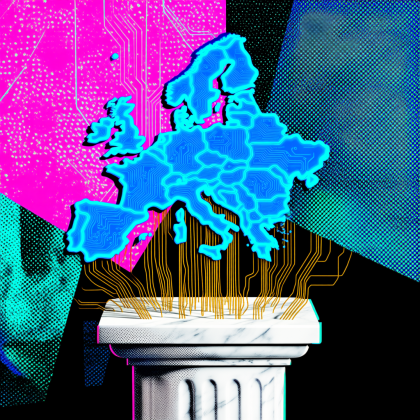
The intersection of geopolitical stability and technological acceleration took center stage at the VIII edition of the Foro La Toja, where Spain's top leadership issued a stark warning about the current trajectory of global governance and artificial intelligence. King Felipe VI and Prime Minister Pedro Sánchez used the platform to argue that the institutional frameworks established after the Second World War are no longer sufficient to manage the complexities of the 21st century, particularly the rise of hybrid threats and the unchecked growth of AI.
The erosion of the post-war consensus
King Felipe VI opened the forum by addressing what he described as the erosion of the international order. While acknowledging that the 20th-century framework produced indispensable achievements—including the UN Charter, the Universal Declaration of Human Rights, and the unification of Europe—the monarch argued that these structures are fraying. This decay, according to the King, has left the global community vulnerable to hybrid threats that bypass traditional diplomatic and military defenses.
The Spanish monarch proposed viewing the world order, international cooperation, and European construction not as finished products, but as ongoing processes. By framing stability as a continuous evolution rather than a static achievement, Felipe VI suggested that the international community must actively renovate its systems to prevent further instability. This call for renewal comes at a time when multilateralism is under severe pressure, a sentiment echoed by former Portuguese President Marcelo Rebelo de Sousa, who received the Foro La Toja Prize during the event and remarked that multilateralism has almost died.
Why AI cannot be left to the tech giants
While the King focused on the broad geopolitical architecture, Prime Minister Pedro Sánchez targeted the specific mechanism of AI governance. In a pointed critique of the current industry trend toward self-regulation, Sánchez warned that allowing the companies developing AI to set their own rules is a fundamental mistake. Using a vivid metaphor, the Prime Minister stated that putting the care of the hen house in the hands of the fox is an error.
This stance marks a clear rejection of the voluntary commitments often proposed by the so-called tecnoligarcas. The Spanish government's position is that the power concentrated in a few global tech firms is too vast to be managed without external, binding oversight. The concern is not merely about safety or ethics, but about the concentration of power and the potential for these entities to prioritize profit and market dominance over societal stability and democratic values.
Human control as a non-negotiable requirement
Adding to the Prime Minister's regulatory push, King Felipe VI emphasized that artificial intelligence must be strictly subject to human control. The monarch argued that the deployment of these technologies must be oriented toward the common good, ensuring that AI serves as a tool for human advancement rather than a replacement for human judgment or a source of systemic risk.
The Spanish leadership's insistence on human-centric AI aligns with a growing global anxiety regarding the speed of deployment versus the speed of regulation. By calling for a framework where humans retain the final word on AI-driven decisions, Spain is positioning itself as a proponent of a cautious, regulated approach to innovation—one that refuses to sacrifice safety for the sake of rapid market penetration.
Maintaining the Atlantic bond
Despite the calls for a new world order and a shift in how technology is governed, Spain remains committed to its traditional strategic alliances. King Felipe VI explicitly mentioned the necessity for Europe and Spain to maintain a strong link with the United States. He asserted that the Atlantic bond is destined to survive, suggesting that any renewal of the global order must be built upon this foundational partnership.
This strategic reassurance serves as a counterbalance to the critique of current global structures. It indicates that Spain is not seeking to dismantle the existing Western security and economic architecture, but rather to modernize it. The goal is a reinforced Atlantic alliance that can collectively address the challenges of the digital age and the instability of the current geopolitical climate.
A vision for global cooperation
The discourse at the La Toja Forum suggests a Spanish strategy that blends traditional diplomacy with a modern, skeptical view of corporate power. The overarching theme was the need for convergence. By inviting critical voices and emphasizing the need for spaces of confluence, the Spanish leadership is attempting to bridge the gap between the old world of nation-states and the new world of algorithmic influence.
The King's vision of the world order as a process suggests that the current crisis is not a failure of the original post-war ideals, but a signal that those ideals must be updated to survive the era of hybrid warfare and artificial intelligence.
The event concluded with a clear message: the status quo is untenable. Whether through the renewal of international treaties or the implementation of strict AI regulations, the Spanish government believes that the only way to secure the common good is through active, human-led governance that transcends the interests of private tech conglomerates.
Implications for US and UK businesses
For entrepreneurs and executives in the USA and UK, the rhetoric from the La Toja Forum signals a tightening regulatory environment in Europe. While the US has largely leaned toward a more flexible, industry-led approach to AI, and the UK has attempted to balance innovation with safety, the Spanish position reinforces the spirit of the EU AI Act. The explicit rejection of self-regulation by Prime Minister Sánchez suggests that companies operating in the European market should expect more rigorous compliance requirements and less reliance on voluntary guidelines.
Businesses should anticipate that the push for human-centric AI will translate into mandates for transparency, auditability, and human-in-the-loop requirements for high-risk AI systems. Furthermore, the emphasis on the Atlantic bond suggests that while regulation will increase, there will still be significant opportunities for US and UK firms that can align their governance models with these European standards. The key for international firms will be to move beyond self-certification and prepare for a regime of external oversight that views AI not just as a commercial product, but as a systemic influence on the global order.
FAQ
What was the main concern of King Felipe VI at the La Toja Forum?
The King expressed concern over the erosion of the post-WWII international order and the rise of hybrid threats, calling for a renewal of global governance.
What is Prime Minister Pedro Sánchez's view on AI regulation?
Sánchez strongly opposes AI self-regulation by tech companies, arguing that it is a mistake to let the industry police itself.
How does Spain view its relationship with the United States in this context?
Spain views the Atlantic bond as essential and destined to survive, emphasizing that it should remain a cornerstone of the renewed world order.
What does the Spanish leadership believe is the primary goal for AI development?
They believe AI must be subject to human control and oriented toward the common good.
Sources: Rtve (2) ·
Scrivila qui: Susanna, l assistente AI di glacom, ti risponde via email con un approfondimento gratuito.
Nessuna consulenza personalizzata (finanziaria, legale o medica): solo informazione e fonti. Email usata solo per rispondere.
oppure scrivile su: WhatsApp · Telegram · SimpleX · Delta Chat · Email