



X Disrupts 200,000-Account Chinese Bot Farm Targeting US AI Infrastructure
- X disrupted a network of 200,000 suspected Chinese inauthentic accounts.
- Roughly 200 accounts targeted US AI data centers, claiming they drive up household power bills.
- The campaign used AI-generated cartoons and legitimate news to fuel existing public grievances.
- Researchers suggest the impact was minimal due to low engagement and rapid account suspension.
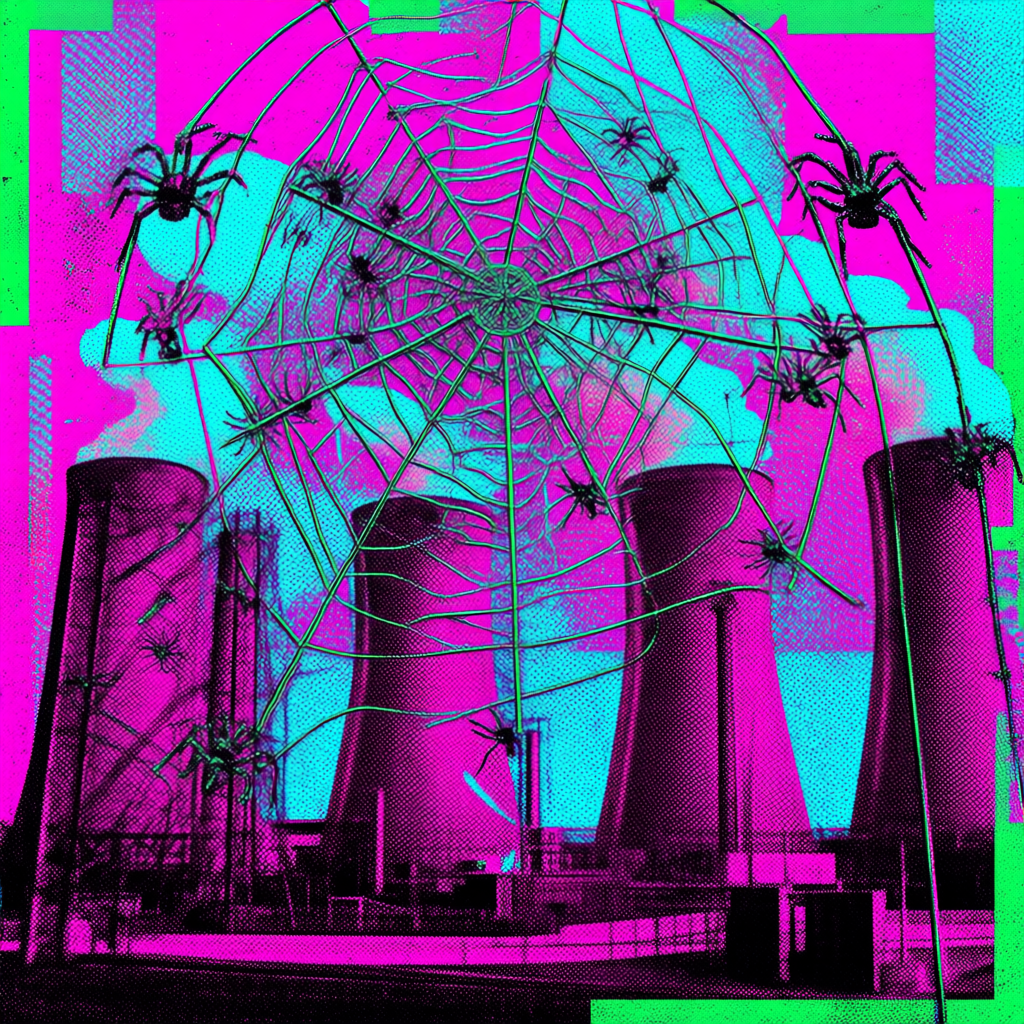
The intersection of artificial intelligence and national infrastructure has become a new frontline for geopolitical influence operations. X recently announced the disruption of a massive bot farm consisting of approximately 200,000 suspected inauthentic accounts linked to China. While the scale of the network is vast, the specific targeting of the American AI buildout reveals a calculated attempt to weaponize local economic anxieties to slow down US technological expansion.
Weaponizing the energy crisis
According to X's Global Government Affairs team, a subset of roughly 200 accounts within this larger network was dedicated to manipulating the debate surrounding AI data centers and energy policy. Rather than employing traditional cyberattacks to breach grids or utilities, these operators launched an influence campaign. They posed as ordinary American citizens, using common names such as Thomas Jackson, Patricia Robinson, Sandra Thompson, and Kenneth Flores to blend into the digital landscape.
The strategy relied on a potent mix of truth and fabrication. The bots amplified legitimate concerns regarding the strain that hyperscale data centers place on local power grids. Some posts referenced actual reporting, including a Southern Maryland Chronicle article regarding rising capacity costs from PJM Interconnection, which serves 13 states and Washington, D.C. By anchoring their narrative in real-world grievances, the operators sought to make their disinformation more palatable to a frustrated public.
The role of generative AI in propaganda
To supplement their arguments, the bot farm utilized generative AI to create visual content designed to trigger emotional responses. These included AI-generated comic strips and cartoons that depicted data center developers as unscrupulous villains accumulating wealth while average American families struggled with soaring electricity bills. This approach transforms complex infrastructure debates into a simplified narrative of corporate greed versus working-class survival.
The fingerprints of these tools extend beyond X. A report published by OpenAI in June 2026 had already identified China-based users asking ChatGPT for strategies to influence American sentiment against data centers. The same illustrations flagged by X appeared in that earlier OpenAI report, suggesting a coordinated, long-term effort. Beyond energy policy, OpenAI noted that these users also sought help in crafting insults against Chinese dissidents and criticizing US tech policies and tariffs.
A debate rooted in economic reality
The effectiveness of such a campaign is bolstered by the fact that the underlying tension is real. The demand for AI facilities is placing unprecedented pressure on energy infrastructure. Data from Goldman Sachs indicates that electricity prices had already risen by 6.9 percent year-over-year as of February 2026, with expectations that prices will continue to climb as AI demand grows.
Because the public is already sensitive to power costs, the bot farm did not need to invent a problem; they simply needed to amplify an existing one. This creates a challenging environment for tech companies and policymakers who must distinguish between legitimate grassroots opposition and foreign-funded psychological operations.
Questioning the actual impact
Despite the alarming numbers, some experts argue that the campaign failed to move the needle. Darren Linvill, a researcher at Clemson University, described the event as a
non-storyafter analyzing data from suspended accounts. Linvill found that at least 59 of the bots had zero engagement, suggesting they were deactivated by X's safety systems before they could reach a significant audience.
His research, which tracked an obscure hashtag used by the bots, revealed that many accounts posted only two or three times in January before being banned. This suggests a gap between the intent of the foreign operation and its actual reach. While Silicon Valley evangelists and some political influencers have pointed to this as evidence that anti-data center sentiment is fueled by foreign propaganda, other researchers, such as Samuel Woolley from the University of Pittsburgh, maintain that there is broad, bipartisan grassroots activity against these facilities that exists independently of any bot farm.
The broader pattern of foreign influence
The disruption of this 200,000-account network is not an isolated incident but part of a growing pattern of foreign influence operations targeting the US AI ecosystem. The scale of the farm—where only a small fraction was dedicated to the data center narrative—raises questions about what the remaining 199,800 accounts were designed to do. The coordination between the use of LLMs for content generation and the deployment of massive bot networks marks a shift toward more scalable, automated disinformation.
For the tech industry, this underscores a critical vulnerability: the very tools being built to drive the AI revolution are being used by adversaries to undermine the physical infrastructure required to run them. The cycle of using AI to generate anti-AI sentiment creates a feedback loop that can complicate zoning laws, energy permits, and public relations for data center operators.
Strategic implications for global enterprises
For entrepreneurs and investors in the USA, UK, and global markets, this news highlights a new layer of risk in the AI infrastructure pipeline. The primary threat is no longer just technical or regulatory, but reputational and social. When foreign actors weaponize local grievances, they can trigger localized political resistance that delays project approvals or increases operational costs through forced community concessions.
In the US and UK, where energy grids are already under pressure, companies deploying AI hardware must anticipate that their projects may be targeted by sophisticated influence campaigns. This necessitates a shift in corporate strategy: moving beyond simple PR to transparent, data-driven community engagement. Businesses should expect increased scrutiny from regulators who may be influenced by amplified public outcry, regardless of whether that outcry is organic or manufactured.
Furthermore, the use of AI-generated disinformation may lead to stricter platform moderation and potentially new transparency requirements for political and infrastructure-related discourse. For the global entrepreneur, the lesson is clear: the physical buildout of AI is as much a battle of perception as it is a feat of engineering.
FAQ
How many accounts were involved in the Chinese bot farm?
X identified and disrupted a network of approximately 200,000 suspected inauthentic accounts.
What was the specific goal of the 200 accounts targeting data centers?
They aimed to manipulate the US debate on AI and energy policy by claiming that AI data centers increase household electricity bills and strain power grids.
Did the bots use any real information in their posts?
Yes, they leveraged legitimate news reports, such as articles about PJM Interconnection's rising capacity costs, to make their claims more believable.
Was the campaign successful in influencing the public?
It is debated; while X flagged the attempt, a researcher from Clemson University found that many of the bots had zero engagement and were suspended quickly.
Sources: Startupfortune, Nextbigfuture, Techspot, Yahoo ·
Scrivila qui: Susanna, l assistente AI di glacom, ti risponde via email con un approfondimento gratuito.
Nessuna consulenza personalizzata (finanziaria, legale o medica): solo informazione e fonti. Email usata solo per rispondere.
oppure scrivile su: WhatsApp · Telegram · SimpleX · Delta Chat · Email