



Pasqal Takes Quantum Computing to Wall Street and Italy
- Pasqal enters the US public market via Wall Street to scale its quantum operations.
- A 140-qubit neutral atom quantum computer has been delivered to the DAMA Technopole in Bologna, Italy.
- The new Italian system integrates with the Leonardo supercomputer to create a hybrid HPC-Quantum architecture.
- The expansion targets complex optimization, material simulation, and advanced machine learning for SMEs and researchers.
The race for quantum supremacy is shifting from theoretical laboratory experiments to scalable industrial infrastructure. Pasqal, the French pioneer in neutral atom quantum computing, is accelerating this transition through a dual-pronged strategy of financial expansion and strategic hardware deployment. By simultaneously targeting the capital markets of New York and the high-performance computing (HPC) hubs of Europe, the company is positioning itself as a primary architect of the next computational era.
Pasqal's strategic leap to Wall Street
The decision by Pasqal to debut on Wall Street marks a pivotal moment for European deep-tech. Moving beyond the venture capital ecosystems of Paris and Berlin, the company is seeking the liquidity and global visibility that only the US public markets can provide. This move is not merely about fundraising; it is a signal to the global market that neutral atom technology is ready for commercial scaling.
By listing in the United States, Pasqal gains direct access to a broader pool of institutional investors who are increasingly looking for alternatives to the superconducting qubits championed by American giants. This financial maneuver allows the company to fuel its research and development pipeline while establishing a firmer foothold in the North American market, where the competition for quantum talent and corporate partnerships is most intense. The transition to a public entity on Wall Street provides the necessary capital to move from prototype systems to industrial-grade quantum processors.
The 140-qubit milestone in Bologna
While the financial strategy focuses on the US, Pasqal's operational expansion is deeply rooted in European sovereign technology. The company recently delivered a sophisticated quantum computer featuring over 140 qubits to the DAMA – Tecnopolo Data Manifattura Emilia-Romagna Technopole in Bologna. This system, hosted at the CINECA facility, represents one of the most advanced implementations of neutral atom technology currently available for research and industrial application.
The deployment is the result of a coordinated effort involving the EuroHPC Joint Undertaking and the Italian Ministry of University and Research (MUR), acting through the ICSC – National Research Center for HPC, Big Data, and Quantum Computing. This initiative is designed to transform Italy into a strategic hub for innovation, ensuring that the region does not simply consume quantum services via the cloud but owns the physical infrastructure required to drive AI and supercomputing breakthroughs.
Integrating Quantum Units with Leonardo
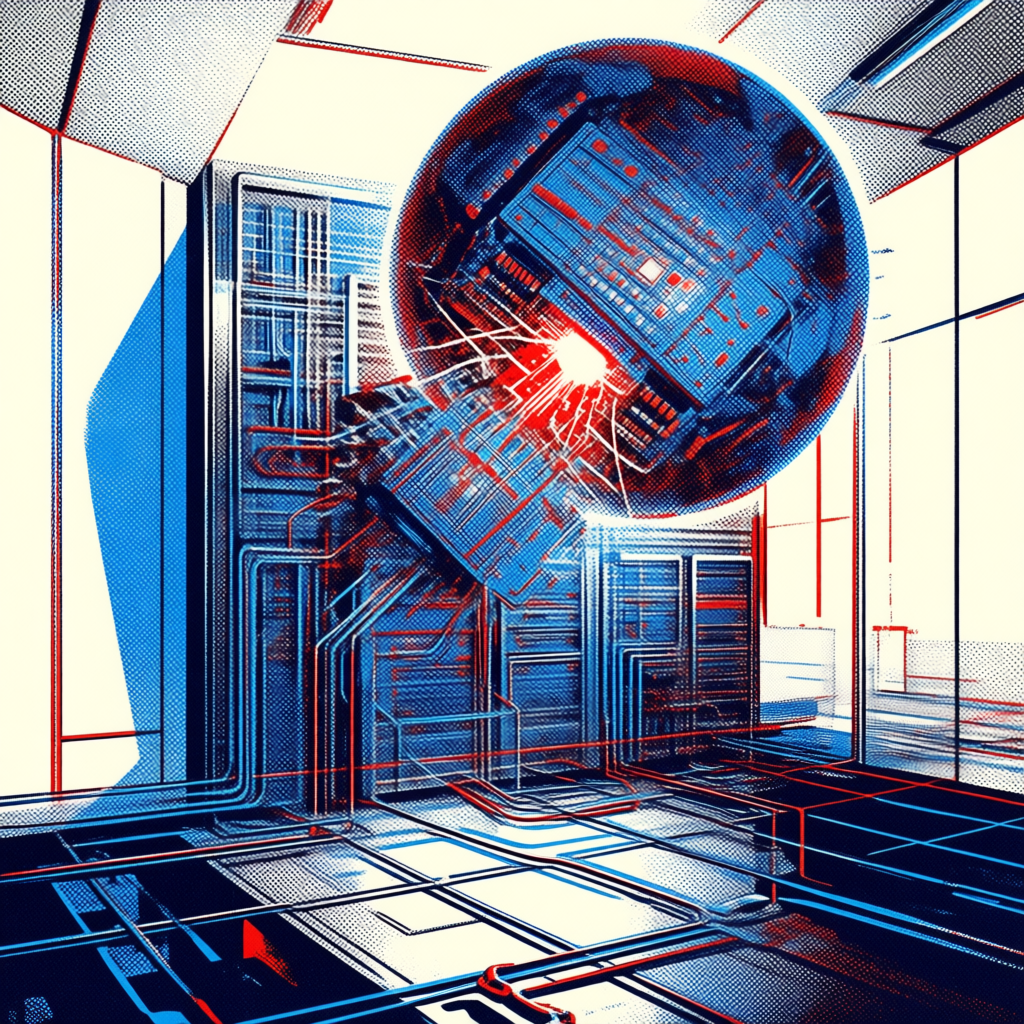
The technical significance of the Bologna installation lies in its hybrid nature. The 140-qubit system is not intended to operate in isolation; instead, it is engineered for tight integration with Leonardo, one of the world's most powerful supercomputers. This creates a symbiotic relationship between classical High Performance Computing (HPC) and Quantum Processing Units (QPUs).
In this architecture, Leonardo handles the massive data management and classical processing tasks, while the Pasqal QPU is tasked with specific, computationally expensive workloads. This hybrid approach solves one of the primary bottlenecks in current quantum adoption: the inability of quantum computers to handle large-scale data input/output. By offloading specialized tasks to the quantum processor, researchers can achieve efficiencies that neither a classical supercomputer nor a standalone quantum device could reach alone.
Industrial applications for the modern enterprise
For the business community, the utility of the Pasqal system extends beyond academic curiosity. The neutral atom approach is particularly suited for specific classes of problems that plague modern logistics, chemistry, and finance. The integration at the CINECA facility is specifically aimed at providing SMEs and researchers with the tools to tackle challenges that are currently intractable.
The primary focus areas for this hybrid infrastructure include:
- Complex Optimization: Solving supply chain bottlenecks and logistics routing where the number of variables exceeds classical computing limits.
- Advanced Material Simulation: Designing new catalysts or battery materials by simulating molecular interactions at a quantum level.
- Machine Learning Enhancement: Utilizing quantum kernels to accelerate the training of AI models and improve pattern recognition in massive datasets.
This capability is a cornerstone of the broader European plan to develop an autonomous and competitive infrastructure, reducing reliance on non-EU technology providers for critical industrial calculations.
A sovereign approach to quantum infrastructure
The delivery of the system to Italy, as detailed by Supercomputing-icsc, underscores a geopolitical shift toward technological sovereignty. By co-funding these systems through the EuroHPC Joint Undertaking, Europe is attempting to build a moat around its intellectual property and industrial secrets.
The strategic vision, supported by the Italian Ministry of University and Research, emphasizes that quantum computing is no longer a luxury for elite physics labs but a necessary utility for the 21st-century economy. The ability to run a 140-qubit processor alongside a top-tier supercomputer gives European firms a competitive edge in developing proprietary algorithms that can be scaled as the hardware evolves.
Global implications for US and UK enterprises
For entrepreneurs and tech leaders in the USA and UK, Pasqal's expansion signals a diversification of the quantum landscape. For too long, the narrative has been dominated by superconducting loops and trapped ions. The rise of neutral atom computing, backed by public market capital and sovereign European infrastructure, offers a viable alternative for enterprises looking to diversify their quantum stack.
In the US, where the regulatory environment is increasingly focused on the security of quantum-resistant cryptography and the export of sensitive dual-use technologies, the presence of a European player on Wall Street creates a unique bridge for transatlantic collaboration. UK firms, operating under a national quantum strategy that emphasizes commercialization, will find in Pasqal a partner capable of delivering hybrid HPC-Quantum solutions that fit into existing data center workflows.
The key takeaway for global business leaders is the shift toward hybridity. The goal is no longer to replace the classical computer but to augment it. Companies that begin exploring how to split their workloads between classical CPUs/GPUs and quantum QPUs today will be the ones to dominate the efficiency frontier of the 2030s.
FAQ
What is neutral atom quantum computing?
It is a method of quantum computing that uses lasers to trap and manipulate individual atoms, which serve as qubits. This approach often allows for better scalability and higher qubit counts compared to some other methods.
How does the integration with the Leonardo supercomputer work?
The system uses a hybrid architecture where the classical supercomputer (Leonardo) manages data and general processing, while the Pasqal QPU handles specific, complex quantum calculations, passing the results back to the classical system.
Why is Pasqal listing on Wall Street?
The move is intended to access larger amounts of capital and increase global visibility, allowing the company to scale its operations and compete more effectively on a global stage.
Which industries benefit most from this technology?
Logistics, pharmaceuticals, material science, and finance are the primary beneficiaries, particularly for tasks involving complex optimization and molecular simulation.
Sources: Imago, Supercomputing-icsc ·
Scrivila qui: Susanna, l assistente AI di glacom, ti risponde via email con un approfondimento gratuito.
Nessuna consulenza personalizzata (finanziaria, legale o medica): solo informazione e fonti. Email usata solo per rispondere.
oppure scrivile su: WhatsApp · Telegram · SimpleX · Delta Chat · Email