



South Korea's AI for All: A Bold Leap Toward G3 Global Status

- South Korea plans to provide free, unlimited AI assistant access to all 51 million residents using domestic models.
- The 'AI for All' initiative is part of a broader G3 strategy to rank among the top three global AI powers alongside the US and China.
- The government is partnering with SK Telecom, KT, and Kakao, providing 512 Nvidia B200 processors to support the infrastructure.
- Massive financial commitments include a KRW 100 trillion public-private fund and a goal of 260,000 advanced GPUs by 2030.
South Korea is attempting a geopolitical and technological gamble of unprecedented scale. Under the leadership of President Lee Jae-myung, the nation has unveiled a project dubbed AI for All, which seeks to provide every single one of its 51 million residents with free, unlimited access to an AI assistant. Unlike the subscription-based models prevalent in the West, this service will be powered by domestic models and integrated directly into the fabric of public administration.
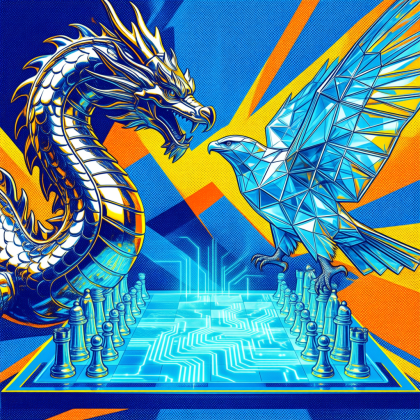
This is not merely a social welfare program but a calculated move in a high-stakes global competition. Seoul has explicitly framed its ambition through the G3 strategy, a roadmap designed to position South Korea as one of the three dominant AI superpowers in the world, standing shoulder-to-shoulder with the United States and China.
The developmental state model applied to intelligence
To understand the AI for All initiative, one must look at the historical blueprint of South Korean economic success. For decades, the country has operated on a developmental state model, characterized by an intimate and strategic partnership between the central government and the chaebols—the massive, family-run conglomerates that built the nation's semiconductor and shipbuilding industries. In this system, the state identifies a strategic frontier and empowers these conglomerates to conquer it.
President Lee is now applying this same logic to artificial intelligence. By guaranteeing a massive, state-backed user base of 51 million people, the government is effectively creating a guaranteed market for domestic AI developers. This approach aims to shield the local ecosystem from the overwhelming gravity of Silicon Valley's LLMs, ensuring that Korean language, culture, and administrative logic remain central to the tools the population uses daily.
Infrastructure and the Nvidia partnership
The ambition of providing free, unlimited access to an entire population brings staggering technical and financial challenges. The primary hurdles are electricity consumption and the sheer cost of compute. To mitigate these, the Ministry of Science and ICT (MSIT) has taken a direct role in hardware procurement.
The state has already selected three consortia to manage the service, led by the nation's tech titans: SK Telecom, KT, and Kakao (the operator of the ubiquitous KakaoTalk app). To fuel this engine, the government is providing up to 512 Nvidia B200 processors and covering a significant portion of the operating costs. This hardware injection is part of a wider push to secure 50,000 GPUs in 2025, with a long-term target of reaching 260,000 advanced GPUs by 2030.
A legislative first in the AI era
While the hardware push is impressive, South Korea is also racing to lead in AI governance. The country has passed and enforced the AI Framework Act, which is being framed as the world's first comprehensive AI law. This legal architecture is designed to provide the certainty needed for massive private investment while establishing a trust-based framework for deployment.
The speed of this institutional rollout has been breathless. Since mid-2025, the administration has established a presidential AI secretariat, appointing Ha Jung-woo, former head of the Naver AI Innovation Center, to coordinate policy. This centralized command structure allows Seoul to merge civilian and defense AI strategies under a single banner, ensuring that the G3 goal is pursued with military-like precision.
The financial scale of the G3 ambition
The numbers associated with the G3 strategy reveal the scale of the competition. South Korean officials have openly compared their efforts to the United States' Stargate infrastructure program and the European Union's investment pushes. To compete, Seoul has launched a public-private investment fund worth KRW 100 trillion (approximately USD 74 billion) to expand research, development, and data capacity.
The global AI contest has shifted from rivalry among individual companies to an all-out contest among nations.
Beyond the main fund, a supplementary budget of KRW 1.8 trillion has been earmarked specifically for capability building. This financial onslaught is intended to support the Korean AI for all vision, ensuring that the domestic models are not just available, but competitive in performance and efficiency.
Integration with the public sphere
The AI assistant will not be a generic chatbot. The plan is to link the system directly to public administration databases. This means the AI will be capable of performing high-utility tasks for the citizen, such as booking medical appointments or providing personalized tax advice. By embedding AI into the state's operational layer, South Korea is attempting to create a seamless interface between the citizen and the government, potentially increasing administrative efficiency while collecting vast amounts of data to further refine domestic models.
Strategic implications for international businesses
For entrepreneurs and firms in the USA, UK, and global markets, South Korea's trajectory offers several critical takeaways. First, the G3 strategy signals that the era of AI being a purely corporate race is over; it is now a matter of national sovereignty. Companies providing AI infrastructure or specialized software may find a highly receptive but strictly regulated market in Seoul, provided they align with the national interest.
In the US and UK, where AI development is largely driven by private venture capital and market demand, the South Korean model represents a different paradigm: the state as the primary customer and orchestrator. While the US maintains a lead in foundation models, South Korea is demonstrating how a nation can leverage its semiconductor dominance and centralized governance to create a vertically integrated AI economy.
Furthermore, the implementation of the AI Framework Act provides a case study for other nations. As the US continues to debate federal AI regulation and the UK pursues a pro-innovation, non-statutory approach, South Korea's comprehensive law may set a precedent for how states balance rapid deployment with legal safeguards. For global firms, this means navigating a landscape where South Korea may become a hub for sovereign AI, potentially offering a third way between the American commercial model and the Chinese state-controlled model.
FAQ
What is the G3 strategy?
It is South Korea's national ambition to become one of the top three global AI powers, alongside the United States and China.
Who will provide the AI services for the citizens?
The service will be managed by three consortia led by SK Telecom, KT, and Kakao.
How is the government supporting the AI for All project?
The state is providing 512 Nvidia B200 processors, covering part of the operating costs, and investing through a KRW 100 trillion public-private fund.
What can the AI assistant actually do?
Beyond general assistance, it will be linked to public administration systems to help citizens book medical appointments and receive tax advice.
Sources: Asianews (2) ·
Scrivila qui: Susanna, l assistente AI di glacom, ti risponde via email con un approfondimento gratuito.
Nessuna consulenza personalizzata (finanziaria, legale o medica): solo informazione e fonti. Email usata solo per rispondere.
oppure scrivile su: WhatsApp · Telegram · SimpleX · Delta Chat · Email