



Entrepreneurial Safety Nets: Balancing Risk and Innovation in Startups
- Safety nets and business networks are essential for encouraging high-risk innovation and startup growth.
- Italy's 2026 SME Law introduces new incentives for business networks and simplified safety models for smaller firms.
- The rise of social-impact startups (Benefit Corporations) shows a shift toward sustainable, purpose-driven entrepreneurship.
- Digital safety nets must now evolve to counter AI-driven fraud and cyber-enabled theft in global supply chains.
Entrepreneurship is fundamentally an exercise in risk management. For the founder of a tech startup or a small business owner, the distance between a breakthrough and a total collapse is often measured by the strength of the safety nets available to them. These nets are not merely financial cushions but comprise a complex architecture of legal frameworks, collaborative networks, and digital security protocols that allow entrepreneurs to pivot without facing catastrophic personal or professional ruin.
The Architecture of Business Networks
One of the most effective ways to mitigate individual risk is through the creation of business networks. By pooling resources, sharing knowledge, and coordinating strategies, small and medium enterprises (SMEs) can achieve a scale and stability that would be impossible in isolation. These networks act as a collective safety net, distributing the burden of innovation across multiple entities.
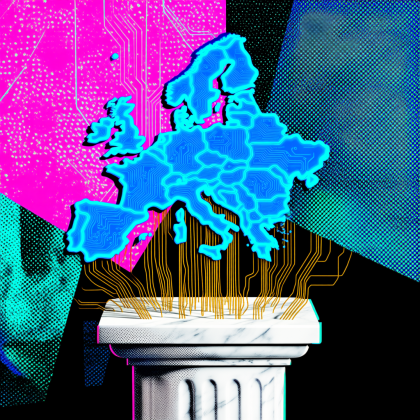
In the European context, specifically within Italy, this approach is being codified into law. The Legge PMI 2026 (Law no. 34 of March 11, 2026) represents a strategic shift toward strengthening the competitiveness of the production system. The legislation introduces specific incentives for business networks and provides a reorganized framework for innovative startups. By encouraging SMEs to operate within these networks, the law aims to facilitate generational turnover and provide a more secure environment for new entrants into the market.
Simplifying Safety and Compliance
For many entrepreneurs, the regulatory burden of health and safety at work represents a significant barrier to entry. The cost of compliance can often outweigh the initial capital of a lean startup, creating a paradoxical situation where the desire to be safe hinders the ability to grow. To address this, modern legislative trends are moving toward simplification.
The 2026 Italian SME law introduces simplified safety models tailored specifically for smaller companies. This includes the extension of training opportunities even during periods of redundancy (cassa integrazione) and the integration of immersive technologies for training. By lowering the friction of compliance, the state effectively expands the safety net, allowing founders to focus on product-market fit rather than drowning in bureaucratic complexity.
The Rise of Purpose-Driven Risk
Risk appetite is not uniform across the startup ecosystem. There is a growing trend toward startups that integrate social and environmental goals into their core business model. This shift suggests that entrepreneurs are increasingly willing to take risks when those risks are aligned with a broader societal purpose.
Data from the Social Innovation Monitor (SIM) at the Politecnico di Torino reveals a telling divergence in the Italian market. While the overall number of innovative startups saw a slight decline in 2022 (approximately -4%), there was a significant surge in those with a certified social or environmental impact. Specifically, the number of startups with a Benefit Corporation qualification increased by 38.2%, and B Corps grew by 55.6%. This indicates that the modern entrepreneurial safety net is increasingly psychological and ethical; founders are more resilient when their business serves a mission beyond mere profit.
The growth of impact-driven startups suggests that the new generation of entrepreneurs views social utility as a hedge against the volatility of the traditional market.
Digital Vulnerabilities as the New Risk Frontier
While legal and social networks provide a foundation, the digital layer of the business has become the most volatile area of risk. For global industries, particularly logistics and transportation, the safety net is no longer just about insurance or law—it is about cybersecurity. The blurring line between traditional fraud and cybercrime has created a new category of enterprise risk.
In the freight transportation sector, the transition to digital portals and electronic paperwork has opened doors for sophisticated criminal rings. As discussed at the National Motor Freight Traffic Association (NMFTA) 2026 conference, the risk has shifted from physical trailer theft to the hijacking of credentials and the manipulation of carrier portals. When a bad actor gains access to a system, they can reroute high-value shipments or send malware disguised as routine insurance certificates. In this environment, the only effective safety net is a strategy of total alignment, from the C-suite to the loading dock, ensuring that every employee is a sentinel against digital intrusion.
Weaponized AI and the Erosion of Trust
The introduction of generative AI has fundamentally altered the risk landscape for international business. The ability to create convincing deepfakes and clone voices with only a few seconds of audio has turned social engineering into a weapon of precision. Fraudsters can now replicate the voice of an executive or a dispatcher to authorize fraudulent wire transfers or reroute cargo.
This evolution means that traditional verification methods—such as a phone call to confirm an order—are no longer sufficient. The risk is no longer just a technical glitch or a leaked password, but the systemic erosion of trust in digital communication. For companies operating in the USA and UK, managing this risk requires a shift toward zero-trust architectures and more rigorous identity verification processes to prevent AI-enabled fraud from bypassing existing security nets.
Global Implications for International Enterprises
For entrepreneurs in the USA, UK, and global markets, the lessons from these diverse developments are clear: safety nets must be multi-dimensional. While the US market traditionally relies more on venture capital and private insurance to mitigate risk, the European model—exemplified by the recent Italian SME legislation—emphasizes state-backed networks and simplified regulatory paths.
In the US and UK, where the regulatory environment for AI is still evolving compared to the EU AI Act, the burden of creating safety nets falls more heavily on the private sector. Companies must proactively implement cybersecurity frameworks to combat the AI-driven threats seen in the logistics sector. Whether it is through joining industry-specific networks to share threat intelligence or adopting B Corp certifications to attract mission-driven talent, the goal remains the same: reducing the cost of failure to encourage the courage to innovate.
FAQ
What are business networks in the context of SMEs?
They are collaborative structures where small and medium enterprises pool resources and coordinate strategies to increase competitiveness and share risks, often supported by government incentives.
How is the 2026 Italian SME law helping startups?
It introduces incentives for business networks, simplifies health and safety compliance for smaller firms, and provides measures to support innovative startups and generational turnover.
What is the difference between a standard innovative startup and a Benefit Corporation?
While an innovative startup focuses on technological or business model innovation, a Benefit Corporation (or B Corp) formally integrates social and environmental impact goals into its legal purpose.
Why is AI considered a risk to the logistics safety net?
Generative AI allows criminals to create voice clones and deepfakes, enabling them to impersonate executives or dispatchers to commit freight fraud and unauthorized financial transfers.
Sources: Assiv, Agency, Innovazionesociale ·
Scrivila qui: Susanna, l assistente AI di glacom, ti risponde via email con un approfondimento gratuito.
Nessuna consulenza personalizzata (finanziaria, legale o medica): solo informazione e fonti. Email usata solo per rispondere.
oppure scrivile su: WhatsApp · Telegram · SimpleX · Delta Chat · Email