



ASI and SoftBank Joint Venture to Automate Heavy Construction
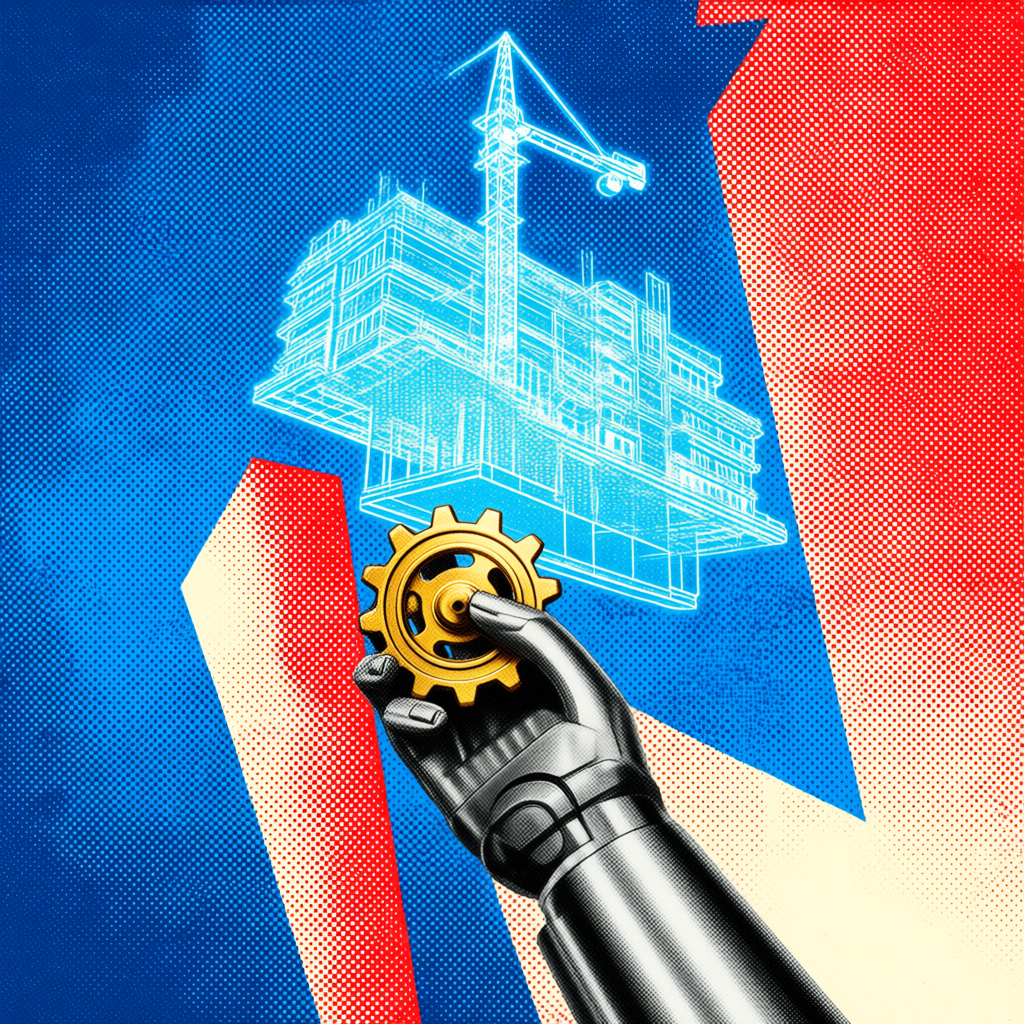
- ASI and SoftBank Group formed a joint venture to commercialize autonomous heavy equipment for large-scale infrastructure.
- SoftBank invested $225 million into ASI to accelerate commercial operations across the construction market.
- The partnership leverages the Mobius platform to coordinate mixed, brand-agnostic fleets of dozers, loaders, and haul trucks.
- The initiative targets severe labor shortages in civil construction, focusing on roadways, airports, and railways.
The global construction industry is facing a systemic crisis that cannot be solved by traditional hiring practices. As infrastructure demands for airports, railways, and roadways grow in both complexity and scale, the pool of skilled heavy equipment operators continues to shrink. To bridge this gap, Autonomous Solutions, Inc. (ASI) and SoftBank Group Corp. have entered into a strategic joint venture designed to bring industrial-scale autonomy to the civil construction sector.
Solving the labor chasm in heavy infrastructure
The motivation behind this partnership is rooted in a stark reality: the dwindling supply of qualified labor. In many regions, particularly low-population areas where massive infrastructure projects are often located, finding operators capable of handling heavy machinery is becoming nearly impossible. This labor shortage creates a critical bottleneck that threatens the timeline and viability of essential public works.
Mel Torrie, CEO of ASI, has noted that traditional labor-intensive methods are struggling to keep pace with the current requirements of modern engineering. By shifting toward autonomous fleets, the industry can maintain momentum on high-capacity operations without being entirely dependent on a shrinking workforce. The goal is to move beyond experimental robotics and implement a scalable, software-driven path to automation across every phase of development.
The power of OEM-agnostic orchestration
One of the primary hurdles in construction automation has been the proprietary nature of equipment. Most contractors operate mixed fleets comprising machinery from various manufacturers, and until now, automating these disparate systems often required fragmented solutions. The ASI and SoftBank venture addresses this through a brand-agnostic approach.
At the heart of this capability is the Mobius industrial autonomous fleet orchestration system. Developed by the Utah-based company over two decades, Mobius allows for the coordination of mixed vehicle environments. This means a single orchestration layer can manage a diverse array of machinery—including haul trucks, loaders, compactors, and dozers—regardless of the original equipment manufacturer (OEM). This open-architecture philosophy prevents contractors from being locked into a single brand, allowing them to automate their existing assets while maintaining operational flexibility.
Strategic pivot from mining to civil construction
The launch of ASI Construction marks a deliberate strategic shift for the company. While ASI has a long history of product development with industry leaders like CNH and John Deere, the company recently underwent a significant restructuring. This included the divestment of its mining division through the sale of ASI Mining to Epiroc.
This departure from the mining sector allowed ASI to refocus its resources on off-road markets where it already held a strong presence, such as agriculture and logistics. The move into heavy construction is the culmination of this pivot, leveraging a matured autonomy stack that has been refined over 25 years. By applying the lessons learned from industrial vehicle automation to civil construction, ASI aims to modernize the way earthmoving and vertical construction are executed.
Financial backing for global commercial scale
Scaling autonomous technology in the rugged environment of a construction site requires massive capital. To ensure the joint venture has the necessary reach, SoftBank Group has provided significant financial support. Beyond the formation of the joint venture itself, SoftBank has invested $225 million directly into ASI.
This capital injection is specifically earmarked to grow commercial operations across the broader construction market. The funding allows ASI to move from the development phase into wide-scale commercialization, ensuring that the Mobius platform can be deployed across multiple high-capacity projects simultaneously. The partnership combines SoftBank's financial muscle with ASI's technical expertise in Industrial Autonomous Fleet Orchestration (IAFO).
Modernizing the jobsite with software-defined robotics
The vision for the future of the jobsite is one where robotics are software-defined. Rather than viewing an autonomous vehicle as a standalone tool, the ASI-SoftBank approach treats the entire fleet as a coordinated system. This shift allows for higher precision in material handling and a reduction in the inefficiencies typically associated with human-coordinated mixed fleets.
The application of this technology extends across various sectors of civil engineering:
Large infrastructure projects, from roadways and airports to railways and waste management, are being built at a pace and complexity that traditional labor-intensive methods struggle to match.
By integrating these autonomous fleets, contractors can optimize the flow of materials and the movement of earth, reducing the idle time of machinery and increasing the overall safety of the site by removing human operators from high-risk zones.
Global implications for construction enterprises
For entrepreneurs and firms in the USA, UK, and other global markets, this venture signals a shift in how infrastructure capital is deployed. In the United States, where the labor shortage is particularly acute in rural infrastructure projects, the ability to deploy OEM-agnostic fleets could drastically reduce project overhead and timeline risks.
In the UK and European markets, the adoption of such systems will likely be influenced by evolving safety standards and the integration of AI in heavy industry. While the US market often leads in the deployment of autonomous heavy machinery due to the sheer scale of its projects, the UK's focus on smart infrastructure provides a fertile ground for software-defined robotics. Companies that adopt these open-architecture systems early will likely gain a competitive edge in bidding for government contracts, as the ability to guarantee project completion despite labor volatility becomes a primary selection criterion.
Ultimately, the ASI and SoftBank partnership represents a move toward the industrialization of construction. By treating the jobsite as a coordinated autonomous ecosystem rather than a collection of individual machines, the venture is setting a new standard for how the physical world is built.
FAQ
What is the main goal of the ASI and SoftBank joint venture?
The joint venture aims to commercialize brand-agnostic autonomous heavy equipment to address severe labor shortages and accelerate large-scale infrastructure projects globally.
What is the Mobius system?
Mobius is an industrial autonomous fleet orchestration system developed by ASI that allows different brands of heavy machinery to work together autonomously in a coordinated fleet.
How much did SoftBank invest in ASI?
SoftBank Group invested $225 million in ASI to support the growth of its commercial operations in the construction market.
Which types of machinery can be automated using this technology?
The system supports a variety of heavy equipment, including haul trucks, dozers, loaders, and compactors.
Sources: Therobotreport, Asirobots (2) ·
Scrivila qui: Susanna, l assistente AI di glacom, ti risponde via email con un approfondimento gratuito.
Nessuna consulenza personalizzata (finanziaria, legale o medica): solo informazione e fonti. Email usata solo per rispondere.
oppure scrivile su: WhatsApp · Telegram · SimpleX · Delta Chat · Email