




The Race to Biological Youth: Inside the Younger Contest
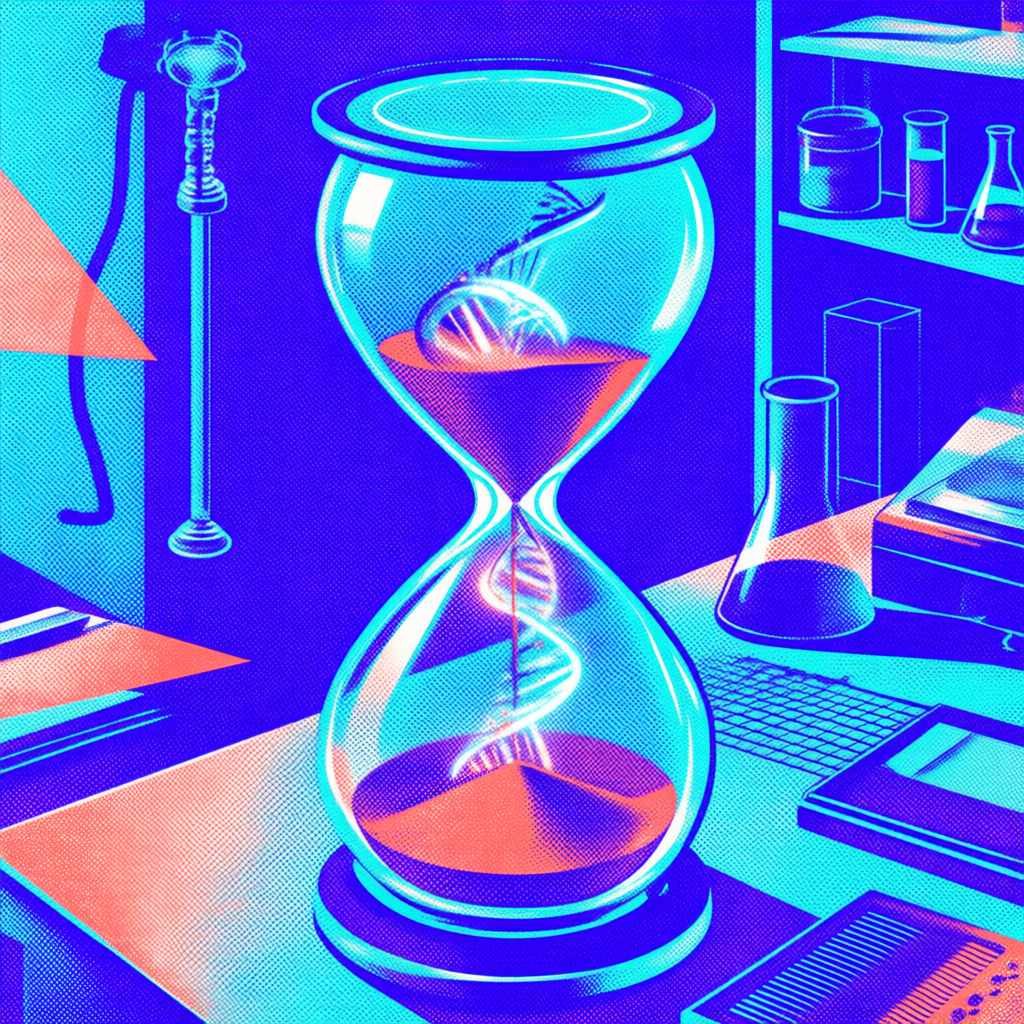
- Christin Glorioso, CEO of NeuroAge Therapeutics, launched a six-month competition to reverse biological age.
- Around 500 participants will be tracked via a public leaderboard using various biological aging clocks.
- Metrics include DNA chemical signatures, blood proteins, cognitive tasks, and AI-driven facial analysis.
- The project aims to create a comprehensive dataset to better understand how biological clocks function.
The concept of aging has long been viewed as a linear, inevitable progression. However, a new experiment is attempting to treat biological decline as a variable that can be manipulated, tracked, and even reversed. Christin Glorioso, a neuroscientist, physician, and the founder of NeuroAge Therapeutics, has introduced the Younger contest, a six-month competition where roughly 500 participants compete to lower their biological age.
Unlike chronological age, which is a simple measure of time passed since birth, biological age reflects the actual health and functional state of a person's organs and systems. The contest seeks to gamify the process of longevity, utilizing a public leaderboard to reward those who achieve the most significant reversal in their biological markers or maintain the widest gap between their birth date and their biological state.
The mechanics of biological aging clocks
At the heart of this competition are aging clocks. These are specialized tools designed to estimate biological age by analyzing various biomarkers. While there are more than a hundred different clocks currently in existence, they do not all measure the same thing. Some focus on chemical signatures—specifically epigenetic markers—that form a layer on top of DNA and shift as a person ages. Others analyze lipids or proteins within the blood to determine functional health or even predict mortality.
The scientific community uses these tools to study development across species, but applying them to individuals remains a point of contention. The primary issue is a lack of clarity regarding exactly what each clock is capturing. By aggregating data from a diverse group of participants, Glorioso intends to build what she describes as the world's most comprehensive clock dataset, potentially bringing more rigor to a field often criticized for its lack of standardization.
A multi-dimensional approach to measurement
To avoid the limitations of relying on a single metric, the Younger contest employs a battery of different tests. Participants are not just submitting a single data point but are engaging in a multi-modal assessment of their health. This approach mirrors the strategies used by some high-end longevity clinics to provide a more holistic view of aging.
The data collection process involves several distinct streams:
- Blood spot samples sent to TruDiagnostic to measure epigenetic groups and the biological age of 11 different organ systems.
- Cognitive performance tasks designed to generate a specific brain age score via NeuroAge Therapeutics.
- Physical assessments, including measurements of grip strength.
- AI-powered facial analysis conducted through an app that estimates age based on selfies.
The economic argument for slowing decline
While the contest may appear as a novelty or a luxury pursuit for the health-conscious, Glorioso frames the initiative as a matter of public health and macroeconomics. The financial burden of age-related decline on national infrastructures is staggering. According to estimates cited by the organizer, slowing the aging process across the general population to add just one year of life expectancy could potentially save the U.S. economy $38 trillion.
By shifting the focus from treating diseases after they appear to maintaining biological youth, the goal is to reduce the prevalence of chronic conditions. NeuroAge Therapeutics is already exploring this frontier by running trials to determine if biological brain age can serve as a predictive marker for the onset of Alzheimer's disease, moving the needle from reactive medicine to proactive prevention.
Skepticism and the timeline of biological change
Not everyone in the medical community is convinced that a six-month window is sufficient to prove the efficacy of longevity interventions. Hillary Lin, a New York-based physician specializing in longevity, has participated by logging baseline measurements but expressed concerns regarding the duration. The worry is that biological markers may not shift significantly enough within half a year to provide statistically meaningful results.
Furthermore, the early stages of the contest have shown a slow start in data logging. While about 120 people signed up early, the leaderboard has remained sparse, highlighting the difficulty of maintaining rigorous biological tracking over time. The official start is slated for January, providing a structured window for participants to implement various longevity protocols.
Interventions and the role of sponsors
The contest serves as a testing ground for a variety of longevity approaches. Some participants are utilizing low-risk tools provided by sponsoring companies to attempt to move their markers in the right direction. These interventions include the use of red-light masks and access to saunas, reflecting a broader trend in the wellness industry toward biohacking and environmental stressors to trigger cellular repair.
The competition is designed to explain to the world what aging clocks are and to gather data on purported longevity approaches in a competitive, tracked environment.
By combining these lifestyle interventions with high-tech tracking, the Younger contest attempts to bridge the gap between anecdotal wellness trends and clinical data. If the participants can indeed move their biological clocks backward, it would provide a powerful proof of concept for the personalized longevity industry.
Strategic implications for the global longevity market
For entrepreneurs and investors in the USA and UK, the Younger contest signals a shift toward the commercialization of biological age tracking. We are seeing the emergence of a new vertical where AI-driven diagnostics meet consumer health. In the United States, where the healthcare system is heavily weighted toward late-stage intervention, there is a massive market opportunity for tools that can quantify the ROI of preventative health measures.
From a regulatory perspective, the use of AI in estimating age—whether through facial recognition or epigenetic analysis—falls into a complex area. While the US currently maintains a more permissive environment for wellness-focused biotech, the UK's regulatory framework is increasingly focused on the validation of digital health tools. Companies operating in this space must ensure that biological age scores are marketed as wellness indicators rather than diagnostic medical devices to avoid stringent FDA or MHRA hurdles.
The integration of AI reasoning into these clocks is the next frontier. As noted in discussions regarding the limitations of current Large Language Models, the ability to truly reason through complex biological data is still evolving. For the business community, the real value lies not in the contest itself, but in the dataset it generates. The entity that can successfully correlate specific lifestyle interventions with a measurable drop in biological age will hold the keys to a multi-trillion dollar longevity economy.
FAQ
What is the difference between chronological and biological age?
Chronological age is the number of years since a person was born. Biological age refers to the state of a person's cells, organs, and biochemical markers, which can be higher or lower than their chronological age depending on health and lifestyle.
How is biological age measured in the Younger contest?
It is measured using multiple aging clocks, including DNA epigenetic markers via blood spots, cognitive tasks for brain age, physical tests like grip strength, and AI facial analysis.
Who is organizing the competition?
The contest was created by Christin Glorioso, a neuroscientist, physician, and the CEO of NeuroAge Therapeutics.
Is it scientifically proven that you can reverse biological age?
While aging clocks can track changes in biomarkers, the use of these clocks to estimate an individual's biological age remains controversial among scientists because the exact mechanisms each clock captures are not fully understood.
Sources: Technologyreview (2), Newsroomamerica ·
Scrivila qui: Susanna, l assistente AI di glacom, ti risponde via email con un approfondimento gratuito.
Nessuna consulenza personalizzata (finanziaria, legale o medica): solo informazione e fonti. Email usata solo per rispondere.
oppure scrivile su: WhatsApp · Telegram · SimpleX · Delta Chat · Email