



Journaling for Leaders: A Scientific Guide to Mental Clarity and Focus

- Journaling leverages the prefrontal cortex to reduce amygdala activity and lower stress.
- Success depends on habit systems (the 2-minute rule) rather than raw willpower.
- Techniques range from raw Morning Pages to structured 5-minute expressive writing.
- Consistent practice can reduce anxiety symptoms by up to 45% and lower cortisol.
For the modern entrepreneur, the primary bottleneck to growth is rarely a lack of technical skill or capital; it is the cognitive load of decision-making. The mental noise generated by managing teams, scaling operations, and navigating market volatility often leads to a state of fragmented focus. This is where journaling evolves from a personal hobby into a strategic business tool. Far from being a mere diary of daily events, professional journaling is a systematic process of externalizing mental chaos to reclaim executive function.
The neuroscience of the written word
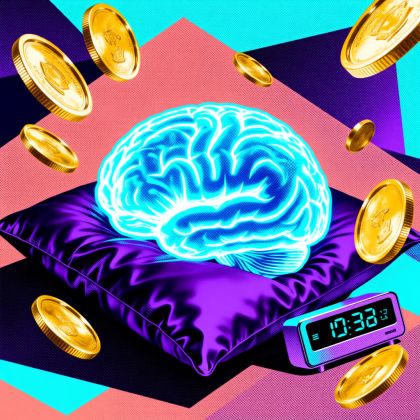
The efficacy of journaling is rooted in how the brain processes information. Neuroimaging from UCLA indicates that expressive writing activates the prefrontal cortex, the brain's executive control center, while simultaneously dampening the activity of the amygdala, which governs the threat-detection system. In essence, the act of writing transforms a vague, emotional stressor into a structured linguistic problem that the brain can solve.
This process of verbalization is particularly potent when done by hand. Writing manually engages different neural circuits than typing or speaking, which enhances memory retention and emotional awareness. Research suggests that just 15 minutes of expressive journaling can lead to significant stress reduction and improved memory for up to eight weeks. For a leader, this means a direct reduction in the cortisol levels that often cloud judgment during high-stakes negotiations or crises.
Why most productivity habits fail
Many executives attempt to integrate journaling by purchasing expensive notebooks and committing to rigorous daily quotas. However, this approach typically fails because it treats journaling as a project rather than a habit. When a leader sets an ambitious goal, such as writing for 30 minutes every morning, they rely on willpower. Willpower is a finite resource that evaporates during a busy fiscal quarter.
To make the practice sustainable, one must shift from goal-oriented behavior to identity-based habits. Instead of aiming to write, the objective is to become someone who journals. This transition is supported by the habit loop: a cue, a craving, a response, and a reward. By optimizing these four components, the act of writing becomes automatic, requiring zero mental effort to initiate.
Strategic frameworks for daily writing
Depending on the desired outcome—whether it is emotional venting, strategic planning, or mental priming—different methodologies apply. The choice of tool and technique should align with the specific cognitive goal of the session.
The Morning Pages technique, popularized by Julia Cameron, is designed for mental decluttering. This involves writing three pages of long-form, unfiltered stream-of-consciousness text immediately upon waking. The goal is not literary quality but a raw brain dump that clears the mind of anxieties and fragmented thoughts before the workday begins. This creates a vacuum of mental space that can then be filled with high-priority strategic thinking.
For those with tighter schedules, the 5-minute format offers a more condensed alternative. This method focuses on brevity and consistency, utilizing specific prompts to trigger reflection. Whether using a physical notebook or a digital interface, the priority is the streak of success rather than the volume of text. As noted in guides on building a journaling habit, the consistency of the act is what reinforces the neurological pathway.
Implementing the two-minute rule
To prevent the common cycle of enthusiasm followed by abandonment, leaders should apply the two-minute rule. The premise is simple: any new habit should take less than two minutes to start. If the barrier to entry is too high, the brain will find excuses to avoid it.
Instead of committing to three pages, the commitment is simply to open the notebook and write one sentence. Once the physical action has begun, the friction disappears, and the session often naturally extends. This approach ensures that the habit is maintained even on the most chaotic days, prioritizing the identity of being a journaler over the output of the session. Designing the environment—such as placing the notebook on the coffee machine or the bedside table—further reduces the friction of the cue.
The most powerful habits are those linked to identity. The shift from 'I want to journal' to 'I am a person who journals' changes the internal narrative from a chore to a characteristic.
Measurable impacts on health and performance
The benefits of a consistent writing practice extend beyond mental clarity into physiological health. Research conducted by psychologist James Pennebaker at the University of Texas at Austin demonstrates that expressive writing can lead to tangible medical improvements, including lower blood pressure and a strengthened immune system.
From a performance standpoint, the data is compelling. Clinical studies indicate that regular journaling can reduce symptoms of depression and anxiety by 20% to 45%, while lowering cortisol levels by up to 23%. Furthermore, 59% of practitioners report improved memory. For an entrepreneur, these metrics translate to better emotional regulation, higher resilience under pressure, and a sharper ability to recall critical data points during decision-making processes.
Integrating these practices often complements other high-performance routines. For instance, combining journaling with a structured morning routine can amplify the effects of focus and intentionality. Those looking to refine their morning rituals can find further insights on morning journaling techniques to optimize their mental state.
Global business implications and local application
For entrepreneurs and executives in the USA, UK, and global markets, the adoption of journaling is less about wellness and more about cognitive optimization. In high-pressure corporate environments, the ability to manage stress internally without relying solely on external support is a competitive advantage.
In the US and UK markets, where burnout rates among C-suite executives are historically high, journaling serves as a low-cost, high-ROI intervention for mental health. Unlike complex corporate wellness programs, this is a decentralized tool that requires no institutional approval and carries no subscription cost if done with pen and paper. For those preferring digital integration, tools that focus on the science of habit formation provide a bridge between traditional writing and modern productivity stacks.
From a regulatory and corporate governance perspective, the practice of private journaling allows leaders to process ethical dilemmas and strategic risks in a secure, personal space before they are formalized into corporate records. In an era of increasing transparency and legal scrutiny, having a private space to 'think on paper' allows for a more refined and considered approach to leadership.
FAQ
Do I need to write long entries for journaling to be effective?
No. The two-minute rule suggests that starting small is more important than volume. Even a few minutes of consistent writing is more beneficial than occasional long sessions.
Is digital journaling as effective as writing by hand?
While digital tools offer convenience, writing by hand activates different brain circuits that improve memory and emotional awareness more effectively than typing.
What is the difference between a diary and a professional journal?
A diary typically records past events, whereas professional journaling focuses on externalizing current thoughts, clearing mental clutter, and priming the brain for future productivity.
How long does it take to see the benefits of journaling?
Some benefits, like immediate stress reduction, happen during the session. However, studies show that significant improvements in memory and stress levels can persist for up to eight weeks after consistent practice.
Sources: Jowl, Curarsialnaturale, Habit-streak ·
Scrivila qui: Susanna, l assistente AI di glacom, ti risponde via email con un approfondimento gratuito.
Nessuna consulenza personalizzata (finanziaria, legale o medica): solo informazione e fonti. Email usata solo per rispondere.
oppure scrivile su: WhatsApp · Telegram · SimpleX · Delta Chat · Email