



AI Governance: Why Machines Cannot Regulate Themselves
- UniEticPMI launched a new AI Observatory in Milan to promote responsible innovation.
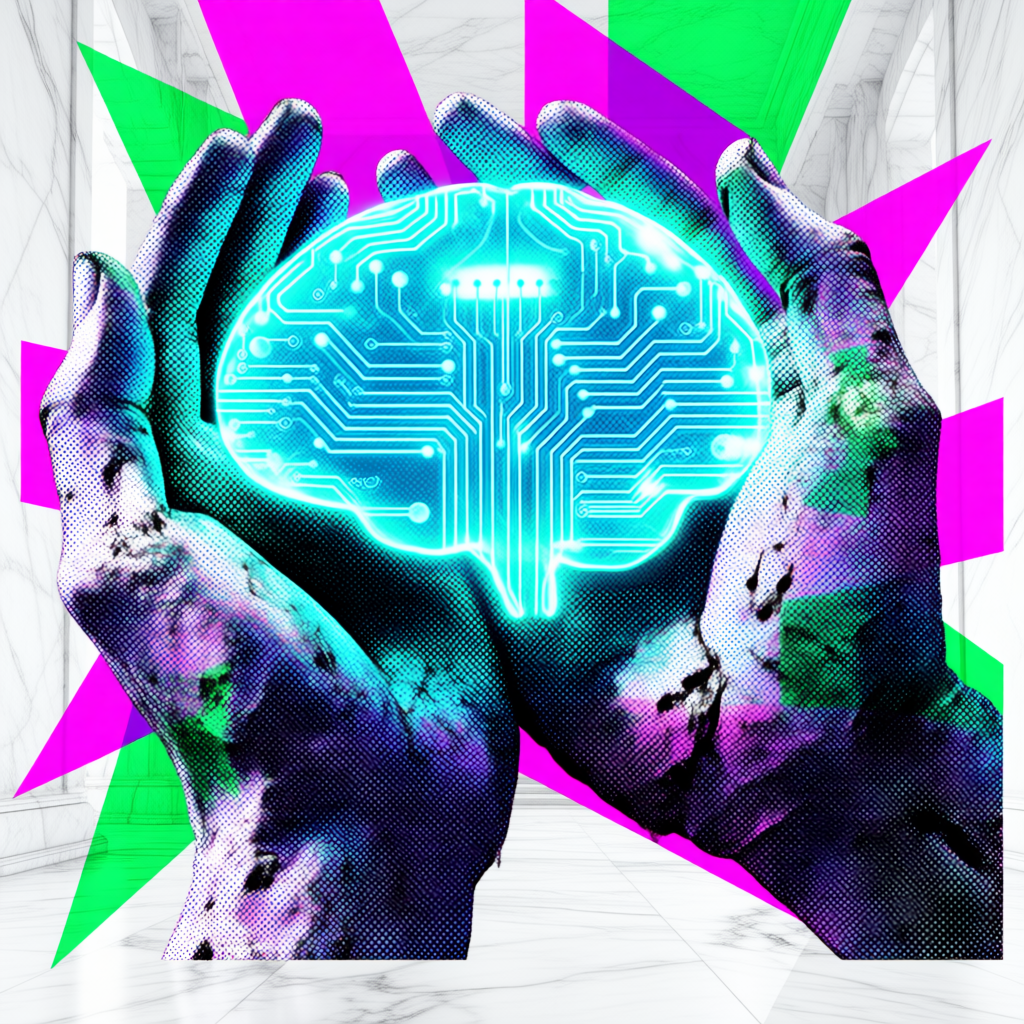
- President Angelo Maria Petroni argues that AI regulation must remain a human prerogative.
- The distinction between human-led regulation and machine-led application is critical for safety.
- The initiative brings together businesses, institutions, and experts to steer AI integration.
The debate over who should hold the steering wheel of artificial intelligence has shifted from theoretical ethics to urgent corporate governance. As enterprises integrate generative models into their core operations, the question is no longer whether AI should be regulated, but who is qualified to write the rules. In a recent high-level gathering in Milan, this tension took center stage during the launch of the AI Observatory by UniEticPMI.
The human prerogative in algorithmic control
During the event titled 'The Enterprise in the Era of AI: Businesses, Institutions and Experts for Responsible Innovation', Angelo Maria Petroni, President of the UniEticPMI AI Observatory, delivered a stark reminder about the boundaries between tool and governor. Petroni argued that the fundamental architecture of oversight must remain firmly in human hands, rejecting the notion that the technology could ever be its own watchdog.
The logic is straightforward: while machines excel at the execution of tasks and the deployment of applications, they lack the moral agency and contextual judgment required to establish legal and ethical frameworks. According to Petroni, allowing artificial intelligence to regulate itself would be an illogical and dangerous progression. The distinction is clear: humans create the regulations, and machines execute the applications.
Why self-regulation is a dangerous fallacy
The idea of AI self-regulation often surfaces in tech circles as a way to keep pace with the blistering speed of innovation. The argument is that human legislators are too slow to understand the nuances of neural networks, and therefore, the systems should be designed to monitor and correct their own biases. However, the UniEticPMI perspective suggests that this approach creates a circular dependency that undermines accountability.
If a machine regulates itself, the point of failure becomes opaque. When a human-led regulation is breached, there is a legal entity, a board of directors, or a government body to hold responsible. In a self-regulating loop, the 'reasoning' behind a regulatory decision is buried in a black box of weights and biases, making true transparency impossible. As noted in reports by Key4biz, the notion of AI governing its own constraints is described as 'quite strange', reflecting a broader skepticism toward removing the human element from the loop.
The role of the UniEticPMI Observatory
The launch of the AI Observatory in Milan is not merely a symbolic gesture but a strategic attempt to bridge the gap between institutional mandates and the practical needs of Small and Medium Enterprises (SMEs). By bringing together a coalition of business leaders and experts, the observatory aims to foster an environment where innovation does not come at the cost of ethics.
For the modern entrepreneur, the challenge is twofold. First, they must adopt AI to remain competitive in a global market. Second, they must ensure that this adoption does not expose the company to systemic risks or legal liabilities. The observatory seeks to provide the intellectual and practical framework to navigate this duality, ensuring that 'responsible innovation' is a measurable metric rather than a corporate buzzword.
Balancing agility with institutional oversight
One of the primary frictions in AI adoption is the perceived conflict between agility and regulation. Many CEOs fear that heavy-handed government oversight will stifle the very creativity that makes AI valuable. Yet, the UniEticPMI approach suggests that clear, human-defined boundaries actually provide the safety needed for bolder experimentation.
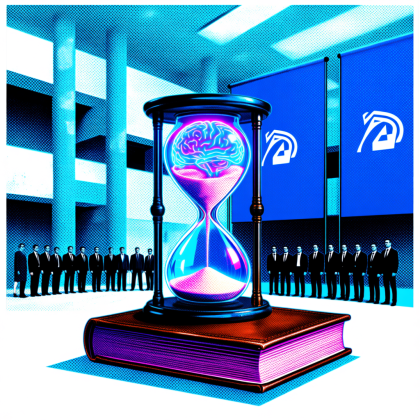
The regulation of artificial intelligence is made by human beings and the applications are made by machines. The last thing to do is to let artificial intelligence regulate itself.
By establishing a clear hierarchy—where the human defines the 'what' and the 'why', and the machine handles the 'how'—businesses can scale their operations without fearing an autonomous drift in their corporate logic. This framework prevents the 'drift' where AI systems optimize for efficiency at the expense of ethics, a common pitfall in unsupervised machine learning deployments.
Corporate responsibility in the machine age
The shift toward responsible AI requires a change in corporate culture. It is no longer sufficient for a CTO to report that a system is working; they must be able to explain how it complies with human-centric values. This requires a new set of skills within the C-suite: the ability to audit algorithmic outputs against ethical benchmarks.
The Milan event highlighted that the integration of AI into the business fabric must be intentional. This means implementing checkpoints where human judgment overrides algorithmic suggestions, particularly in areas affecting employment, data privacy, and client relations. The goal is a symbiotic relationship where the machine enhances human capability without replacing human responsibility.
Global implications for US and UK enterprises
For entrepreneurs in the United States and the United Kingdom, the warnings from the UniEticPMI Observatory resonate differently depending on the local regulatory climate. In the US, the approach has traditionally been more laissez-faire, relying heavily on industry standards and voluntary commitments from tech giants. However, the push for 'responsible innovation' seen in Europe is beginning to influence US discourse, as federal agencies move toward more structured guidelines to prevent algorithmic discrimination.
In the UK, the government has attempted to position itself as a 'pro-innovation' hub, avoiding the rigid, prescriptive nature of the EU AI Act in favor of a more flexible, sector-led approach. Despite these differences, the core principle remains the same: the danger of the 'black box'. Whether under the strict mandates of the EU or the flexible guidelines of the UK and US, the risk of allowing AI to self-regulate is a universal threat to corporate governance.
International firms operating across these jurisdictions must realize that the 'human-in-the-loop' model is becoming the global gold standard. Companies that rely solely on the internal 'safety filters' provided by AI vendors are exposing themselves to significant risk. The takeaway for the global market is clear: invest in human oversight capabilities today, or face a crisis of accountability tomorrow. The transition from AI as a tool to AI as a governor is a line that must not be crossed if businesses intend to remain sustainable and legally compliant.
FAQ
What is the main argument of Angelo Maria Petroni regarding AI?
He argues that AI regulation must be performed by humans, as machines are designed for applications, not for establishing the ethical and legal rules that govern them.
What is the UniEticPMI AI Observatory?
It is a newly launched initiative in Milan that brings together businesses, institutions, and experts to promote responsible innovation in the field of artificial intelligence.
Why is AI self-regulation considered dangerous?
Because it removes human accountability and creates a lack of transparency, as the reasoning behind regulatory decisions would be hidden within the machine's complex algorithms.
Sources: Key4biz, Quotidiano (2) ·
Scrivila qui: Susanna, l assistente AI di glacom, ti risponde via email con un approfondimento gratuito.
Nessuna consulenza personalizzata (finanziaria, legale o medica): solo informazione e fonti. Email usata solo per rispondere.
oppure scrivile su: WhatsApp · Telegram · SimpleX · Delta Chat · Email