



Google Project Suncatcher: Scaling AI Compute in Low Earth Orbit
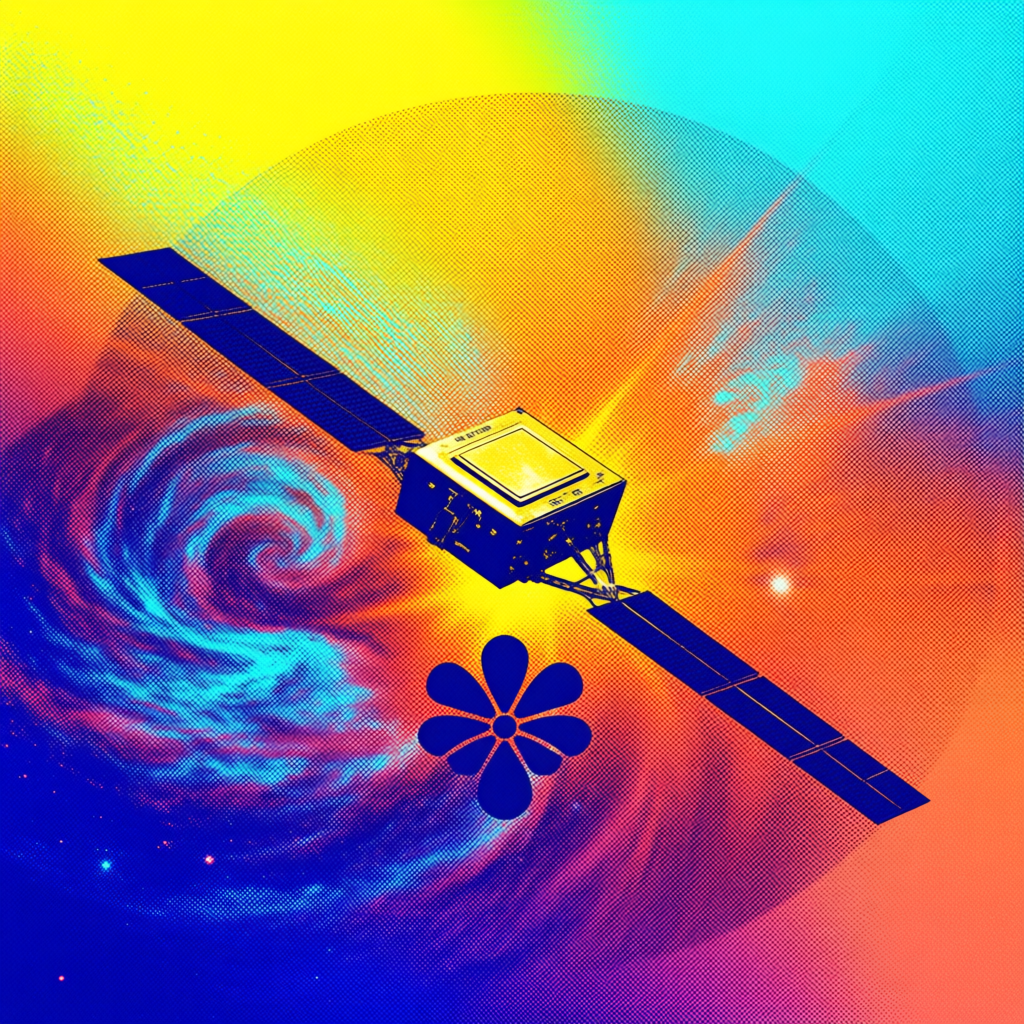
- Google is testing Tensor Processing Units (TPUs) in space to evaluate their performance under extreme radiation and thermal stress.
- The project aims to leverage near-constant sunlight in orbit, which can generate up to eight times more solar power than on Earth.
- Initial prototype satellites will launch via SpaceX's Transporter-18 mission in partnership with Planet.
- The long-term vision involves interconnected satellite constellations using free-space optical links to manage massive AI workloads.
The race for artificial intelligence supremacy has largely been fought on the ground, centered around massive data centers and the immense energy grids required to power them. However, Google is now shifting its gaze upward. With the introduction of Project Suncatcher, the company is exploring a research moonshot that seeks to move machine learning infrastructure into space, transforming low Earth orbit into a scalable compute hub.
This initiative is not an immediate commercial product but a long-term exploration of whether the vacuum of space can host the next generation of AI hardware. By deploying Tensor Processing Units (TPUs) onto solar-powered satellites, Google intends to bypass some of the terrestrial constraints that currently limit the scaling of large-scale AI models.
The solar advantage of orbital compute
The primary driver behind Project Suncatcher is the pursuit of energy efficiency and abundance. On Earth, solar energy is intermittent and subject to atmospheric interference. In low Earth orbit, the environment changes drastically. Satellites can access near-constant sunlight, which allows solar panels to be up to eight times more productive than their terrestrial counterparts.
This energy surplus is critical for AI workloads, which are notoriously power-hungry. By harnessing the Sun—the ultimate energy source in our solar system—Google envisions a future where the need for massive battery arrays is reduced and the capacity for computation is expanded. The goal is to create an interconnected network of satellites that can manage larger AI workloads while remaining in orbit, effectively creating a space-based cloud.
Engineering for the extremes of spaceflight
Moving high-performance silicon from a climate-controlled data center to a rocket is a monumental engineering challenge. The journey to orbit is violent. A typical trip to low Earth orbit lasts roughly ten minutes, but during that window, the spacecraft endures intense vibrations and sustained acceleration loads reaching up to 10g. For individual components like TPU chips, these forces can spike to between 50 and 100g.
To prepare for this, the Project Suncatcher team implemented rigorous vibration testing, shaking the hardware on all three axes to simulate the frequencies of a rocket launch. Beyond the launch, the environment of space presents a constant threat in the form of radiation. Cosmic rays and solar events can cause bitflips or permanent hardware failure in standard electronics.
To mitigate this, Google utilized the proton beam facility at UC Davis’s Crocker Nuclear Laboratory. By running AI workloads while exposing the hardware to radiation, researchers monitored how the chips handled errors. The initial findings indicate that the Trillium TPUs are remarkably resilient, surviving a total ionizing dose of radiation that exceeds standard expectations for such hardware.
Strategic partnerships and the road to 2027
Google is not venturing into orbit alone. The project relies on a strategic partnership with Planet and utilizes the Transporter-18 rideshare mission provided by SpaceX. This collaboration allows Google to launch prototype satellites designed specifically to gather in-orbit data on how TPUs handle thermal extremes and physical stress.
The timeline for Project Suncatcher is measured and deliberate, mirroring Google's previous moonshots in quantum computing and autonomous driving. The current phase focuses on hardware survival and data collection, with a significant milestone set for early 2027. This next phase will involve the launch of two prototype satellites to further validate the feasibility of orbital machine learning.
The vision is to ensure AI's profound benefits in key areas, from healthcare to scientific discovery, can reach everyone, far into the future.
A modular architecture for scalable AI
The long-term technical blueprint for Project Suncatcher involves more than just individual satellites. The research describes a system design based on compact, modular constellations. Rather than relying on a few massive satellites, Google is exploring a network of smaller, interconnected units.
These satellites would be linked via free-space optical links, enabling high-bandwidth communication between nodes in the constellation. This modular approach allows for easier scaling; as demand for compute grows, more satellites can be added to the network. This architecture not only increases the potential for scale but also minimizes the impact on terrestrial resources, potentially reducing the environmental footprint of AI training and inference on Earth.
What this means for global enterprises
For business leaders in the USA, UK, and other global markets, Project Suncatcher represents a fundamental shift in how we perceive infrastructure. While we are years away from a commercial space-based AI cloud, the implications for the tech ecosystem are significant.
In the United States, where the private space sector is booming, this signals a convergence between the AI race and the NewSpace economy. Companies specializing in satellite communications and orbital logistics may find new opportunities as AI hardware becomes a standard payload. In the UK, which has a strong heritage in satellite engineering and aerospace research, this could spur new collaborations between academic institutions and AI labs.
From a regulatory perspective, the deployment of AI infrastructure in space will likely fall under a complex web of international space law and national security frameworks. Unlike terrestrial data centers, which are governed by local laws and the EU AI Act in Europe, orbital compute will require new agreements regarding data sovereignty and the management of orbital debris. For the global entrepreneur, the takeaway is clear: the ceiling for AI scaling is no longer the physical limit of Earth's land or power grids, but the engineering capacity to survive the vacuum of space.
Project Suncatcher Technical Summary
| Key Challenge | Google's Solution/Approach |
|---|---|
| Energy Constraints | Solar-powered satellites in LEO (up to 8x more power) |
| Launch Stress | Three-axis vibration testing for 50-100g loads |
| Radiation | Proton beam testing at UC Davis Crocker Nuclear Lab |
| Inter-satellite Comms | Free-space optical links for high-bandwidth data |
FAQ
What is Project Suncatcher?
It is a Google research moonshot aimed at exploring the possibility of scaling machine learning infrastructure in space using solar-powered satellite constellations equipped with TPUs.
Why put AI in space instead of on Earth?
Space offers near-constant sunlight, allowing solar panels to be up to eight times more productive than on Earth, which provides the massive energy required for AI compute while reducing reliance on terrestrial resources.
When will the first prototypes be tested?
Google is preparing an initial test via the SpaceX Transporter-18 mission, with further milestones and the launch of two prototype satellites planned for early 2027.
How do the chips survive the radiation of space?
Google tested its Trillium TPUs at UC Davis’s Crocker Nuclear Laboratory using a proton beam to ensure the hardware could withstand total ionizing doses of radiation and manage bitflips during AI workloads.
Scrivila qui: Susanna, l assistente AI di glacom, ti risponde via email con un approfondimento gratuito.
Nessuna consulenza personalizzata (finanziaria, legale o medica): solo informazione e fonti. Email usata solo per rispondere.
oppure scrivile su: WhatsApp · Telegram · SimpleX · Delta Chat · Email