




Physical AI: The New Frontier of Industrial Automation and Robotics
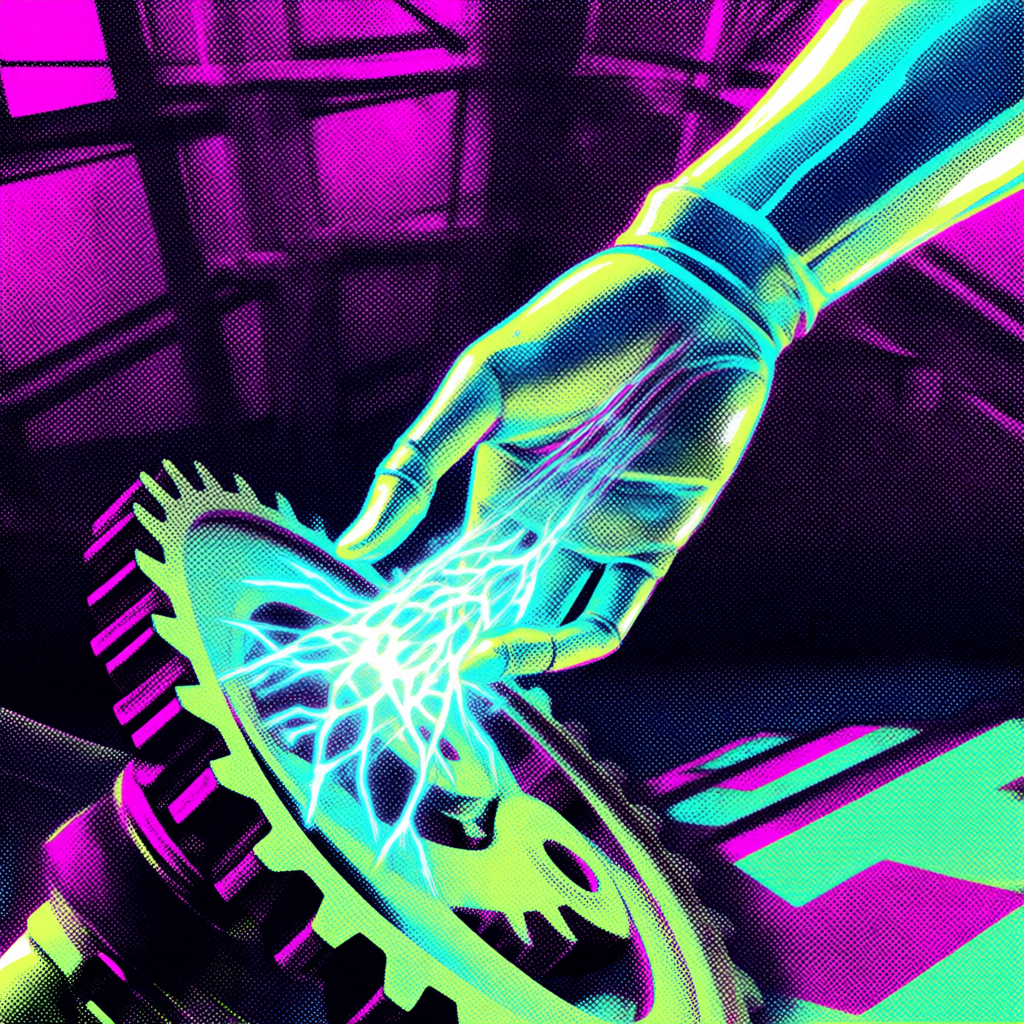
- Physical AI integrates perception, reasoning, and autonomous action into industrial robotics.
- Three robotic systems (rule-based, training-based, and context-based) are emerging to coexist in factories.
- Global leaders like Amazon and Foxconn are already deploying these technologies to counter labor shortages.
- Scaling requires a new technology stack and significant investment in workforce retraining.
The industrial landscape is currently navigating a period of intense volatility. Manufacturers and logistics providers are grappling with a convergence of rising operational complexity, chronic workforce shortages, and a global environment defined by uncertainty. In this context, the conversation around automation is shifting. It is no longer just about replacing a human arm with a mechanical one, but about embedding intelligence directly into the physical world. This evolution is what experts call Physical AI.
Unlike generative AI, which operates primarily in the digital realm of text and images, Physical AI focuses on robotic systems capable of perception, reasoning, and autonomous action. It represents the bridge between high-level cognitive computing and the tactile requirements of a factory floor. By integrating breakthroughs in hardware, vision systems, and artificial intelligence, companies are moving toward a state where machines do not just follow a script but understand their environment and adapt to it in real-time.
The Three Pillars of Modern Robotics
The transition to a fully intelligent industrial environment is not happening through a single technology, but through the coexistence of three distinct robotic systems. Each serves a specific purpose depending on the predictability of the task and the environment.
Rule-based robotics remain the bedrock of high-precision manufacturing. These systems operate on strict logic and predefined paths, ideal for tasks where variance is an enemy. However, the new era of Physical AI introduces training-based robotics, which learn through data and repetition, allowing them to handle a wider variety of objects and scenarios without manual reprogramming for every minor change.
The most advanced tier is context-based robotics. These systems possess the ability to perceive their surroundings and reason through a problem to determine the best course of action. This level of autonomy allows a robot to recognize an anomaly on a conveyor belt or adjust its grip on a fragile component based on visual feedback, mimicking human intuition and adaptability.
Real-World Adoption by Global Giants
While the theoretical framework is compelling, the practical application is already visible in the operations of the world's largest logistics and electronics firms. Companies such as Amazon and Foxconn are utilizing these innovations to reshape their operational flows. For these organizations, Physical AI is a strategic response to the fragility of global supply chains and the difficulty of finding skilled labor for repetitive or dangerous tasks.
By deploying intelligent robotics, these firms are achieving higher levels of resilience. The ability to scale operations rapidly without a linear increase in headcount allows them to maintain growth even during labor market contractions. These early adopters are proving that the integration of perception and action leads to measurable results in throughput and error reduction.
Beyond the Hardware: The Technology Stack
Implementing Physical AI requires more than simply purchasing advanced robots. According to a white paper by the World Economic Forum, scaling these systems requires a completely new technology stack. This stack must integrate high-speed connectivity, edge computing to reduce latency in decision-making, and sophisticated vision systems that allow robots to see and interpret the physical world with high fidelity.
Moreover, the shift necessitates a move toward ecosystem partnerships. No single company can master the entire chain of hardware, AI software, and industrial integration. The future of the factory floor will be defined by collaborations between AI startups, traditional robotics manufacturers, and software architects who can create a seamless flow of data from the sensor to the actuator.
The Human Element and Workforce Transformation
The rise of autonomous action in factories inevitably raises questions about the role of the human worker. However, the narrative is shifting from replacement to transformation. The complexity of Physical AI systems creates a new demand for a different set of skills. The workforce must evolve from performing the manual task to managing the systems that perform the task.
Investing in workforce transformation is not merely a social responsibility but a business necessity. Without a workforce capable of supervising, maintaining, and optimizing AI-driven robotics, the technology cannot reach its full potential. This involves retraining programs focused on robotics management, data analysis, and human-machine collaboration.
Physical AI is redefining automation, creating new opportunities for resilience and growth in an era of rising complexity and workforce shortages.
Industrial Efficiency and the McKinsey Perspective
The drive toward Physical AI is also being analyzed through the lens of enterprise efficiency. Insights presented by McKinsey emphasize that the goal is to unlock new capabilities that were previously impossible. This includes enhancing efficiencies in ways that traditional automation could not, such as dynamic rescheduling of tasks based on real-time demand or autonomous quality control that learns from every defect it encounters.
The integration of these systems allows industries to move from rigid production lines to flexible, adaptive cells. This flexibility is critical for the modern business model, where customization and short product lifecycles are the norm. Physical AI enables a level of agility that allows a manufacturer to pivot production without weeks of downtime for retooling.
Strategic Implications for International Enterprises
For entrepreneurs and executives in the USA, UK, and other global markets, the emergence of Physical AI signals a shift in competitive advantage. In the US and UK, where labor costs are high and the struggle to attract talent to manufacturing is acute, these technologies offer a pathway to reshoring production. By reducing the reliance on low-cost labor markets through intelligent automation, companies can bring production closer to their end consumers, reducing shipping costs and carbon footprints.
From a regulatory perspective, businesses must navigate a fragmented landscape. While the US currently favors a more decentralized, innovation-first approach to AI, the UK is positioning itself as a hub for AI safety and governance. Companies deploying Physical AI must ensure that their autonomous systems meet rigorous safety standards to prevent industrial accidents, as the autonomous nature of these robots introduces new liability challenges compared to rule-based machines.
The global market is now entering a race for industrial intelligence. Those who treat Physical AI as a mere tool upgrade will likely fall behind those who view it as a fundamental redesign of their business operations. The winners will be the firms that successfully blend the cognitive power of AI with the physical precision of robotics, supported by a workforce that is trained to lead the machines.
FAQ
What exactly is Physical AI?
Physical AI refers to robotic systems that integrate artificial intelligence, vision systems, and advanced hardware to achieve perception, reasoning, and autonomous action in the physical world.
How does it differ from traditional industrial robotics?
Traditional robotics are primarily rule-based and follow fixed paths. Physical AI introduces training-based and context-based systems that can learn from data and adapt to changing environments without manual reprogramming.
Which companies are already using this technology?
Global leaders such as Amazon and Foxconn are already implementing these innovations to improve operational resilience and address labor shortages.
What is required to scale Physical AI in a business?
Scaling requires a new technology stack, the formation of ecosystem partnerships, and a significant investment in transforming and retraining the workforce.
Scrivila qui: Susanna, l assistente AI di glacom, ti risponde via email con un approfondimento gratuito.
Nessuna consulenza personalizzata (finanziaria, legale o medica): solo informazione e fonti. Email usata solo per rispondere.
oppure scrivile su: WhatsApp · Telegram · SimpleX · Delta Chat · Email