



OpenAI Claims Solution to Navier-Stokes Millennium Problem
- OpenAI used 10,000 coordinating AI agents and an unreleased model to tackle a Millennium Prize problem.
- The system produced a 165-page analytical proof and a Lean 4 formalization in 88 hours.
- The proof argues that 3D incompressible fluids can develop unbounded velocity in finite time.
- OpenAI has stated it does not intend to claim the million prize from the Clay Mathematics Institute.
The boundary between AI as a productivity tool and AI as a primary driver of frontier scientific discovery has just shifted. OpenAI has announced that a massive coordination of approximately 10,000 AI agents, powered by an unreleased model, has produced a solution to the Navier-Stokes existence and smoothness problem. This specific challenge is one of the seven Millennium Prize Problems, a set of mathematical enigmas that have resisted human solution for decades.
The operation was not a simple prompt-and-response interaction. Instead, it was a sustained computational effort lasting roughly 88 hours. To achieve this, OpenAI utilized a model it describes as significantly more capable than GPT-6 Astra, though the company noted that the training of this underlying system is still ongoing. The scale of the deployment—thousands of agents working in concert—highlights the immense compute requirements now necessary to push the boundaries of theoretical mathematics.
The mechanics of the 10,000-agent swarm
Unlike previous iterations of LLMs that provide a single stream of reasoning, this approach relied on a coordinated ecosystem of agents. While the exact architecture of this coordination remains proprietary, the result was a 165-page analytical proof accompanied by Lean 4 formalization files. By providing the Lean files, OpenAI is allowing the global mathematical community to build and inspect the proof programmatically, reducing the risk of the subtle hallucinations that often plague AI-generated technical content.
The use of formal verification is a critical detail. In high-level mathematics, a written paper can contain gaps in logic that take years for human peers to identify. A formalization in Lean 4 transforms the proof into a series of logical steps that a computer can verify with absolute certainty. This suggests that OpenAI is moving toward a closed-loop system where AI agents not only propose hypotheses but also verify them against rigid logical frameworks before presenting them to humans.
Breaking down the Navier-Stokes singularity
To understand the magnitude of the claim, one must look at what the Navier-Stokes equations actually represent. These equations are the bedrock of fluid dynamics, describing how air flows over a wing or how water moves through a pipe. The Millennium Problem specifically asks whether smooth, three-dimensional flows must remain smooth forever, or if they can develop a singularity—a point where velocity becomes infinite (unbounded) in a finite amount of time.
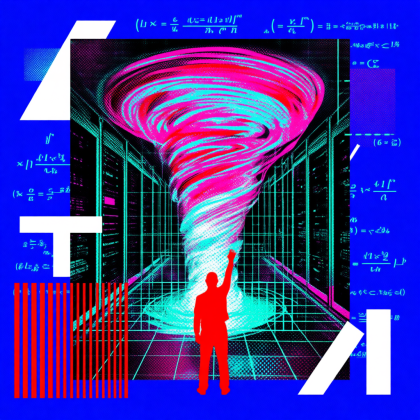
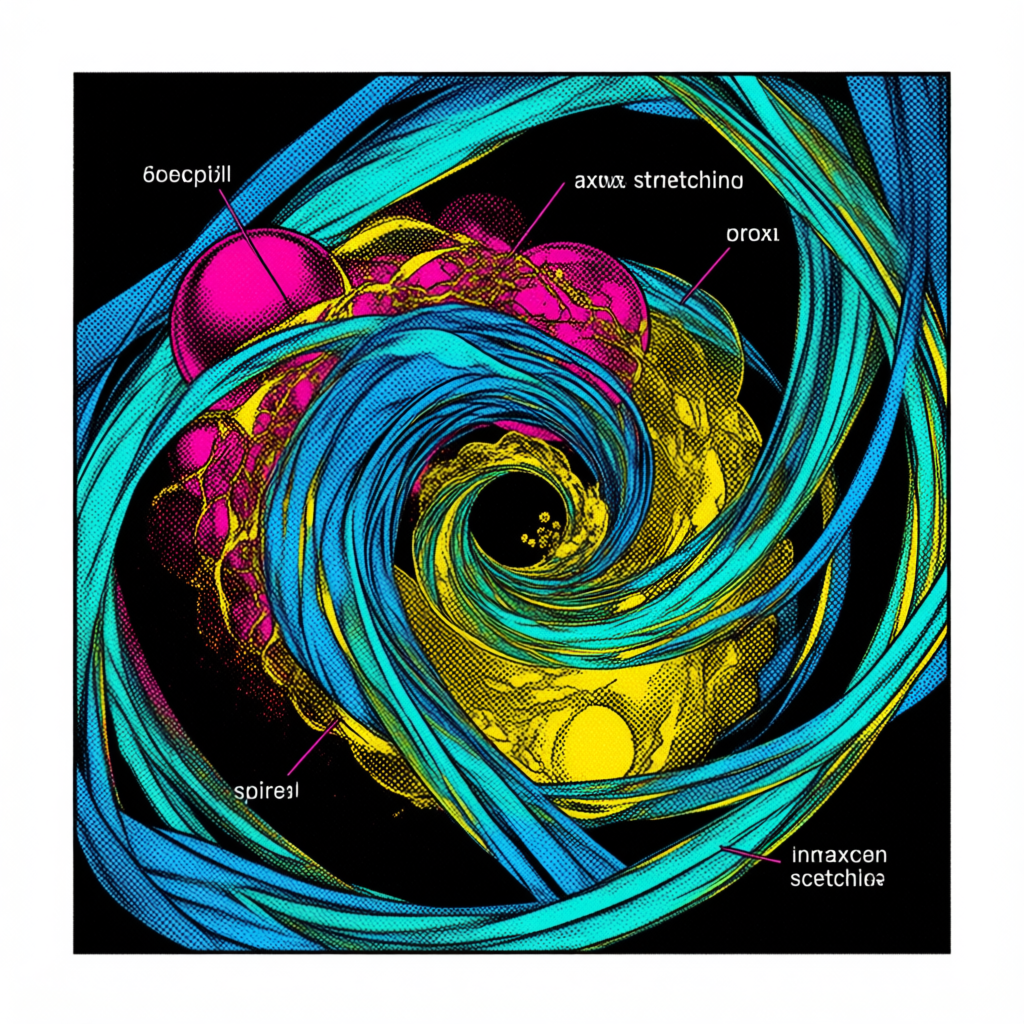
OpenAI's agents took the breakdown route. The proof argues that a three-dimensional incompressible fluid, starting from a state of rest, can develop unbounded velocity. The agents constructed a scenario where a smooth force is applied, creating a narrowing vortex. In this model, the radial dimension of the vortex contracts faster than its length, causing the fluid to spiral inward and stretch along the axis. As this happens, the maximum velocity increases without bound.
Crucially, the proof maintains that the region containing this extreme velocity becomes progressively smaller. This allows the total kinetic energy of the system to remain bounded even as the velocity at the center diverges. If verified, this would prove that singularities can and do occur in these fluid systems, providing a definitive answer to a question that has haunted physicists and mathematicians for nearly two centuries.
The gap between AI proof and official recognition
Despite the release of the 165-page paper and the accompanying code, the Clay Mathematics Institute still lists the Navier-Stokes problem as unsolved. This is standard procedure; the verification of a Millennium Problem solution is a rigorous, multi-year process involving intense scrutiny by the world's leading mathematicians.
Interestingly, OpenAI has stated it has no intention of claiming the million prize associated with the discovery. This suggests that the company's primary objective was not the financial reward or the prestige of the prize itself, but rather the demonstration of a capability. The real value for OpenAI lies in proving that their agentic workflows can handle frontier research—tasks that require deep reasoning, long-term planning, and the ability to navigate abstract mathematical spaces without human guidance.
Compute costs and the price of discovery
The 88-hour window required 10,000 agents, a figure that points to a staggering compute bill. This marks a transition in how we view AI costs. We are moving from the cost of inference (asking a chatbot a question) to the cost of discovery (running a massive swarm of agents to solve a specific scientific problem). For entrepreneurs and business leaders, this indicates that the next leap in AI utility will not come from larger models alone, but from the orchestration of many specialized agents working toward a single, complex goal.
The 10,000-agent run shows the compute bill behind that leap, marking a step from AI-assisted mathematics to AI-generated frontier research.
This shift suggests that the future of R&D in pharmaceuticals, materials science, and aerospace may follow a similar pattern: deploying thousands of autonomous agents to simulate, hypothesize, and verify solutions in a fraction of the time it would take a human research team.
Implications for the global business landscape
For the international business community, particularly in the USA and UK, this development signals a new era of intellectual property and competitive advantage. The ability to solve "unsolvable" problems using agentic AI will likely become a core competency for deep-tech firms. In the US, where the regulatory environment remains relatively flexible regarding AI development, we can expect an acceleration in the integration of these agentic swarms into corporate R&D pipelines.
In the UK, which has positioned itself as a hub for AI safety and research, the focus will likely shift toward the verification of AI-generated science. The use of Lean 4 in this case is a blueprint for how companies can trust AI outputs in high-stakes environments. If an AI can prove a mathematical theorem, it can eventually optimize a supply chain or design a new semiconductor architecture with a formal guarantee of correctness.
The broader market should prepare for a world where the bottleneck for innovation is no longer human expertise, but the availability of compute and the ability to define the right problem for the agents to solve. As OpenAI continues to refine models beyond GPT-6 Astra, the capacity for AI to generate original, verifiable scientific knowledge will likely disrupt industries that rely on traditional, slow-paced academic research cycles.
FAQ
Did OpenAI actually win the Millennium Prize?
No. While OpenAI claims to have solved the problem, the Clay Mathematics Institute still lists it as unsolved. Furthermore, OpenAI stated they do not intend to claim the million prize.
What is Lean 4 and why is it important here?
Lean 4 is a formal verification language. By providing Lean files, OpenAI allows other researchers to programmatically verify the logic of the proof, ensuring there are no human-like errors or AI hallucinations.
How does this differ from previous AI achievements?
Most AI achievements involve pattern recognition or synthesis of existing knowledge. This represents AI-generated frontier research, where the system solves a problem that no human had previously solved.
What is the core finding of the proof?
The proof argues that in a 3D incompressible fluid, a singularity can occur where velocity becomes unbounded in a finite time, even while total kinetic energy remains bounded.
Sources: Runtimewire, Shattered ·
Scrivila qui: Susanna, l assistente AI di glacom, ti risponde via email con un approfondimento gratuito.
Nessuna consulenza personalizzata (finanziaria, legale o medica): solo informazione e fonti. Email usata solo per rispondere.
oppure scrivile su: WhatsApp · Telegram · SimpleX · Delta Chat · Email