



Securing Siemens S7 PLCs: CISA Warns Against AI-Driven Threats
- CISA, NSA, and FBI warn of active targeting of Siemens S7 series PLCs using AI-generated exploitation scripts.
- Threat actors leverage internet scanning and libraries like Snap7 to exploit TCP port 102 and misconfigurations.
- Indiscriminate security hardening risks production outages by disconnecting HMIs and remote I/O.
- Experts urge a dependency-led change plan over generic checklists to protect critical infrastructure.
The intersection of industrial automation and artificial intelligence has introduced a volatile new variable into the security of critical infrastructure. A joint cybersecurity advisory, AA26-231A, issued by CISA, the NSA, the FBI, the Department of Energy, and the EPA, has put operators on high alert regarding the active targeting of Siemens S7 Series programmable logic controllers (PLCs).
This is not a standard vulnerability notice. Unlike typical alerts that point to a single "zero-day" flaw requiring a specific patch, this advisory highlights a systemic risk born from the combination of legacy misconfigurations and the modern acceleration of attack tools. The threat is widespread, covering the S7-200, S7-300, S7-400, S7-1200, and S7-1500 series, including the F-series safety controllers used in high-risk environments.
The role of AI in industrial reconnaissance
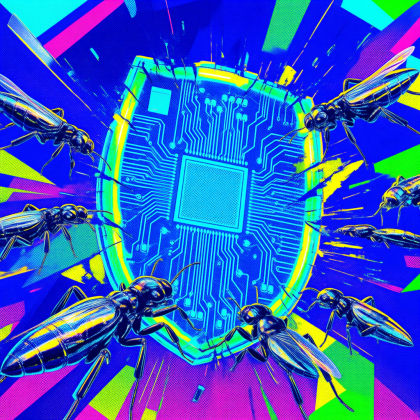
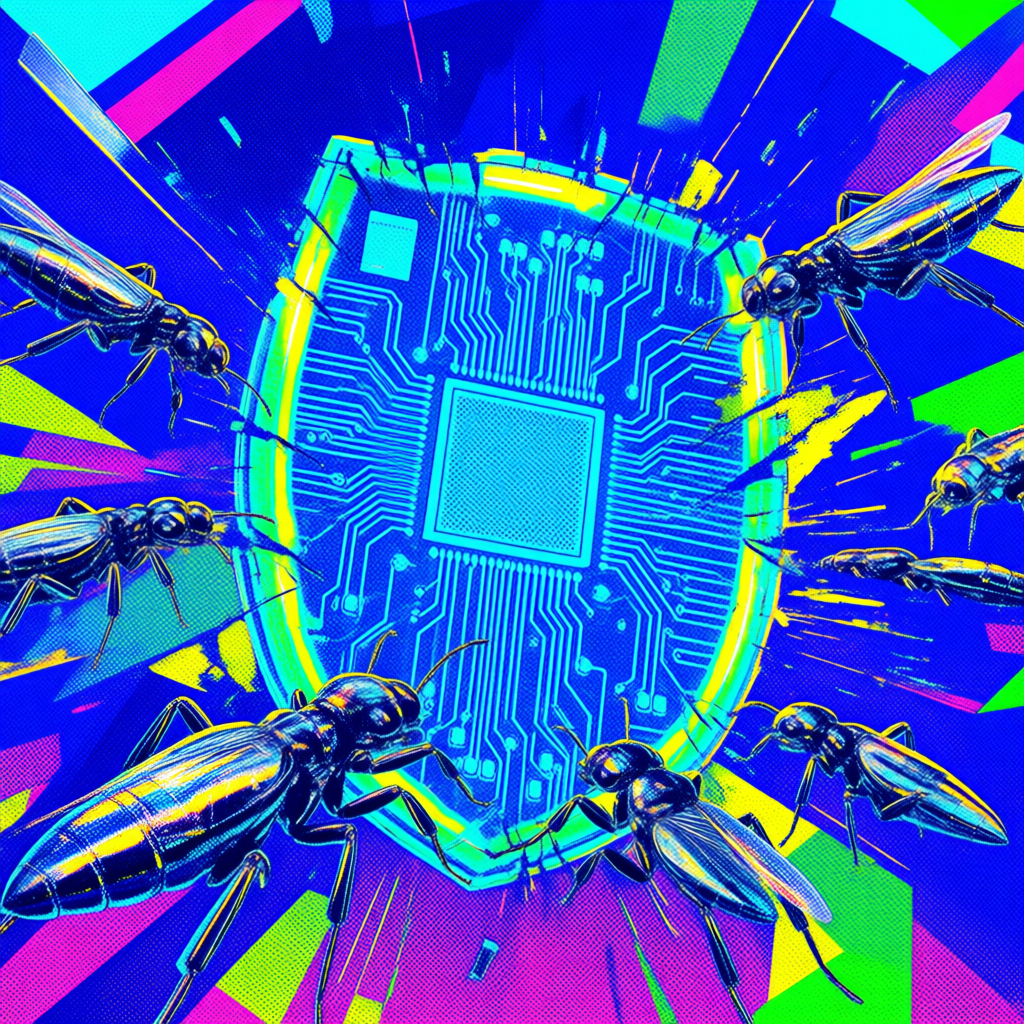
The most alarming aspect of the current threat landscape is the democratization of cyber warfare. Threat actors are no longer relying solely on elite state-sponsored teams with vast resources. Instead, they are utilizing AI-assisted scripts and public libraries, such as Snap7 and python-snap7, to automate the discovery and exploitation of industrial targets.
By combining internet-scanning services with AI-generated code, attackers can rapidly identify exposed PLCs that are poorly segmented or running outdated software. These tools communicate via S7comm, typically over TCP port 102, allowing attackers to read or write PLC memory, alter configuration data, and manipulate control logic. While AI is not the underlying weakness—the vulnerabilities are existing misconfigurations—it acts as a force multiplier, allowing attackers to scale their operations with unprecedented speed and precision.
Why generic hardening is a production risk
For a standard IT administrator, disabling an unused service on a server is a routine security task. In the Operational Technology (OT) world, this approach can be catastrophic. A service that appears unused to a security auditor may actually be the sole conduit for remote I/O traffic or the primary path for a Human-Machine Interface (HMI) to supply critical process values.
If an operator implements a generic security checklist without a deep understanding of the plant's specific dependencies, they risk causing the very outage they are trying to prevent. Disconnecting a protocol or updating firmware without a dependency-led plan can lead to an immediate loss of visibility or control over the industrial process, potentially resulting in physical damage or production downtime.
Strategic mitigations for OT operators
To counter these threats without compromising uptime, the authoring agencies and industry experts suggest a prioritized approach to hardening. The goal is to reduce the attack surface while maintaining the integrity of the production line.
The first line of defense is perimeter control. Operators are encouraged to block TCP port 102 at the network perimeter before attempting to modify internal PLC settings. This prevents external actors from utilizing internet-scanning tools to find the controllers. Once the perimeter is secure, the focus shifts to internal hygiene: inventorying all S7 series devices, applying critical patches, and strengthening access controls.
The warning is not a patch notice; it is a call for a comprehensive review of how industrial controllers are exposed to the world and how they are managed internally.
Siemens has reinforced this stance through its ProductCERT bulletin SSB-104599, emphasizing that the threat stems from misconfigurations already addressed in their existing guidance. This means the solution is not waiting for a "magic" update, but rather implementing protected networks, strong passwords, and model-specific documentation.
Targeted sectors and the vulnerability map
The advisory specifically identifies several U.S. critical infrastructure sectors that are being most aggressively targeted. These include:
- Critical Manufacturing and Commercial Facilities
- Energy and Chemical sectors
- Water and Wastewater systems
- Food and Agriculture
The vulnerability is not limited to a single version of the S7 software but spans multiple generations of hardware. Because these different generations do not provide identical security functions, a one-size-fits-all approach to security is impossible. Each CPU variant requires a tailored strategy to ensure that security hardening does not break the functional safety of the system.
Moving toward dependency-led security
The shift from "checklist security" to "dependency-led security" represents a fundamental change in how CISOs and OT managers must collaborate. Validating whether a service is truly unused requires a combination of engineering configuration reviews and active traffic analysis. Only after confirming that a service does not support an HMI, an engineering station, or remote I/O should it be disabled.
This methodology requires a tighter loop between the security team and the plant engineers. The security team provides the threat intelligence—such as the warnings found in HazeTec's analysis—while the engineers provide the operational context to ensure that the cure is not worse than the disease.
Global implications for US and UK enterprises
For businesses operating in the USA and UK, this advisory underscores a critical shift in the regulatory and risk landscape. In the US, the focus on critical infrastructure resilience is intensifying, with agencies like CISA providing granular guidance to prevent systemic failures in energy and water sectors. The use of AI-generated scripts by attackers means that the "barrier to entry" for disrupting industrial processes has plummeted, making even mid-sized enterprises viable targets.
In the UK, where industrial digitalization is accelerating, the risk of internet-exposed PLCs is particularly acute. Companies must align their OT security with broader national cybersecurity frameworks, moving away from the "air-gap" myth. Since many S7 controllers are now integrated into broader business networks for data analytics, the risk of lateral movement from an IT breach to an OT failure is a primary concern.
Ultimately, for the international entrepreneur and business leader, this news highlights that AI is not just a tool for productivity, but a weapon for reconnaissance. The ability to automate the discovery of misconfigured industrial hardware means that "security through obscurity" is officially dead. Companies must now invest in visibility and dependency mapping to protect their physical assets from digital threats.
FAQ
Is there a single patch that fixes the Siemens S7 vulnerability?
No. The CISA advisory and Siemens state that the threat arises from misconfigurations and known vulnerabilities across various models, not a single new flaw. Operators must apply a combination of patches, network segmentation, and configuration changes.
Why can't I just disable all unused services on my PLC?
In OT environments, services that seem unused may be critical for HMI communication or remote I/O. Disabling them without a dependency-led plan can cause immediate production outages.
How is AI being used by attackers in this scenario?
Attackers use AI to generate exploitation scripts and leverage internet-scanning services to find exposed PLCs more efficiently, using libraries like Snap7 to communicate with the devices.
Scrivila qui: Susanna, l assistente AI di glacom, ti risponde via email con un approfondimento gratuito.
Nessuna consulenza personalizzata (finanziaria, legale o medica): solo informazione e fonti. Email usata solo per rispondere.
oppure scrivile su: WhatsApp · Telegram · SimpleX · Delta Chat · Email