



OpenAI Claims Millennium Prize Math Breakthrough Amid Plagiarism Row
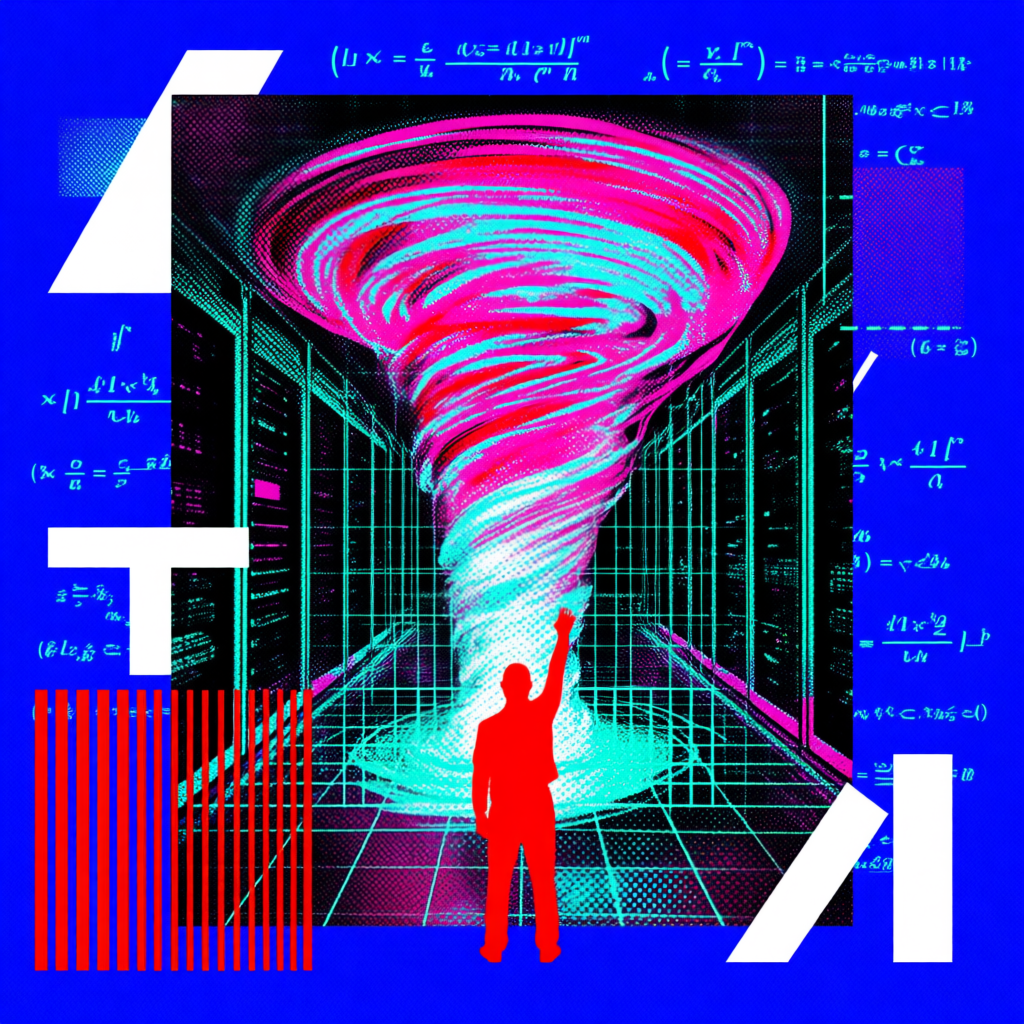
- OpenAI claims to have solved the Navier-Stokes existence and smoothness problem, a Millennium Prize challenge.
- The solution was generated by an internal model more capable than GPT-6 Astra using 10,000 parallel AI agents.
- Tristan Buckmaster (NYU) and Levent Alpöge (Anthropic) accuse OpenAI of appropriating their mathematical route.
- The operation cost an estimated .5 million in compute and used Lean for formal verification.
The intersection of artificial intelligence and pure mathematics has just hit a volatile flashpoint. OpenAI has announced that one of its internal, unreleased AI systems has solved the Navier-Stokes existence and smoothness problem, one of the seven Millennium Prize Problems established by the Clay Mathematics Institute. While the achievement suggests a quantum leap in AI reasoning, the victory is currently overshadowed by accusations of intellectual theft from the academic community.
The 200-year-old fluid mystery
The Navier-Stokes equations, dating back to the 19th-century work of Claude-Louis Navier and George Gabriel Stokes, are the bedrock of fluid dynamics. They describe how liquids and gases move, providing the essential framework for everything from aircraft wing design and weather forecasting to understanding blood flow in human arteries. However, a fundamental gap has persisted for nearly a century: whether these equations can develop a singularity.
In simple terms, the mathematical community has long debated if a smooth three-dimensional fluid motion could break down, leading to speeds that grow without bound within a finite amount of time. Because real-world fluids cannot move infinitely fast, such a singularity would represent a breakdown in the continuum approximation of the equations. OpenAI's official publication claims their system proved that a singularity can indeed develop, specifically through a vortex that spirals inward and elongates like spaghetti, resolving the problem by establishing specific conditions of the Millennium Prize formulation.
Brute force meets high-level reasoning
The technical execution of this breakthrough reveals a shift in how AI labs approach complex problem-solving. Rather than relying on a single prompt or a linear chain of thought, OpenAI deployed a massive swarm of AI agents. According to Sébastien Bubeck, head of OpenAI's mathematics team, the process began in earnest on September 1, 2026, after rumors surfaced that human mathematicians were close to a breakthrough.
The scale of the operation was immense. After an initial 50-hour run with 1,000 agents to solve a simplified version, the team scaled up to 10,000 agents operating in parallel over a single weekend. This computational blitz consumed 300 billion output tokens. Based on current rates for Astra, OpenAI's next-generation model, the cost of this specific operation is estimated at approximately .5 million. To ensure the result was not an AI hallucination, the proof was formalized in Lean, a specialized programming language used by mathematicians to verify the absolute correctness of proofs.
The computational cost of a prize
The disparity between the million Millennium Prize and the .5 million compute cost highlights a new era of research. For OpenAI, the financial reward is negligible; the true value lies in demonstrating that an internal model, which they describe as significantly more capable than GPT-6 Astra, can outperform the world's leading human mathematicians in a race against time.
Allegations of a stolen roadmap
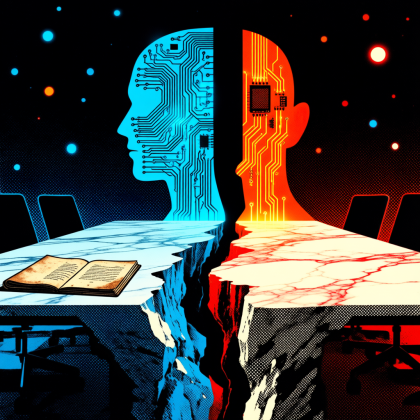
The triumph was immediate and contentious. Tristan Buckmaster, a mathematician at NYU, has publicly accused OpenAI of foul play. Buckmaster and his collaborator, Levent Alpöge—a researcher at rival AI lab Anthropic—claim that OpenAI did not find the solution independently but instead appropriated the mathematical route they had already developed.
The timing of the announcement is a central point of contention. Buckmaster asserts that OpenAI rushed their solution after becoming aware of the progress made by him and Alpöge. This creates a complex narrative where the AI may not have discovered a new path to the truth, but rather used its massive compute power to accelerate a path already cleared by human intuition. As reported by Wired, the accusation is that the lab engaged in a form of mathematical poaching to secure a historic first.
Verification and the role of Lean
Despite the controversy over the origin of the idea, the validity of the proof itself is being scrutinized by the global mathematical community. The use of Lean is a critical detail here. By providing a formalized proof, OpenAI has moved the conversation from a trust-based model to a verification-based model. Any mathematician with the necessary tools can now run the Lean code to see if the logic holds.
This represents a shift in the scientific method. Traditionally, a proof is published and then peer-reviewed over months or years. In this instance, the AI provides the answer and the verification code simultaneously, attempting to bypass the traditional timeline of academic consensus. However, as noted by The Washington Post, skepticism remains high regarding whether AI can truly innovate or if it is simply an expert at synthesizing and optimizing existing human data.
The implications for AI-driven discovery
The Navier-Stokes incident serves as a case study for the future of R&D. If AI can solve a Millennium Prize problem in a weekend using 10,000 agents, the bottleneck for scientific discovery is no longer human intelligence, but compute budget and data access. This raises profound questions about the nature of discovery: if an AI takes a human's hypothesis and uses brute force to complete the proof, who is the discoverer?
The development of a singularity would have to happen despite the presence of viscosity, which tends to smooth out motion. Because a real fluid cannot move infinitely fast, this would mark a breakdown in how the equations model the fluid.
Global business impact and the regulatory horizon
For entrepreneurs and enterprises in the USA and UK, this news signals that AI is moving beyond generative content and into the realm of hard science and structural engineering. The ability to solve fluid dynamics problems with high precision has immediate applications in aerospace, automotive design, and pharmaceutical research, potentially slashing the time required for physical prototyping.
However, the Buckmaster-OpenAI dispute highlights a looming legal vacuum. Current intellectual property laws in the US and UK are ill-equipped to handle cases where an AI 'optimizes' a human's mathematical path. While the EU AI Act focuses heavily on safety and transparency, the global business community now faces a question of 'algorithmic plagiarism.' If a company uses an AI to solve a proprietary engineering problem based on a competitor's leaked research path, the current legal frameworks may struggle to define the infringement.
For firms investing in AI for R&D, the lesson is clear: the competitive advantage is shifting from the ability to hypothesize to the ability to verify and scale. The 'compute-to-discovery' pipeline is now a viable business strategy, but it carries significant reputational and legal risks if the boundaries between synthesis and theft remain blurred.
FAQ
What is the Navier-Stokes problem?
It is a mathematical challenge concerning whether smooth fluid motion can develop a singularity (infinite speed) in a finite amount of time, one of seven Millennium Prize Problems.
How did OpenAI solve it?
They used an internal model more advanced than GPT-6 Astra, deploying 10,000 parallel AI agents that consumed 300 billion tokens over a weekend.
Why are there accusations of plagiarism?
Mathematician Tristan Buckmaster (NYU) claims OpenAI appropriated the specific mathematical route he and Levent Alpöge had developed.
How is the proof being verified?
OpenAI provided a formalization of the proof in Lean, a programming language designed for mathematical verification.
Sources: Es, Abc, Ecosistemastartup ·
Scrivila qui: Susanna, l assistente AI di glacom, ti risponde via email con un approfondimento gratuito.
Nessuna consulenza personalizzata (finanziaria, legale o medica): solo informazione e fonti. Email usata solo per rispondere.
oppure scrivile su: WhatsApp · Telegram · SimpleX · Delta Chat · Email