



Physical AI: The New Frontier of Autonomous Industrial Robotics
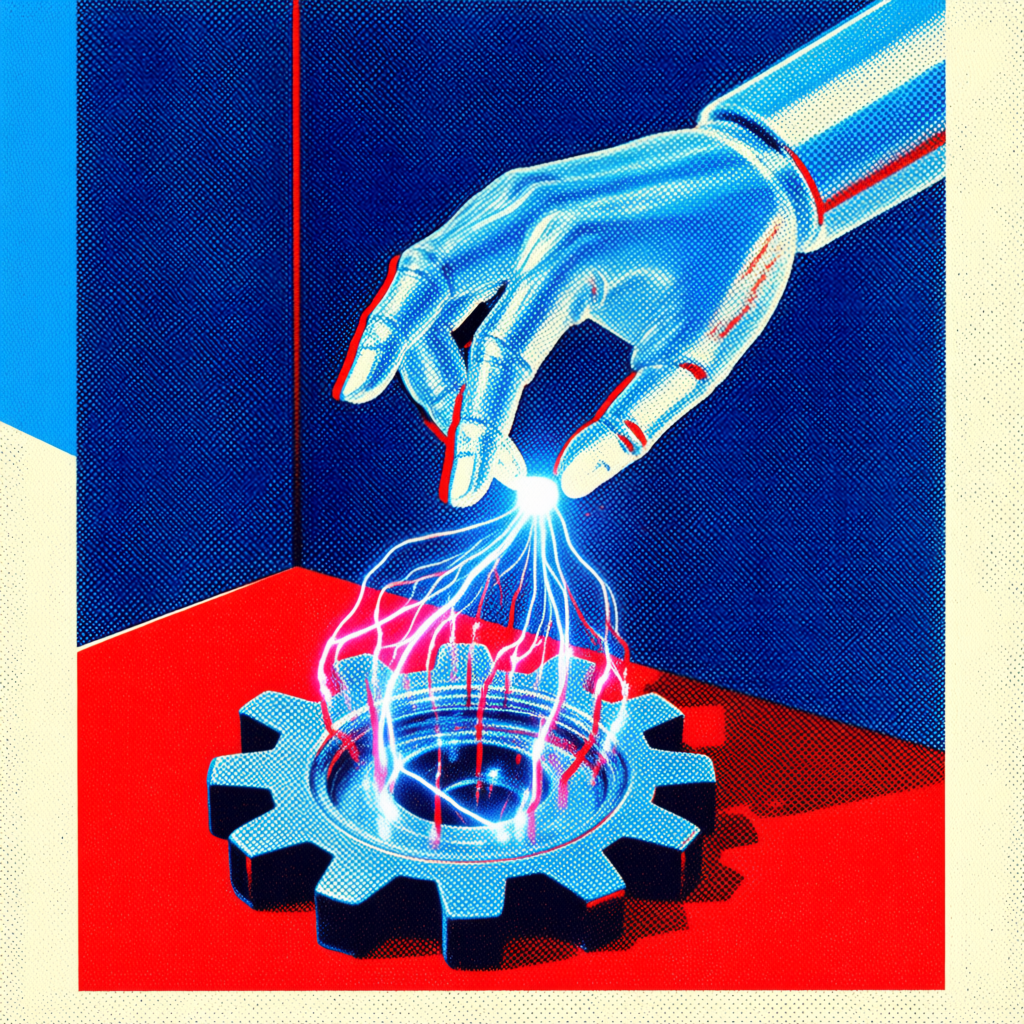
- Physical AI integrates reasoning and perception directly into hardware, moving beyond rigid, pre-programmed automation.
- Market projections suggest a value of 121 billion euros in European manufacturing and 69 billion in logistics by 2035.
- New solutions from ABB and Industrial Next are slashing commissioning times from weeks to minutes.
- The technology enables robots to handle high-variability tasks, such as fashion logistics and complex assembly.
For decades, industrial automation has operated on a simple, rigid premise: repeat a pre-programmed trajectory with absolute precision. While this approach revolutionized the automotive assembly line, it remained blind to the chaos of the real world. A shifted component, a deformed package, or a human operator stepping into a workspace could bring an entire line to a grinding halt. Today, a paradigm shift known as Physical AI is dismantling this rigidity, moving intelligence out of digital dashboards and directly into the mechanical limbs of the factory floor.
Unlike traditional AI, which analyzes data in the cloud to provide predictions or generate text, Physical AI combines perception, reasoning, and action within a material environment. It allows machines to perceive their surroundings, make autonomous decisions, and adapt their behavior in real-time. As Jensen Huang, CEO of Nvidia, suggests, this evolution is pushing every industrial company toward becoming a robotics company.
Beyond the limits of rigid automation
The fundamental difference between legacy automation and Physical AI lies in the ability to handle variability. A traditional robot is an executor of rules; a Physical AI system is an interpreter of context. In a typical manufacturing plant, variables such as mechanical tolerances, vibrations, and small batch sizes create a level of complexity that rigid programming cannot manage efficiently.
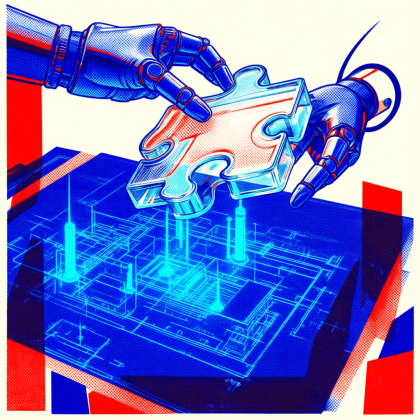
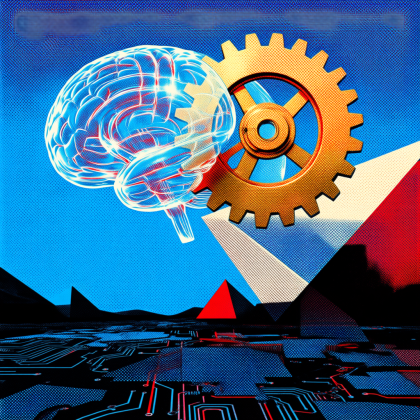
Physical AI transforms these challenges into manageable systems. By integrating advanced sensors (the eyes), reasoning models (the brain), and dexterous actuators (the hands), robots can now perform tasks like sorting, picking, and quality control in environments that are imperfect and unpredictable. This shift is not merely a software update but an architectural overhaul that bridges the gap between Operational Technology (OT) and Information Technology (IT), fostering a more resilient and sustainable production ecosystem.
The economic impact on global manufacturing
The financial implications of this transition are staggering. According to PwC estimates, the adoption of Physical AI in the European manufacturing sector is projected to reach a value of 121 billion euros by 2035, while the logistics sector is expected to hit 69 billion euros in the same timeframe. The potential for efficiency gains is equally significant, with some projections indicating productivity increases of up to 50%.
This growth is driven by the need for flexible production. In an era of hyper-customization and volatile supply chains, the ability to pivot production lines quickly is a competitive necessity. Physical AI allows for a transition from isolated automated islands to a connected ecosystem of assets that can collaborate and adapt without requiring a complete system overhaul for every new product iteration.
Solving the variability puzzle in logistics
One of the most difficult sectors to automate has always been fashion and apparel logistics due to the extreme variability of fabrics, packaging, and product shapes. ABB Robotics has addressed this by launching an end-to-end vision-based Physical AI solution. By integrating the AI Robot Trainer into its Fashion Inductor module, the company is enabling robots to handle high-variability sorting with a throughput of up to 1,300 items per hour per cell and picking accuracy exceeding 99.5%.
Physical AI fundamentally changes what robots can do in industrial applications, especially in those that have traditionally been difficult to automate because of high variability.
The impact on the deployment phase is perhaps the most disruptive element. The AI Robot Trainer reduces engineering and commissioning effort by up to 75%. By utilizing pre-trained, fashion-specific AI vision models, system integrators can deploy and scale applications faster and with significantly less risk, removing the need for deep specialist AI expertise on the factory floor.
Rapid retooling and the end of weeks-long downtime
While ABB focuses on logistics, other innovators are targeting the core of the factory floor. San Francisco-based startup Industrial Next is tackling the problem of fixed automation. Traditionally, changing a production line to accommodate a new task could take weeks or months of reprogramming and physical retooling. Industrial Next utilizes proprietary foundation models that link vision, task context, and motion to allow robotic stations to switch tasks in minutes.
Founded by former Tesla engineers Lukas Pankau and Allen Pan, the company aims to bridge the divide between high-level machine learning and antiquated factory equipment. Their approach to dexterous manipulation is currently being evaluated in partnership with the BMW Group Technology Office. This move toward flexible automation represents a shift toward a future where the factory is as agile as the software that manages it.
The technological stack driving the revolution
The transition to Physical AI is supported by a convergence of several key technologies that allow machines to understand the laws of physics and interact with the world naturally. This includes:
- Deep Learning and Predictive Maintenance: Utilized by players like Fanuc to anticipate failures and optimize movements.
- Imitation Learning: Championed by Universal Robots via their AI Accelerator, allowing robots to learn tasks by observing humans.
- Visual SLAM and OmniCore: ABB's approach to spatial awareness and control.
- Digital Twins: Exact software replicas that accelerate commissioning and allow for the integration of third-party components like grippers without risking physical hardware.
These tools collectively allow robots to manipulate flexible objects and interact with human workers through natural language, bypassing the need for complex, line-by-line coding.
Strategic implications for US and UK enterprises
For entrepreneurs and industrial leaders in the USA and UK, the rise of Physical AI signals a critical window for capital investment. In the US, where labor shortages in manufacturing remain a systemic challenge, the ability to deploy autonomous systems that require minimal programming can drastically lower the barrier to entry for automation.
From a regulatory perspective, US firms currently benefit from a more flexible framework compared to the EU's AI Act, allowing for faster iterative testing of autonomous agents in industrial settings. However, UK firms, navigating a post-Brexit regulatory landscape, have an opportunity to establish their own standards for robotic safety and AI integration, potentially positioning themselves as a hub for high-tech manufacturing services.
The primary risk for Western enterprises is no longer the cost of the hardware, but the speed of adoption. As commissioning times drop from weeks to minutes, the competitive advantage will shift from those who own the most robots to those who can reconfigure their production capabilities the fastest. The integration of Physical AI is transforming the factory from a static asset into a dynamic software-defined environment.
FAQ
What is the main difference between traditional industrial robots and Physical AI?
Traditional robots follow rigid, pre-programmed paths and struggle with changes in their environment. Physical AI enables robots to perceive their surroundings, reason through tasks, and adapt their actions in real-time to handle variability.
How much can Physical AI improve industrial productivity?
Some industry data suggests that the implementation of Physical AI can lead to productivity increases of up to 50%.
Which industries are seeing the fastest adoption of Physical AI?
Manufacturing and logistics are the primary drivers, with specific breakthroughs in fashion logistics and automotive assembly.
Does Physical AI require a team of AI specialists to operate?
Not necessarily. New solutions, such as ABB's AI Robot Trainer, are designed to reduce the need for specialist expertise, cutting commissioning effort by up to 75%.
Sources: Innovationpost (2), Industriaitaliana ·
Scrivila qui: Susanna, l assistente AI di glacom, ti risponde via email con un approfondimento gratuito.
Nessuna consulenza personalizzata (finanziaria, legale o medica): solo informazione e fonti. Email usata solo per rispondere.
oppure scrivile su: WhatsApp · Telegram · SimpleX · Delta Chat · Email