Boston Dynamics Names Rohit Prasad CEO to Scale Physical AI
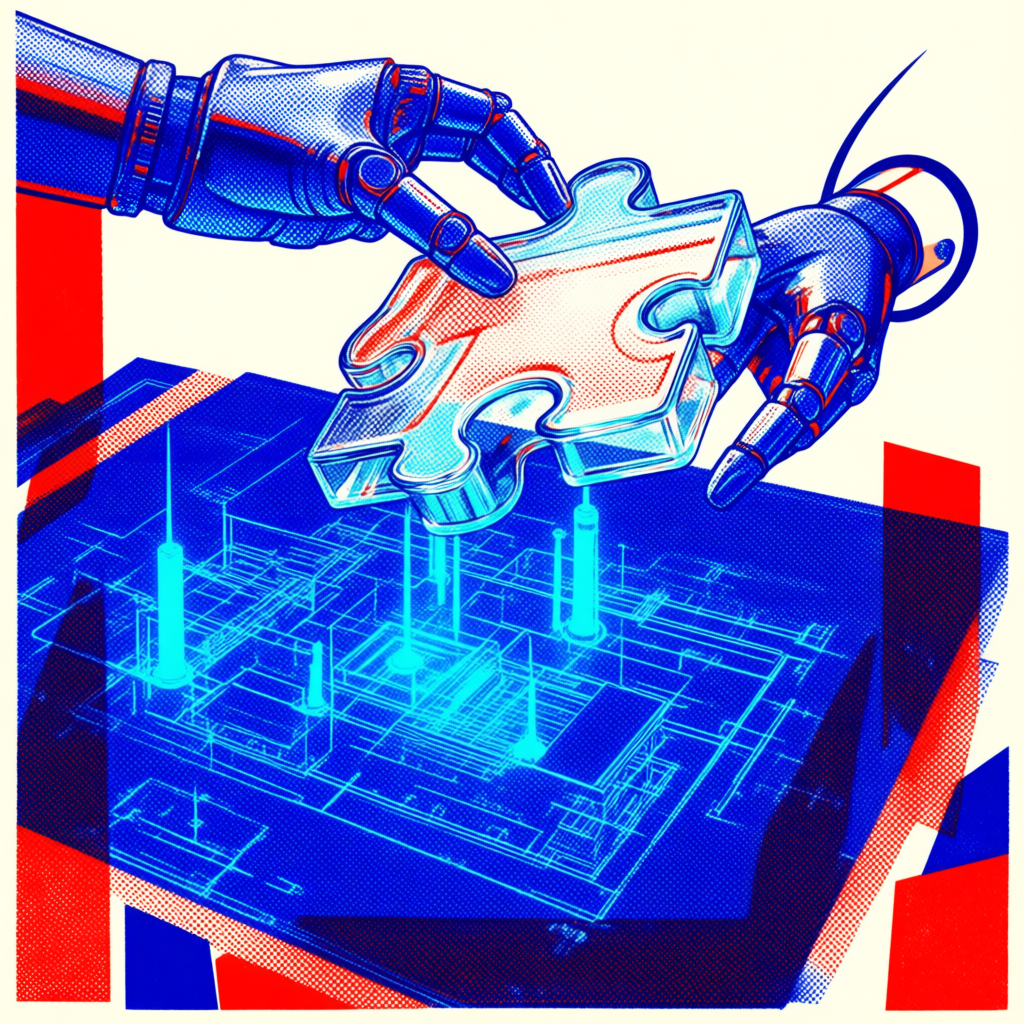
- Rohit Prasad, former Amazon SVP and Alexa lead, becomes the third CEO in Boston Dynamics history.
- The appointment signals a strategic shift toward Physical AI, merging robotics with foundation models.
- Prasad brings a track record of scaling consumer AI (Alexa) and enterprise models (Amazon Nova).
- The goal is to productize intelligent systems for industrial, enterprise, and commercial environments.
Boston Dynamics has officially entered a new leadership phase with the appointment of Rohit Prasad as Chief Executive Officer, effective October 7, 2026. The move ends a nine-month leadership transition following the departure of Robert Playter in February, during which Chief Financial Officer Amanda McMaster served as interim CEO. Prasad, a veteran of the artificial intelligence sector, arrives at a moment when the robotics industry is shifting from experimental prototypes to scalable, intelligent commercial products.
The Amazon Pedigree: From Alexa to Robotics
The selection of Rohit Prasad is a calculated move to inject high-scale productization expertise into a company known for its engineering brilliance. Prasad spent 12 years at Amazon, where he served as Senior Vice President and Head Scientist for Alexa and Artificial General Intelligence. His tenure there was defined by the ability to take complex AI research and turn it into a household name, scaling Alexa into a service used by hundreds of millions of people globally.
Beyond consumer electronics, Prasad recently spearheaded the development of the Amazon Nova foundation model family. This experience with large-scale foundation models is precisely what Boston Dynamics seeks as it attempts to move beyond pre-programmed movements toward autonomous, adaptive behavior. Before his time at Amazon, Prasad spent nearly 14 years at Raytheon BBN Technologies, focusing on machine-learning research for both commercial and U.S. government applications, providing him with a balanced background in both the public and private sectors.
Defining the Physical AI Strategy
The central theme of Prasad's appointment is the acceleration of Physical AI. While traditional robotics often relies on rigid coding for specific tasks, Physical AI aims to integrate advanced AI capabilities—such as those found in foundation models—directly into robotic hardware. This allows machines to perceive, reason, and act in unpredictable real-world environments with a level of autonomy that was previously unattainable.
Prasad has stated that the objective is to build intelligent systems that create meaningful value in real-world environments. By combining world-class robotics expertise with advanced AI, the company intends to expand the reach of its technology across various industries. The focus is no longer just on the agility of the machine, but on the intelligence governing that agility, ensuring that robots can improve safety and operational efficiency without constant human intervention.
Bridging the Gap Between Research and Revenue
For years, Boston Dynamics has been a symbol of technical achievement, producing viral videos of acrobatic robots. However, the challenge has always been the transition from a research-heavy entity to a commercial powerhouse. Prasad's mandate is to productize these breakthroughs. This means transforming high-end engineering into reliable, off-the-shelf products that enterprises can integrate into their workflows to boost productivity.
The company's current portfolio, which includes the quadruped Spot, serves as the foundation for this expansion. Under Prasad, the goal is to move these systems from niche industrial inspections into broader commercial applications. The integration of Physical AI is expected to unlock new levels of adaptability, allowing robots to handle a wider variety of tasks in diverse settings without requiring bespoke programming for every new environment.
The Boston Ecosystem Advantage
Prasad is not a stranger to the geography of innovation. Having been based in the Boston area for over 25 years, he possesses deep ties to one of the most concentrated robotics and AI ecosystems in the world. This local presence is viewed as a strategic asset for the company's growth.
These regional connections are expected to facilitate several key business objectives:
- Attracting top-tier technical talent from nearby academic institutions and research labs.
- Deepening collaborations with other technology firms within the Boston hub.
- Accelerating the feedback loop between prototype development and real-world testing.
By leveraging these relationships, Prasad can ensure that Boston Dynamics remains at the center of the AI talent war, securing the human capital necessary to execute a complex Physical AI roadmap.
Synergy with Hyundai Motor Group
The appointment of Prasad also strengthens the alignment between Boston Dynamics and its parent company, Hyundai Motor Group. Hyundai has been aggressively expanding its focus on automation, logistics, and mobility. The combination of Boston Dynamics' robotics, Prasad's AI scaling experience, and Hyundai's massive manufacturing infrastructure creates a powerful vertical integration.
Jaehoon Chang, Vice Chair of Hyundai Motor Group, noted that this foundation is essential for scaling Physical AI. The ability to manufacture at scale is the final piece of the puzzle; once Prasad defines the product and the AI governs the behavior, Hyundai provides the industrial capacity to deploy these machines across global markets. This synergy transforms Boston Dynamics from a standalone robotics lab into the AI-driven arm of a global mobility giant.
By bringing together advanced AI and robotics, we can build intelligent systems that create meaningful value in real-world environments, expand the reach of robotics across industries, and shape the next era of Physical AI.
Global Implications for Enterprise and Industry
For international business leaders in the USA, UK, and global markets, the appointment of a former Amazon AI executive as CEO of Boston Dynamics signals that the era of the 'experimental robot' is ending and the era of the 'AI worker' is beginning. This shift will likely accelerate the adoption of autonomous systems in logistics, warehousing, and hazardous environment management.
In the United States, where labor shortages in manufacturing and logistics persist, the push toward commercialized Physical AI could lead to a rapid deployment of autonomous systems. The US market is particularly primed for this, given the existing infrastructure for AI investment and a regulatory environment that generally encourages rapid technological iteration in industrial settings.
In the United Kingdom and other global markets, the impact will be felt in the operational efficiency of large-scale enterprises. As these systems become more productized and less like custom research projects, the barrier to entry for mid-sized firms will drop. However, the integration of these machines will require a shift in workforce training, as the role of the human operator moves from direct control to high-level supervision of AI-driven agents.
From a regulatory perspective, the move toward Physical AI will bring robotics closer to the scrutiny applied to software AI. While the US and UK currently maintain flexible frameworks for industrial automation, the ability of robots to make autonomous decisions in real-world environments will eventually necessitate clearer safety standards and liability frameworks, mirroring the global conversation currently surrounding generative AI.
FAQ
Who is Rohit Prasad and what is his background?
Rohit Prasad is the new CEO of Boston Dynamics. He previously served as Senior Vice President and Head Scientist for Alexa and Artificial General Intelligence at Amazon, and spent 14 years at Raytheon BBN Technologies.
What is Physical AI?
Physical AI is the integration of advanced AI capabilities, such as foundation models, into robotic hardware to allow machines to operate with greater autonomy and adaptability in real-world environments.
How does this change affect Boston Dynamics' business model?
The appointment signals a shift from research and development toward the commercialization and productization of intelligent robotic systems at a global scale.
What is the relationship between Boston Dynamics and Hyundai?
Boston Dynamics is owned by Hyundai Motor Group, which provides the manufacturing, logistics, and mobility capabilities necessary to scale the company's robotic innovations.
Sources: Therobotreport, Bostondynamics, Cxodigitalpulse ·
Scrivila qui: Susanna, l assistente AI di glacom, ti risponde via email con un approfondimento gratuito.
Nessuna consulenza personalizzata (finanziaria, legale o medica): solo informazione e fonti. Email usata solo per rispondere.
oppure scrivile su: WhatsApp · Telegram · SimpleX · Delta Chat · Email