



Innodata Launches Motion-Capture Lab to Scale Physical AI Training
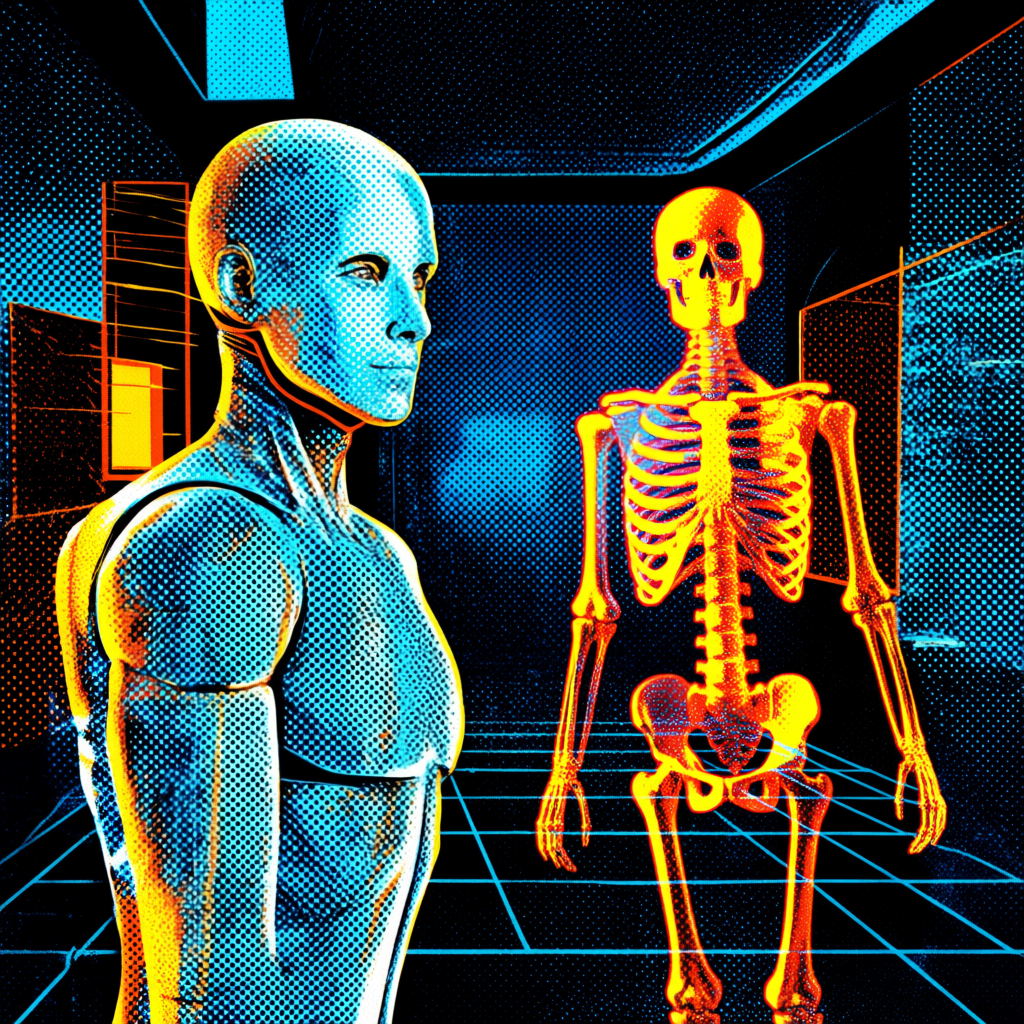
- Innodata opened a specialized motion-capture lab in Ridgefield Park, New Jersey, to generate high-precision training data for humanoid robots.
- The facility uses Vicon infrared optical tracking to capture 3D movement with sub-millimeter accuracy, avoiding the errors common in 2D video analysis.
- Beyond data collection, the lab serves as an independent validation center to test robot performance against real-world requirements.
- The move addresses a critical shortage of interaction data, which currently acts as a bottleneck for the growth of Physical AI.
The evolution of humanoid robotics has reached a critical juncture where agility is no longer the primary hurdle; rather, the limitation is the quality of the intelligence driving the machine. While Large Language Models (LLMs) scaled rapidly by consuming the vast archives of the internet, Physical AI lacks a similar digital corpus. To bridge this gap, Innodata Inc. has launched a dedicated research and development laboratory in Ridgefield Park, New Jersey, specifically engineered to produce the high-fidelity motion data required for the next generation of human-like robots.
The data bottleneck in Physical AI
According to Rahul Singhal, CEO of Innodata, the physical AI sector is currently expanding faster than any other AI segment, yet developers consistently encounter a shared obstacle. Real-world interaction data is not only scarce but also expensive and slow to produce. This scarcity creates a ceiling for how capable and safe robots can become before they are deployed in complex environments.
Unlike software-based AI, which can be trained on static datasets, Physical AI must earn its tokens through deliberate, physical interactions. This requirement makes the precision of the training data paramount. When a humanoid robot weighs nearly 200 pounds, approximate data is a liability. Small errors in estimated joint movement or body positioning can propagate through the training model, leading to unpredictable or unsafe behavior in the physical world.
Precision over approximation
A significant portion of the current robotics market relies on inferring 3D motion by analyzing 2D video grids or using wearable inertial measurement unit (IMU) sensors. Innodata is positioning its new facility as a superior alternative by capturing 3D data directly from the source. Developed in collaboration with Vicon, the lab utilizes high-precision, low-latency infrared optical tracking cameras.
Frank Tanner, vice president of robotics and physical AI at Innodata, argues that there is no substitute for direct 3D motion capture. When computer vision models attempt to interpret a 2D grid of pixels, mistakes inevitably enter the dataset. The New Jersey facility eliminates this guesswork by measuring subtle movements with sub-millimeter accuracy. This level of precision ensures that every joint rotation and limb extension is registered exactly as it occurs, providing what Andrew Knox, managing director of Vicon, describes as independent ground truth rather than a mere estimate.
A dual-purpose infrastructure for robotics
The facility is designed to function as both a factory for training data and a rigorous testing ground. Innodata intends to offer its services through two primary channels: the sale of prepackaged datasets and the execution of custom data-collection projects. This flexibility allows robotics companies to acquire standardized motion libraries or commission specific scenarios tailored to their robot's intended use case.
Furthermore, the lab operates as an independent evaluation environment. This means companies can send their robots to the facility to be tested against specific performance requirements. By measuring robot responses across scripted scenarios in a controlled setting, Innodata can validate the performance data that robots generate internally, ensuring that the machine's self-reporting aligns with physical reality.
Compressing the development cycle
By providing an end-to-end capability—from the initial collection of human motion to the final evaluation of the robotic model—Innodata aims to compress the development cycles of physical AI companies. The ability to retarget captured motion from one platform to another further enhances this efficiency, allowing developers to adapt human movements to various robotic morphologies without starting the data collection process from scratch.
Physical AI has to earn its tokens one interaction at a time, and they have to be deliberate.
This methodical approach to data engineering is intended to move humanoids away from controlled, scripted demonstrations and toward the execution of useful, real-world tasks. The goal is to accelerate the deployment of robots that are not only more capable but fundamentally safer for human interaction.
Strategic implications for the AI ecosystem
The opening of this lab signals a shift in the AI industry toward the professionalization of physical data. For decades, motion capture was largely the domain of the film and gaming industries. By applying these tools to robotics, Innodata is treating physical movement as a structured data engineering problem. This approach mirrors the way high-quality RLHF (Reinforcement Learning from Human Feedback) transformed LLMs, suggesting that the next leap in robotics will come from the quality, rather than the quantity, of the training data.
The collaboration with Vicon is central to this strategy. As a leader in motion capture, Vicon provides the technical consulting and hardware that allow Innodata to maintain a reference point for accuracy. For frontier AI labs and research universities, having a centralized facility that can provide sub-millimeter precision reduces the need for every robotics startup to build its own expensive capture infrastructure.
Global business impact and regional outlook
For entrepreneurs and investors in the USA, UK, and global markets, this development highlights the emerging infrastructure layer of the robotics economy. We are moving beyond the era of simply designing hardware; the competitive advantage is shifting toward those who control the high-quality data pipelines.
In the United States, the focus remains on accelerating commercial viability and safety. As humanoid robots move into warehouses and healthcare settings, the ability to independently validate performance data—as Innodata does—will likely become a prerequisite for insurance and safety certifications. In the UK and European markets, where regulatory scrutiny regarding AI safety is traditionally higher, the transition from approximate 2D data to precise 3D ground truth will be essential for meeting stringent safety standards.
Businesses looking to integrate Physical AI should monitor these data-as-a-service models. The ability to outsource the expensive process of motion capture to specialized labs like the one in New Jersey allows smaller firms to compete with tech giants by accessing professional-grade training sets without the capital expenditure of building their own R&D facilities. This democratization of high-fidelity data is likely to trigger a surge in specialized humanoid applications across logistics, manufacturing, and domestic services.
FAQ
What makes Innodata's lab different from other AI data providers?
Most providers infer 3D motion from 2D video, which introduces errors. Innodata captures 3D data directly using infrared optical tracking cameras, achieving sub-millimeter accuracy.
Can the lab be used for existing robots?
Yes, the facility serves as an independent evaluation environment where customers can send their robots to be tested against specific performance requirements.
Who is the technology partner for the lab?
The lab was developed in collaboration with Vicon, a leader in motion capture technology, which provided design consulting and technical support.
What is the main goal of this facility?
To remove the data bottleneck in Physical AI by providing high-quality, real-world interaction data to help humanoid robots move more accurately and safely.
Sources: Therobotreport, Finance, Digitaljournal ·
Scrivila qui: Susanna, l assistente AI di glacom, ti risponde via email con un approfondimento gratuito.
Nessuna consulenza personalizzata (finanziaria, legale o medica): solo informazione e fonti. Email usata solo per rispondere.
oppure scrivile su: WhatsApp · Telegram · SimpleX · Delta Chat · Email