



India 2026: The New Global Economic Frontier for Tech and Business
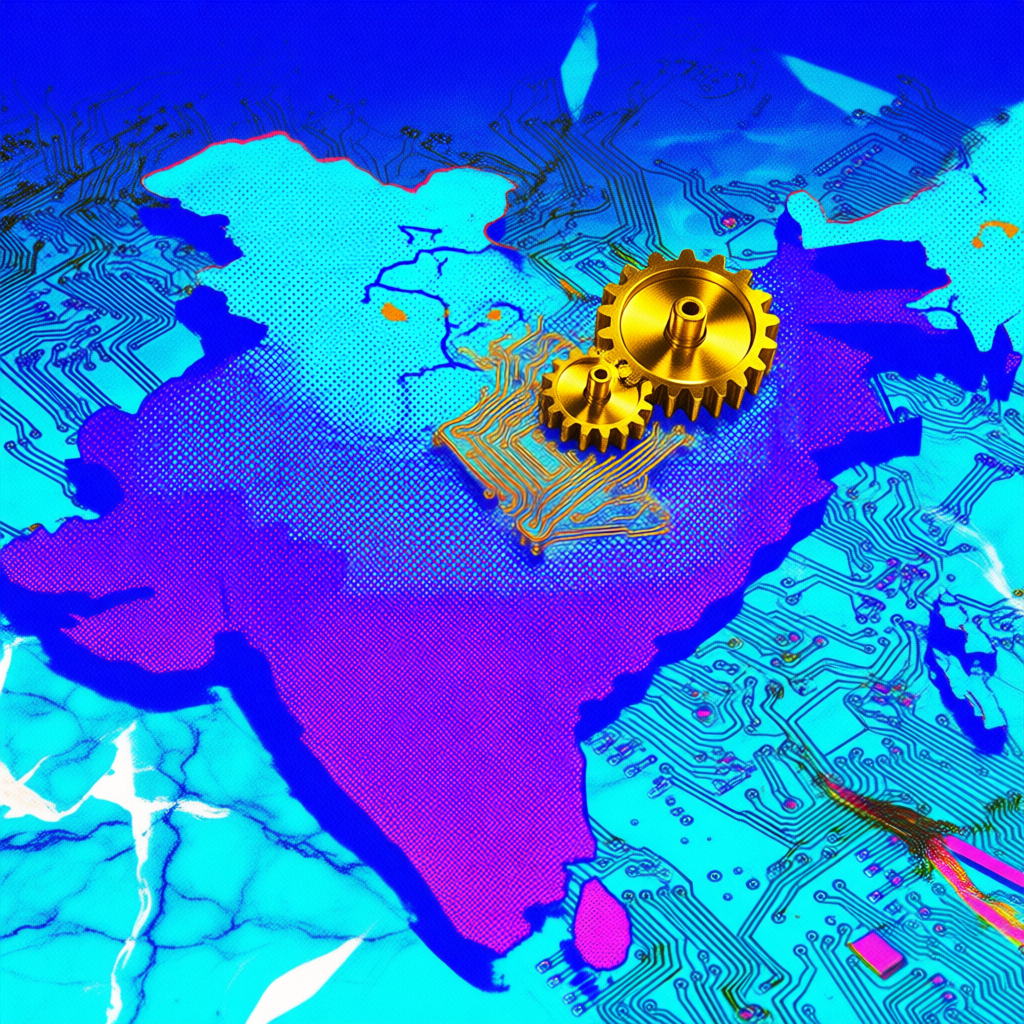
- India is on track to become the world's fourth-largest economy by 2025-2026, challenging traditional giants.
- The digital transformation market is surging, projected to reach $144.48 billion by 2026 with a strong focus on AI and Cloud.
- Regulatory clarity is improving, specifically regarding BIS certifications, though local adaptation remains critical.
- Strategic partnerships are expanding, evidenced by new UK academic hubs in Bengaluru and EU-India trade agreements.
The global economic center of gravity is shifting. For entrepreneurs and C-suite executives in the US, UK, and beyond, India is no longer just a destination for outsourcing or a secondary market. It has evolved into a primary engine of global growth. With a population exceeding 1.4 billion and a demographic profile that stands in stark contrast to the aging populations of China and the West, India is positioning itself as the definitive frontier for the next decade of industrial and technological expansion.
Current projections indicate that by 2025, India will secure its position as the fourth-largest economy globally, overtaking both Germany and Japan. Some forecasts suggest it could climb to the third spot by 2027, trailing only the United States and China. This ascent is not merely a result of population scale but a structural transformation driven by internal demand, aggressive digitalization, and a strategic geopolitical pivot that makes the region an essential node in resilient global supply chains.
The $300 Billion Digital Leap
The most immediate opportunity for tech-driven enterprises lies in the massive acceleration of India's digital infrastructure. The market for digital transformation is experiencing a vertical climb. According to data from Mordor Intelligence, the digital transformation market in India is estimated to reach 144.48 billion dollars by 2026, with a trajectory that could see it hit 304.86 billion dollars by 2031. This represents a compound annual growth rate (CAGR) of 16.12%.
This growth is fueled by the government's Digital India initiative and a corporate sector that is aggressively adopting generative AI, cybersecurity, and 5G networks. The shift is not limited to software; it extends to industrial robotics, blockchain, and the Internet of Things (IoT), creating a fertile ground for B2B providers who can offer scalable cloud-edge solutions. For the international entrepreneur, the opportunity lies in providing the high-end specialized tools that allow Indian SMEs and conglomerates to transition from legacy systems to AI-native operations.
Navigating the Regulatory Maze and BIS Standards
Entering the Indian market has historically been viewed as a bureaucratic challenge. However, 2026 marks a period of relative stabilization and clarity. The Bureau of Indian Standards (BIS) remains the essential passport for any physical product entering the country. Recent shifts have seen the government cancel the 'Scheme X' related to the Omnibus Technical Regulation (OTR) for electrical machinery, reducing some of the previous regulatory uncertainty.
Current compliance now centers on two primary paths: the ISI/FMCS scheme, which involves factory audits and is typical for industrial machinery and components, and the CRS registration, which is the standard for electronics and ICT products. Success for foreign firms now depends on a rigorous mapping of Harmonized System (HS) codes to Indian Standards (IS). As noted by Octagona, the ability to provide certified quality and reliable after-sales service—including measurable Service Level Agreements (SLAs)—is what separates successful market entrants from those who fail to scale.
Strategic Alliances: From Stockholm to Bengaluru
The trend of 'Make in India' is evolving into 'Made with' global partners. This is evident in the strengthening ties between India and the European Union. The 13th India-Sweden Innovation Day 2026 highlighted the potential of the EU-India Free Trade Agreement (FTA), which could potentially boost trade between the two entities by up to 133.9 billion dollars by 2035. The focus is shifting toward sustainable manufacturing, AI, and the creation of resilient supply chains that reduce dependency on single-source geographies.
Parallel to industrial cooperation is the investment in human capital. The University of Manchester's plan to establish a new center in Bengaluru is a prime example of this integration. By utilizing a Partner-Enabled Learning (PEL) model, the university aims to connect students directly with industry giants like Tata, Reliance, and Infosys. This academic-industrial bridge ensures that the workforce is equipped with the problem-solving skills required by global firms, effectively lowering the talent-acquisition risk for international companies setting up operations in the 'Silicon Valley of India'.
High-Value Sectors and the Luxury Pivot
While tech dominates the headlines, the appetite for high-value industrial goods and luxury products is expanding. The Indian consumer market is bifurcating: while mass-market challenges remain, there is a surging demand for certified quality and prestige brands. This is particularly evident in the expansion of the luxury sector, where the 'Made in Italy' brand and similar high-end European labels are finding a growing base of affluent consumers.
For industrial entrepreneurs, the key sectors for investment include:
- Advanced manufacturing and robotics for the automotive and aerospace sectors.
- Green energy infrastructure and sustainable waste management.
- Health-tech and digital healthcare solutions for a diversifying population.
- Specialized chemicals and polymers for high-performance industrial use.
The Geopolitical Hedge
Beyond the balance sheets, investing in India is increasingly seen as a geopolitical hedge. As global trade tensions persist, India offers a stable, democratic alternative for diversifying production. The country's role in the new global equilibrium is defined by its ability to act as a bridge between the Global South and the developed economies of the West. This position is bolstered by a young workforce that is not only large but increasingly skilled in high-tech domains, making it a hub for R&D rather than just a back-office for the world.
The resilience of real growth, driven by internal demand and services, makes India a must-screen market for any company competing in high-value industrial or consumer sectors.
Global Implications for US and UK Enterprises
For businesses based in the USA and UK, the Indian trajectory necessitates a shift in strategy from 'exporting to' to 'integrating with'. The regulatory environment is becoming more transparent, but it remains distinct. US firms, in particular, can leverage existing bilateral tech partnerships to enter the AI and Cloud sectors, while UK firms are finding success through academic and research collaborations, as seen with the University of Manchester's expansion.
From a legal perspective, international firms must be wary of the specific Quality Control Orders (QCO) that can be implemented rapidly across different product categories. Unlike the EU's centralized AI Act, India's approach to tech regulation is often more iterative and sector-specific. Companies should prioritize local partnerships—joint ventures or strategic alliances—to navigate the nuances of state-level taxation and logistics. The goal for the international entrepreneur in 2026 is to embed their operations within the local ecosystem, ensuring that products are not just sold in India, but are adapted to the specific technical and cultural requirements of the Indian market.
FAQ
When is India expected to become the 4th largest economy?
Projections indicate India will reach this milestone by 2025, potentially moving to 3rd place by 2027.
What is the BIS certification and why is it important?
The Bureau of Indian Standards (BIS) provides the mandatory quality certifications (such as ISI or CRS) required for many products to be legally sold and imported into India.
Which city is the primary hub for tech and research partnerships?
Bengaluru remains the preferred location due to its high concentration of technology businesses, research institutions, and universities.
How much is the Indian digital transformation market worth?
It is estimated to reach 144.48 billion dollars by 2026 and could grow to 304.86 billion dollars by 2031.
Sources: Rmix, Mordorintelligence, Octagona ·
Scrivila qui: Susanna, l assistente AI di glacom, ti risponde via email con un approfondimento gratuito.
Nessuna consulenza personalizzata (finanziaria, legale o medica): solo informazione e fonti. Email usata solo per rispondere.
oppure scrivile su: WhatsApp · Telegram · SimpleX · Delta Chat · Email