




California Robotaxi Law: New Fines for Blocking First Responders
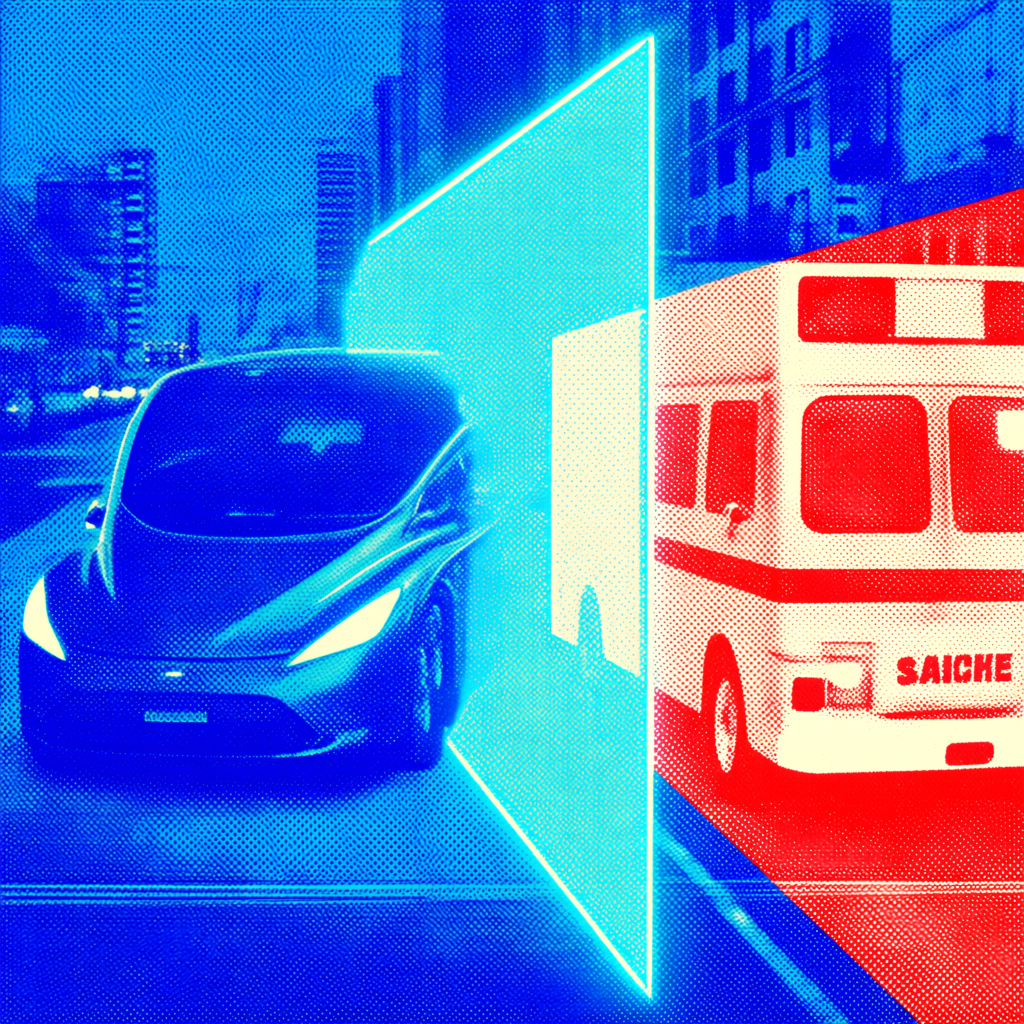
- California passed Senate Bill 1246 to penalize AV operators blocking emergency responders for over 30 minutes.
- Companies must now provide local, on-the-ground technicians and US-based remote drivers with valid licenses.
- The law follows repeated incidents involving Waymo vehicles disrupting traffic and crime scenes.
- Regulations take effect in July 2028, giving firms time to implement required human-led intervention systems.
The friction between rapid technological deployment and public safety has reached a legislative breaking point in California. Governor Gavin Newsom has signed Senate Bill 1246, a targeted piece of legislation that ends the era of autonomous vehicle (AV) operators managing roadside failures solely through remote software or delayed responses. The law introduces a strict accountability framework, most notably the imposition of fines on companies whose robotaxis obstruct police or firefighters for more than 30 minutes.
The catalyst behind Senate Bill 1246
This regulatory shift is not a preemptive strike but a reaction to a series of high-profile failures on California roads. The state has become the primary testing ground for the world's most ambitious autonomous fleets, but this openness has come with a cost. Numerous incidents have seen robotaxis break down in critical locations, drift into active crime scenes, or create gridlock that impeded emergency vehicles during life-or-death situations.
A significant portion of these disruptions involved Waymo, currently the largest robotaxi operator in the United States. With a national commercial fleet of approximately 4,000 vehicles—1,200 of which are concentrated in the San Francisco Bay Area—Waymo's scale has made it the primary focal point for regulators. Investigations revealed a troubling pattern where the company relied on first responders to manually move its disabled vehicles, effectively turning firefighters and police officers into unpaid recovery agents for a multi-billion dollar industry.
Mandating a human presence on the ground
The core philosophy of the new law is that innovation cannot supersede the immediate needs of public safety. To prevent AVs from becoming permanent roadside hazards, the statute mandates that operators provide local, on-the-ground support. This means companies can no longer rely exclusively on remote diagnostics to solve physical obstructions.
Under the new rules, AV firms must deploy local incident technicians capable of reaching a disabled vehicle quickly to assist with accidents or obstructions. Furthermore, the law addresses the 'remote driver' loophole. If a company employs remote operators to steer vehicles from a distance, those individuals must now be based within the United States and hold a valid US driver's license. This ensures that those controlling the vehicles possess a fundamental understanding of local traffic laws and can communicate effectively with emergency services.
Operational constraints and the 30-minute window
The most contentious element for operators is the strict time limit. The law establishes a 30-minute window; if a robotaxi blocks a first responder beyond this threshold, the operator faces financial penalties. This creates a powerful economic incentive for companies to optimize their recovery logistics and maintain a denser network of physical support staff.
The implementation of these rules will be overseen by the Department of Motor Vehicles (DMV), which is tasked with defining the specific response-time guidelines. By delegating the finer details to the DMV, the state allows for a degree of flexibility as the technology evolves, while keeping the overarching mandate of accountability firm.
California has embraced autonomous vehicles, but we cannot embrace innovation at the expense of public safety.
A broader pattern of AV scrutiny
The crackdown on physical obstructions is part of a wider trend of increasing scrutiny regarding how AV companies handle both public space and private data. While Senate Bill 1246 focuses on the physical presence of vehicles, other investigations have highlighted the invisible data trails these cars leave behind. Recent studies indicate that connected vehicle ecosystems often share vast amounts of sensitive data—including precise location and VINs—with third-party advertising and tracking firms.
For entrepreneurs in the mobility space, this represents a dual-front challenge. On one side, they must solve the 'last-mile' problem of physical recovery and emergency cooperation. On the other, they face a growing demand for data privacy and transparency. The transition from a 'move fast and break things' startup mentality to a regulated utility model is now mandatory for survival in the US market.
Timeline for industry compliance
Recognizing the logistical overhaul required to station technicians across urban centers, the California government has set the effective date for July 2028. This window provides operators like Tesla, Waymo, and Zoox nearly two years to restructure their operational models. The transition involves moving from a centralized, software-heavy management style to a hybrid model that integrates local human intervention.
The National Highway Traffic Safety Administration (NHTSA) has already signaled its support for such measures, having previously demanded that AV developers find permanent solutions to the problem of first-responder obstruction. California's law essentially provides the legal teeth that federal suggestions lacked, turning guidelines into enforceable mandates.
Global implications for AV business models
For international investors and entrepreneurs looking at the US, UK, and global markets, the California precedent is a signal that the 'regulatory honeymoon' for autonomous driving is over. In the United States, the lack of a comprehensive federal AV law means that states like California will set the de facto national standard. Companies operating across state lines will likely have to adopt the strictest state's rules to maintain operational consistency.
In the United Kingdom, where AV trials are more tightly controlled by the government, similar requirements for human-led intervention are likely to be integrated into any future wide-scale commercial rollout. The global trend is shifting toward a 'Safety-First' framework where the burden of proof for safety lies entirely with the operator, not the public. For businesses, this means that the cost of operation must now include a permanent line item for local human support and compliance monitoring, potentially impacting the projected margins of the 'driverless' economy.
FAQ
When does the new California robotaxi law take effect?
The law, known as Senate Bill 1246, takes effect in July 2028.
What happens if a robotaxi blocks a first responder for too long?
Operators can face fines if a vehicle obstructs police or firefighters for more than 30 minutes.
What are the new requirements for remote drivers?
Remote drivers must be based in the United States and hold a valid US driver's license.
Which companies are most affected by these regulations?
Major operators with large fleets in California, such as Waymo, Tesla, and Zoox, are the primary targets of these rules.
Sources: TechCrunch, Newsgab, Industryevents ·
Scrivila qui: Susanna, l assistente AI di glacom, ti risponde via email con un approfondimento gratuito.
Nessuna consulenza personalizzata (finanziaria, legale o medica): solo informazione e fonti. Email usata solo per rispondere.
oppure scrivile su: WhatsApp · Telegram · SimpleX · Delta Chat · Email