



Disney AI Strategy: Blending Storytelling with Machine Intelligence
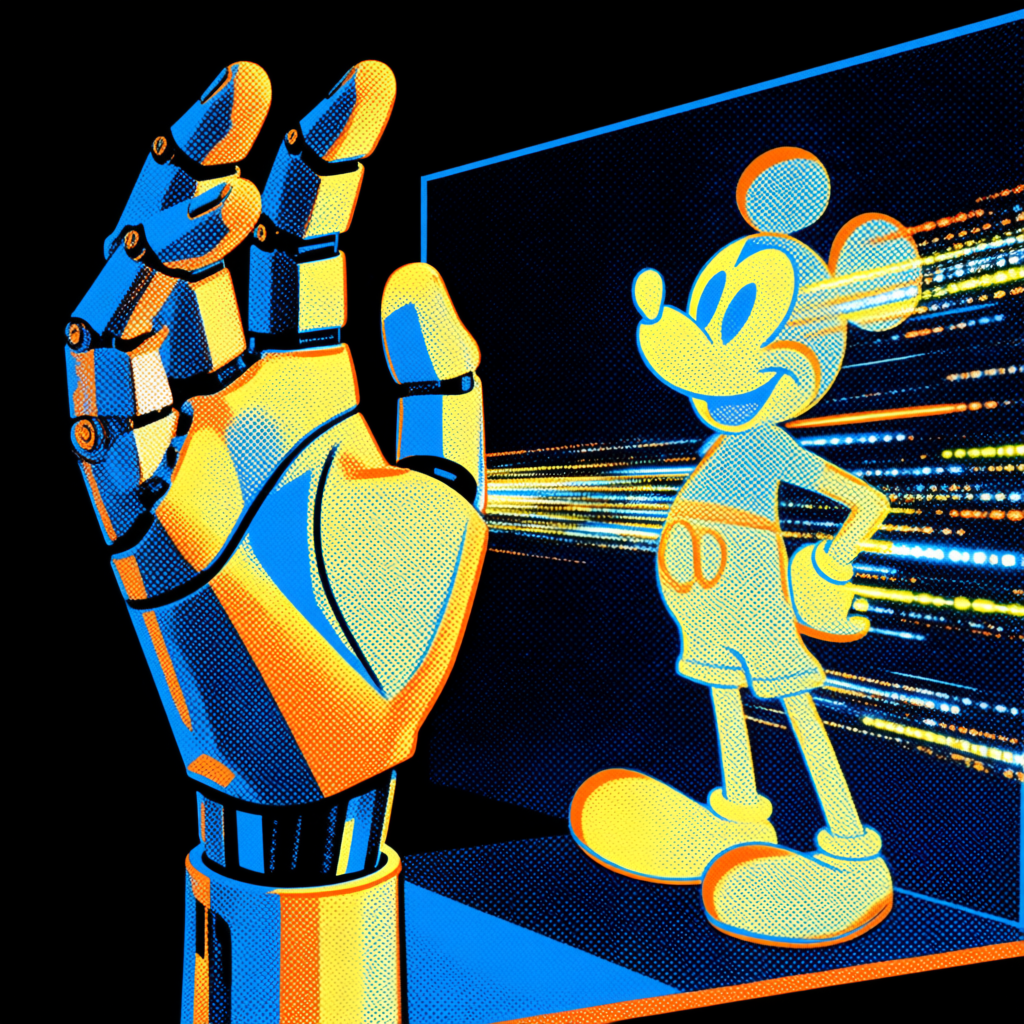
- Disney is deploying AI-powered BDX droids in parks via partnerships with Nvidia and Google DeepMind.
- The company is consolidating Disney+, Hulu, and ESPN into a single AI-driven app ecosystem.
- Deep learning and AWS integration are optimizing animation recognition and content tagging.
- Financial recovery in the DTC sector reflects a successful pivot toward tech-enabled monetization.
The Walt Disney Company has long operated as a hybrid of a creative studio and a technology lab. While the world recognizes the brand for its storytelling, the current operational shift reveals a deeper reliance on artificial intelligence to sustain its market dominance. By integrating AI not as a replacement for creativity but as a catalyst for immersive experiences, Disney is redefining how a legacy media giant scales personalization and physical interaction.
The evolution of physical immersion through robotics
In the physical realm of Disney parks, the limitation of traditional animatronics has always been their predictability. To break this cycle, Disney has moved toward AI-powered robotics that can react to guests in real-time. The introduction of BDX droids, inspired by the Star Wars universe, represents a significant leap in guest engagement. These robots are not merely pre-programmed; they utilize reinforcement learning to adapt their behaviors based on simulated experiences before they ever step foot in a park.
This achievement was made possible through strategic alliances with tech leaders. Disney collaborated with Nvidia and Google DeepMind to develop Newton, a specialized physics engine. Newton allows the company to simulate real-world robotic movement with high precision, ensuring that the BDX droids can navigate complex environments and express emotions that feel authentic to the visitor. This blending of physics simulation and AI allows the company to blur the line between fictional characters and physical reality.
Deep learning in the animation pipeline
Beyond the parks, Disney is applying machine learning to the very core of its production: animation. The company has transitioned from traditional machine learning to deep learning to solve complex recognition problems. Specifically, these tools are used to distinguish and identify characters within diverse and intricate animated environments, a process that previously required exhaustive manual labor.
The technical infrastructure supporting this shift is heavily reliant on cloud computing. By partnering with AWS, Disney has gained the flexibility to test and deploy AI models rapidly. This infrastructure does more than just assist artists; it extends to the metadata level. AI is now used for sophisticated content tagging and personalization, ensuring that the vast library of Disney assets is searchable and discoverable in ways that align with individual user preferences.
Consolidating the digital ecosystem
The streaming wars have forced a pivot from raw subscriber growth to sustainable monetization. Disney is addressing this by orchestrating a massive consolidation of its digital touchpoints. The strategy involves merging Disney+, Hulu, and ESPN into a single, unified application experience. This is not a simple UI update but a strategic move to reduce user friction and optimize marketing reach through a centralized data hub.
At the heart of this unified app is an AI-driven discovery engine. By leveraging advanced analytics, Disney aims to create a seamless journey where commerce, gaming, and content consumption coexist. This ecosystem integration allows the company to track user behavior across different genres and platforms, using AI to suggest content that increases retention and lifetime value. As noted in National CIO Review, this approach transforms the direct-to-consumer business from a cost center into a high-margin engine.
Financial recovery and the tech dividend
The impact of these technological investments is visible in the company's fiscal health. Disney reported a strong fiscal 2025, characterized by an adjusted EPS increase of 19% year-over-year. Perhaps the most telling metric is the turnaround of the direct-to-consumer (DTC) segment, which swung from a billion loss three years ago to an operating income of .3 billion. This recovery is directly linked to improvements in content delivery and a more efficient cost structure enabled by tech-driven operations.
Confidence in this tech-forward trajectory is further evidenced by the company's capital allocation. Disney has doubled its share-repurchase program to billion for 2026 and increased its dividend by 50%. These moves signal that the company views its AI and digital platform investments as a stable foundation for future earnings growth, rather than a speculative venture.
Balancing automation with human creativity
Despite the aggressive push into AI, Disney maintains a strict philosophy regarding the role of the human creator. The company has established an AI-focused task force to oversee the integration of these tools, ensuring that technology serves the story rather than dictating it. This balance is critical for a brand whose value is rooted in emotional resonance and artistic legacy.
The company balances technological advancement with a focus on human creativity and talent, maintaining its role as an innovator in entertainment.
By opening numerous AI-related job roles, Disney is building a workforce that can bridge the gap between data science and cinematic art. This ensures that while a deep learning model might tag a scene or a droid might greet a guest, the overarching narrative remains a product of human imagination.
Strategic implications for global enterprises
For business leaders in the USA, UK, and other global markets, Disney's trajectory offers a blueprint for legacy modernization. The company demonstrates that the path to AI maturity is not through a single 'silver bullet' tool, but through a multifaceted application across different business units—from physical robotics to cloud-based content management.
In the US and UK markets, where the regulatory environment for AI is still evolving, Disney's approach of using AI for operational efficiency and customer experience (rather than purely generative content) minimizes some of the legal risks associated with copyright and intellectual property. For enterprises looking to unify fragmented digital services, the consolidation of Disney+, Hulu, and ESPN serves as a case study in reducing churn through AI-enhanced personalization.
The key takeaway for international firms is the importance of the tech-stack foundation. Disney's reliance on strategic partnerships with AWS and Nvidia shows that even the largest companies benefit from leveraging specialized external expertise to accelerate their internal AI transformation. The result is a scalable model where technology drives operating leverage without sacrificing the brand's core identity.
FAQ
How is Disney using AI in its theme parks?
Disney uses AI-powered BDX droids that utilize reinforcement learning and a physics engine called Newton, developed with Nvidia and Google DeepMind, to interact realistically with guests.
What is the goal of consolidating Disney+, Hulu, and ESPN?
The goal is to create a single, seamless app experience that reduces user friction and uses AI-driven discovery to personalize content and optimize monetization.
How has AI impacted Disney's animation process?
Disney uses deep learning to identify and differentiate characters in complex animated scenes, improving efficiency in content tagging and production pipelines via AWS.
What were the financial results of Disney's tech-driven strategy?
The company saw a significant turnaround in its DTC business, moving from a billion loss to .3 billion in operating income, alongside a 19% increase in adjusted EPS for fiscal 2025.
Sources: Digitaldefynd, Nationalcioreview, Aiexpert ·
Scrivila qui: Susanna, l assistente AI di glacom, ti risponde via email con un approfondimento gratuito.
Nessuna consulenza personalizzata (finanziaria, legale o medica): solo informazione e fonti. Email usata solo per rispondere.
oppure scrivile su: WhatsApp · Telegram · SimpleX · Delta Chat · Email