



Apertus: Switzerland's Open-Source Answer to Big Tech AI

- Swiss academic institutions launched Apertus, a fully open-source LLM available in 8B and 70B parameter versions.
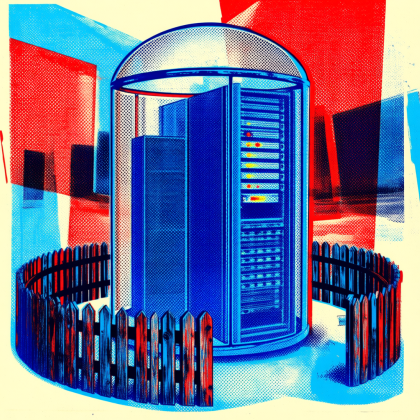
- Unlike proprietary models, Apertus provides total transparency regarding architecture, training data, and weights.
- Version 2.0 aims for 500-700 billion parameters, focusing on agents, mathematics, and programming.
- The project prioritizes digital sovereignty and reliability over competing with US tech giants' consumer budgets.
The global landscape of Large Language Models (LLMs) has long been dominated by a handful of American giants and a few strategic challengers from China and France. However, a new entry from the heart of Europe is attempting to shift the conversation from raw power to absolute transparency. Switzerland has introduced Apertus, a multilingual open-source model developed through a collaboration between the EPFL (École Polytechnique Fédérale de Lausanne), ETH Zurich, and the Swiss National Supercomputing Centre (CSCS).
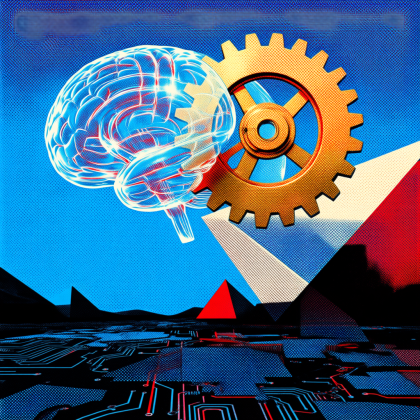
While the tech world often uses the term open source loosely, Apertus adheres to a strict definition. The project does not merely release the final weights of the model; it documents the entire development process. This includes the architecture, the specific training recipes, and the datasets used, allowing researchers and developers to inspect every gear in the machine. This level of disclosure is a direct response to the black-box nature of proprietary systems where the training data remains a closely guarded corporate secret.
A strategic pivot toward reliability
The architects of Apertus are not attempting to outspend the multi-billion dollar budgets of Silicon Valley. Instead, they have carved out a specific niche: the provision of a reference model for reliable, sovereign, and inclusive AI. By focusing on scientific rigor rather than consumer-facing polish, the Swiss initiative provides a foundation that enterprises and academic institutions can trust for high-stakes applications.
The initial release offered two distinct versions to cater to different operational needs. An 8-billion parameter model was designed for personal use and lightweight applications, while a 70-billion parameter version provided the depth required for complex organizational tasks. Both are released under a permissive license, ensuring that the model can be integrated into commercial products, educational tools, and social projects without the restrictive barriers typical of proprietary APIs.
The evolution into Apertus 2.0
The trajectory of the project suggests a rapid scaling of ambitions. Following the initial release, the development team introduced version 1.5, which expanded the model's capabilities to include the analysis of images and audio. Notably, the team made a conscious decision to avoid the generation of such media to prevent copyright infringements, signaling a cautious approach to intellectual property that contrasts with the more aggressive stances of some US-based AI labs.
The leap to Apertus 2.0 marks a transition toward specialized intelligence. This iteration targets a scale of 500 to 700 billion parameters, utilizing selectively activated specialized networks. The primary objectives for this version are the development of autonomous agents and a significant increase in proficiency regarding mathematics and programming. This shift indicates that Switzerland is moving beyond general-purpose chatbots toward tools that can perform complex logical reasoning and technical execution.
Infrastructure and the role of supercomputing
The physical backbone of Apertus is located in Lugano at the Swiss National Supercomputing Centre. The model is trained on the Alps supercomputer, which utilizes NVIDIA chips. Interestingly, the project does not exist in a vacuum; it shares these massive computing resources with other scientific disciplines, including climate simulation. This synergy between AI and traditional scientific research underscores the Swiss approach of integrating AI as a tool for broader scientific advancement rather than a standalone commercial product.
Despite the scale of the Alps supercomputer, the developers have been candid about the limitations of available infrastructure. While the 700-billion parameter goal is ambitious, the team acknowledges that hardware constraints prevent the creation of even larger models. This honesty about the ceiling of their capabilities further reinforces the project's identity as a research-driven endeavor rather than a marketing-driven one.
Digital sovereignty as a core objective
At the heart of the Apertus project is the concept of digital sovereignty. By creating a national LLM, Switzerland reduces its dependence on foreign technology providers. This is not about achieving total technological self-sufficiency, but about maintaining the ability to inspect, control, and execute AI systems on local soil. For a country known for its neutrality and banking secrecy, the ability to run a powerful LLM without sending sensitive data to external servers is a critical strategic advantage.
The goal is to provide a model for the development of an AI that is reliable, sovereign, and inclusive, ensuring that the systems remain inspectable and controllable.
This philosophy extends to the ecosystem surrounding the model. By keeping Apertus as a public research project, the Swiss government and academic institutions allow private companies to build the actual services and applications on top of the model. This creates a symbiotic relationship where the public sector provides the transparent foundation and the private sector drives the commercial innovation.
Practical applications and pilot projects
The utility of Apertus is already being tested in real-world scenarios. Approximately seventy pilot projects are currently underway, ranging from educational tools to specialized translation services. One notable local application includes translation services for the Canton Ticino, demonstrating how a multilingual model can be fine-tuned to serve specific regional and linguistic needs that are often overlooked by global models trained primarily on English-centric data.
For developers, the accessibility of the model via Hugging Face or through strategic partners like Swisscom means that the barrier to entry for creating a sovereign AI application is now significantly lower. Organizations can download the weights, audit the training data to ensure no biases or prohibited sources were used, and deploy the model within their own secure infrastructure.
Global implications for international business
For entrepreneurs and enterprises in the USA and UK, the emergence of Apertus is a signal that the market is diversifying away from the monolithic AI providers. While the US remains the leader in raw compute and consumer adoption, the Swiss model proves there is a viable path for high-performance AI that prioritizes transparency over profit margins.
In the US and UK, where the regulatory environment for AI is still evolving—shifting between voluntary commitments and targeted sectoral guidelines—Apertus provides a blueprint for compliance. For companies operating under the strict requirements of the EU AI Act, the total transparency of Apertus (documented data and weights) makes it a far more attractive foundation than closed models, as it simplifies the process of auditing for bias and risk management.
International firms looking to enter the European market or those handling highly sensitive intellectual property may find that using a transparent, sovereign model reduces the legal and security risks associated with data leakage. The Swiss experiment demonstrates that the future of AI may not be a single winner-take-all scenario, but a fragmented ecosystem where different models are chosen based on whether the user values maximum capability (US giants) or maximum transparency and control (Apertus).
FAQ
What makes Apertus different from Llama or ChatGPT?
Unlike ChatGPT (closed) or Llama (partially open), Apertus is fully open-source, providing access to the architecture, model weights, training data, and the specific recipes used during development.
Who developed Apertus and who can use it?
It was developed by EPFL, ETH Zurich, and the Swiss National Supercomputing Centre (CSCS). It is available for free to researchers, professionals, and companies under a permissive open-source license.
What are the technical specifications of the different versions?
The first release included 8B and 70B parameter models. Apertus 2.0 is designed to scale between 500 and 700 billion parameters, with a focus on agents, coding, and mathematics.
Does Apertus generate images or audio?
No. Version 1.5 can analyze images and audio, but it does not generate them to avoid potential copyright violations.
Sources: Swisscom, Swissinfo, Lamiafinanza ·
Scrivila qui: Susanna, l assistente AI di glacom, ti risponde via email con un approfondimento gratuito.
Nessuna consulenza personalizzata (finanziaria, legale o medica): solo informazione e fonti. Email usata solo per rispondere.
oppure scrivile su: WhatsApp · Telegram · SimpleX · Delta Chat · Email