



Critical Security Flaws in OpenSSH and FreeRDP Threaten Global Infrastructure

- A critical OpenSSH flaw allows unauthenticated remote access on Linux systems using musl libc (e.g., Alpine Linux).
- Multiple Proof of Concept (PoC) exploits are now public for FreeRDP, including three critical vulnerabilities.
- SonicWall GMS users face critical information disclosure risks with no official patches available due to End-of-Life status.
- Siemens has released urgent security updates to address one critical and 13 high-severity vulnerabilities.
The global cybersecurity landscape is currently facing a convergence of high-severity threats targeting foundational infrastructure tools. From the ubiquitous OpenSSH protocol to remote desktop implementations and industrial automation hardware, a series of critical vulnerabilities have emerged that could allow unauthenticated attackers to seize full control of corporate servers or leak sensitive configuration data.
The OpenSSH Authentication Bypass Crisis
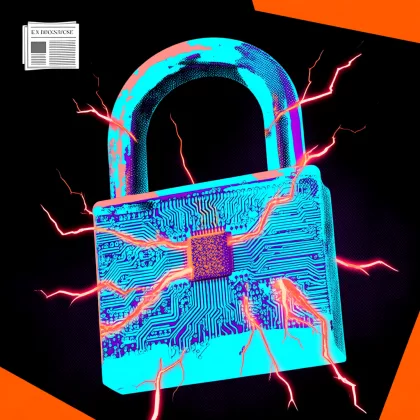
One of the most alarming discoveries involves a critical vulnerability in the OpenSSH Server (sshd). This flaw specifically targets Linux systems based on the musl libc library—a lightweight alternative to the standard GNU C Library (glibc) frequently used in containerized environments and distributions like Alpine Linux. The vulnerability stems from a failure in how the system handles credential verification when the Pluggable Authentication Module (PAM) is disabled.
The technical root of the problem lies in the crypt() function of musl libc. When processing passwords exceeding 256 bytes, the function uses an asterisk (*) to signal an error. However, many systems use that same asterisk to identify accounts where password access is explicitly disabled. This creates a dangerous collision: OpenSSH may misinterpret a processing error as a successful authentication match. An unauthenticated remote attacker can exploit this by sending a specially crafted password between 257 and 1,024 bytes. If the targeted account possesses elevated privileges, the attacker could gain total system sovereignty. Businesses relying on lightweight Linux distributions for their cloud microservices should prioritize auditing their SSH configurations immediately via official security alerts.
FreeRDP and the Danger of Public PoCs
While the OpenSSH flaw is a structural risk, the situation surrounding FreeRDP is an active threat. FreeRDP, the open-source implementation of the Remote Desktop Protocol (RDP), is widely used for remote administration. The risk has escalated because Proof of Concept (PoC) exploits are now publicly available, providing a roadmap for malicious actors to execute attacks.
Among the dozens of vulnerabilities identified, three are classified as critical. CVE-2026-121953, a Use After Free vulnerability with a CVSS score of 9.8, allows an attacker to create duplicate dynamic virtual channels. This leads to memory corruption, which can either crash the client session or, in more severe cases, allow the execution of arbitrary code within the user's context. Similarly, CVE-2026-121952 involves an Out-of-Bounds Write flaw in the Bitmap Cache V2 component. By using a manipulated RDP client, an attacker can corrupt the process memory to steal sensitive information or disrupt services. The availability of PoCs means the window for patching is narrow, as the barrier to entry for attackers has been significantly lowered.
SonicWall GMS: The End-of-Life Trap
Enterprise security is not only about patching new bugs but managing the lifecycle of hardware and software. A critical vulnerability in the SonicWall Global Management System (GMS)—used for the centralized management of firewalls—highlights the danger of relying on legacy systems. The flaw allows unauthenticated attackers to perform arbitrary file reads, potentially exposing internal system files, management data, and confidential configurations.
The most concerning aspect of this disclosure is that SonicWall will not release a patch for GMS versions 9.5.2 and earlier because the product has reached its End-of-Life (EoL) date. This leaves organizations using these versions in a state of permanent vulnerability. The only viable mitigation is a complete migration to the SonicWall Network Security Manager (NSM). This scenario serves as a stark reminder for CTOs that EoL software is not just a technical debt but a primary security liability.
Industrial Risks and Siemens Updates
The threat vector extends beyond IT into Operational Technology (OT). Siemens has issued a series of urgent security updates to address 14 vulnerabilities across its product line. While 13 of these are rated as high severity, one is classified as critical. In industrial environments, such vulnerabilities can lead to unauthorized access to programmable logic controllers (PLCs) or the disruption of critical manufacturing processes. Given the sensitivity of industrial control systems, the deployment of these updates must be handled with precision to avoid unplanned downtime while closing the security gap.
Summary of Critical Vulnerabilities
To help security teams prioritize their response, the following table summarizes the current high-priority threats:
| Software/Vendor | Severity | Primary Risk | Mitigation |
|---|---|---|---|
| OpenSSH (musl libc) | Critical | Authentication Bypass | Update/Enable PAM |
| FreeRDP | Critical | Remote Code Execution | Apply latest patches |
| SonicWall GMS | Critical | Information Disclosure | Migrate to NSM |
| Siemens Products | Critical/High | System Compromise | Install Siemens updates |
Strategic Implications for Global Enterprises
For businesses operating in the USA, UK, and other global markets, these vulnerabilities underscore a shift in the threat landscape. The OpenSSH flaw, in particular, targets the very tools used to secure servers, creating a paradox where the security layer becomes the entry point. In the US, where the CISA (Cybersecurity and Infrastructure Security Agency) emphasizes the move toward Zero Trust Architecture, these flaws demonstrate why relying on a single perimeter—like an SSH password—is no longer sufficient.
From a regulatory perspective, companies in the UK and USA must consider how these vulnerabilities impact their compliance with data protection laws. A breach resulting from a known, unpatched critical vulnerability in an EoL product (like SonicWall GMS) could be viewed as a failure to implement reasonable security measures, potentially leading to significant fines or legal liabilities. Furthermore, the emergence of public PoCs for FreeRDP means that the time between disclosure and exploitation has shrunk to nearly zero.
Enterprises should adopt a proactive posture by implementing multi-factor authentication (MFA) to mitigate the risk of authentication bypasses and by establishing a strict EoL decommissioning schedule. The current wave of alerts, including those tracked by national cybersecurity agencies, proves that the intersection of open-source flexibility and legacy corporate hardware remains the most volatile area of modern business infrastructure.
FAQ
Which Linux distributions are most at risk from the OpenSSH flaw?
Systems using the musl libc library are affected, most notably Alpine Linux, especially when the PAM authentication module is disabled.
Is there a patch for the SonicWall GMS vulnerability?
No. Because the product has reached End-of-Life (EoL), the vendor will not release a patch. Users must migrate to SonicWall Network Security Manager (NSM).
Why is the FreeRDP situation more urgent than other vulnerabilities?
The risk is heightened because Proof of Concept (PoC) exploits are already public, meaning attackers have a functional guide to exploit the flaws.
How can I protect my system from the OpenSSH authentication bypass?
Ensure your systems are updated and verify that PAM is enabled, or avoid configurations that rely solely on password authentication for musl libc-based systems.
Sources: Acn (7) ·
Scrivila qui: Susanna, l assistente AI di glacom, ti risponde via email con un approfondimento gratuito.
Nessuna consulenza personalizzata (finanziaria, legale o medica): solo informazione e fonti. Email usata solo per rispondere.
oppure scrivile su: WhatsApp · Telegram · SimpleX · Delta Chat · Email