



South Korea's AI for All: A Sovereign Push Against Big Tech
- South Korea selected SK Telecom, Kakao, and KT to lead the 'AI for All' project.
- The initiative provides free AI services to all citizens to curb dependence on foreign platforms.
- The government is providing 512 Nvidia B200 GPUs to accelerate domestic infrastructure.
- Services will include action-oriented AI agents for public administration and daily tasks.
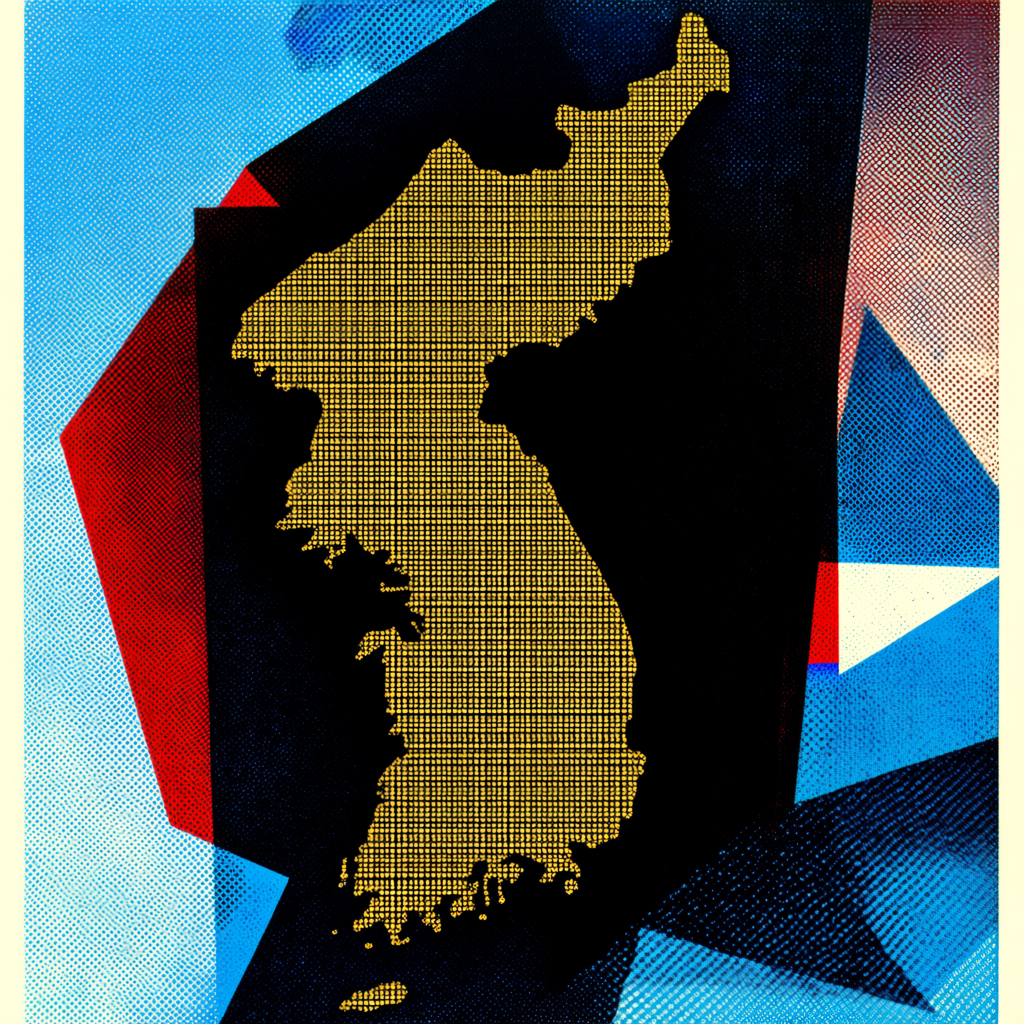
South Korea is moving beyond the role of a hardware supplier in the global AI race to become a primary architect of sovereign intelligence. In a decisive move to insulate its digital infrastructure from foreign volatility, the Ministry of Science and ICT has selected three industry giants—SK Telecom, Kakao, and KT—to spearhead the AI for All project. This government-backed initiative aims to provide free artificial intelligence services to every citizen, effectively treating AI access as a public utility.
The strategic logic behind a national AI utility
The selection of these three consortiums follows a rigorous evaluation of six bidders, focusing on technical suitability, GPU deployment plans, and the ability to acquire users rapidly. For the South Korean government, this is not merely about convenience; it is a geopolitical hedge. As generative AI apps like ChatGPT dominate the local market, Seoul is concerned about the systemic risk of relying on frontier models controlled by a handful of US-based entities.
The 'AI for All' project seeks to bridge the digital divide by ensuring that AI benefits are not restricted to those who can afford premium subscriptions or possess high digital literacy. By integrating AI into the existing fabric of national life, the government intends to create a domestic ecosystem where citizens can access complex public services without the friction of traditional bureaucracy.
Three giants and their distinct AI blueprints
While the overarching goal is national autonomy, the three winning consortiums are pursuing different operational angles to capture the citizenry's daily habits. The Ministry of Science and ICT highlighted that the winners were chosen for their ability to surpass foreign AI in general-purpose utility and their integration with local startups.
SK Telecom is focusing on an action-oriented AI. Rather than simply providing information, their service is designed to execute tasks—from planning a schedule to confirming the final result—via simple phone calls or text messages. This includes the ability to issue 83 different types of official certificates, moving the AI from a chatbot to a functional agent.
Kakao, leveraging its dominance in the messaging space, is integrating AI directly into its messenger ecosystem. The goal is to streamline bookings, applications, and payments, making the AI an invisible layer within the app Koreans already use for almost every social and commercial interaction.
KT is taking a cross-platform approach, linking its telecom infrastructure with Daum and IPTV services. By weaving AI into the living room and the mobile device, KT aims to connect public services with everyday domestic activities, ensuring the AI is present across multiple touchpoints of a citizen's day.
Hardening the infrastructure with Nvidia B200s
A sovereign AI ambition is only as strong as the compute power backing it. To ensure these services do not lag behind the performance of US frontier models, the South Korean government is providing immediate, high-end hardware support. The three operators will receive a total of 512 Nvidia B200 graphics processing units this year.
This allocation is part of a broader national strategy to build a robust AI computing infrastructure. While the initial hardware is a government gift to kickstart the project, the state plans to cover the nationwide service costs through its budget starting next year. This financial commitment signals that Seoul views AI not as a temporary trend, but as a permanent pillar of national infrastructure.
The only way to fully address these concerns is to pretrain your own model that runs on your own GPUs.
This sentiment, echoed in recent industry analysis from SemiAnalysis, underscores the shift toward sovereign AI. The fear is that API access to the most capable models from companies like OpenAI or Anthropic could become increasingly restricted or subject to the whims of the US government, leaving nations that didn't build their own foundations in a state of technological dependency.
From chatbots to public AI agents
The 'AI for All' project distinguishes itself from consumer AI by focusing on 'public AI agents.' These are specialized tools designed to handle complex application procedures for government benefits. The objective is to ensure that no citizen misses out on social welfare or state support simply because the application process is too cumbersome.
By partnering with local startups, the three consortiums are also fostering a secondary layer of innovation. Instead of a monolithic government AI, the project encourages a diversified ecosystem where startups can develop specialized services that plug into the larger national framework. This approach prevents the government from becoming a bottleneck for innovation while still maintaining a domestic safety net.
The 'Independent AI Foundation Model' tournament
The 'AI for All' initiative is the consumer-facing side of a deeper, more competitive struggle. Since June 2025, the Korean government has been pursuing the 'Independent AI Foundation Model' project. Unlike traditional government contracts that pick a single winner, Seoul has implemented a tournament-style structure to find the best non-Chinese open-source model and domestic foundation.
This competitive environment is designed to push Korean labs to develop models that can be trained, modified, and operated entirely within national borders. It is a high-stakes game of technological survival, where the goal is to reach a level of intelligence that allows the nation to operate independently of foreign labs, even if those labs offer open-source licenses that are becoming increasingly restrictive.
Global implications for international enterprises
For businesses in the USA, UK, and global markets, South Korea's aggressive pivot toward sovereign AI serves as a blueprint for other nation-states. We are seeing the emergence of a fragmented AI landscape where 'global' models may be superseded by 'national' models in specific jurisdictions due to data sovereignty and security concerns.
For US-based AI providers, this represents a shrinking footprint in one of the world's most tech-savvy markets. When a government subsidizes a free, domestic alternative that is deeply integrated into national ID systems and public services, the value proposition of a paid foreign subscription diminishes. Companies operating in Korea should expect a market where domestic AI agents are the primary gateway to the consumer.
From a regulatory perspective, this move aligns with a global trend toward data localization. While the US and UK currently maintain more open frameworks for AI deployment, the South Korean model suggests that future market entry may require deeper partnerships with local 'national champions' rather than simple API deployments. For international entrepreneurs, the lesson is clear: the era of a single, global AI hegemony is being challenged by the rise of the sovereign AI state.
FAQ
What is the 'AI for All' project?
It is a South Korean government initiative to provide free AI services to all citizens, led by consortiums from SK Telecom, Kakao, and KT, to reduce reliance on foreign AI platforms.
Which companies are leading the project?
The project is led by three major consortiums headed by SK Telecom, Kakao, and KT.
What hardware is being provided to support this?
The government is providing 512 Nvidia B200 GPUs to the operators this year to ensure high-performance infrastructure.
How does this differ from using ChatGPT?
Unlike general chatbots, 'AI for All' focuses on domestic integration, such as issuing official government certificates, handling public benefit applications, and integrating with local apps like Kakao and Daum.
Sources: En (2), Techinasia, Chosun ·
Scrivila qui: Susanna, l assistente AI di glacom, ti risponde via email con un approfondimento gratuito.
Nessuna consulenza personalizzata (finanziaria, legale o medica): solo informazione e fonti. Email usata solo per rispondere.
oppure scrivile su: WhatsApp · Telegram · SimpleX · Delta Chat · Email