




Red Sea Cable Crisis: Cloud Giants Pivot to Costly Land Routes
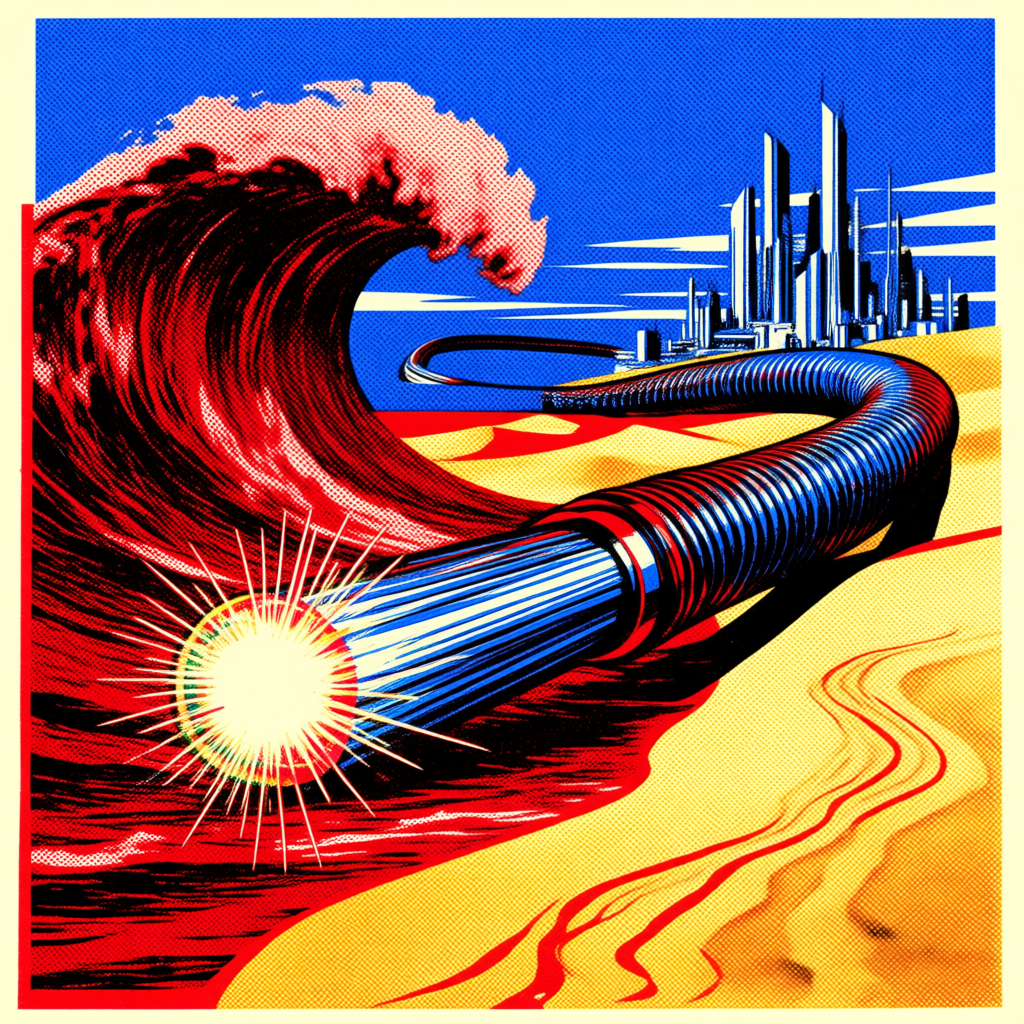
- Over 90% of Europe-Asia data capacity relies on cables passing through the narrow Bab al-Mandab strait.
- Conflict in Yemen and Houthi control of key coastal areas have made these subsea links highly vulnerable.
- Tech giants are paying premiums for land routes through Turkey and Iraq to ensure network resilience.
- Physical repairs to severed cables are stalled by security risks and the lack of safety guarantees for crews.
The invisible architecture of the global internet is facing a physical crisis in one of the world's most volatile maritime chokepoints. For decades, the Red Sea has served as the primary artery for data traveling between Europe and Asia, with more than 90% of the total capacity flowing through submarine cables that converge at the Bab al-Mandab strait. This narrow passage, less than 32 kilometers wide, has transformed from a strategic transit point into a critical liability for the world's largest cloud providers.
The Bab al-Mandab Bottleneck
The vulnerability of the global web is rooted in geography. Most subsea cables enter the Red Sea via the Bab al-Mandab, situated between Yemen and the African nations of Eritrea and Djibouti. When the Houthis, a U.S.-designated terrorist organization, seized the Yemeni side of the strait in September—including the strategic island of Mayyun—the risk profile for global data shifted overnight. While Saudi-backed government forces claimed to have retaken positions around the port of Mocha by October 5, the Houthis have denied these losses, insisting they maintain full control over their gains.
This territorial dispute creates a precarious environment for infrastructure. Industry experts warn that a single cable cut in these contested waters could take months to resolve. Unlike standard technical failures, repairs in a war zone require explicit permissions and safety guarantees for repair ships. Without these, crews cannot enter the water, leaving the global network dependent on rerouting traffic through already congested alternatives.
Escalating Costs for Digital Resilience
As the risk of prolonged outages grows, cloud giants are no longer relying on the hope of maritime stability. Instead, they are securing land-based fiber routes, often at exorbitant prices. Google has already taken aggressive steps to diversify its path, purchasing a pair of fiber strands that run along Turkish state pipelines. According to sources familiar with the deal, Google paid two to three times the estimated 6 million euros (roughly $7 million) that newer lines crossing Turkey typically cost.
The financial structure of these deals reflects the urgency of the situation. Long-distance fiber is generally sold via a massive upfront payment covering 15 years or more of use, supplemented by annual maintenance fees. The willingness of Google to pay a significant premium suggests that the cost of potential downtime far outweighs the immediate capital expenditure of these land routes.
The Shift Toward Terrestrial Alternatives
The movement away from the Red Sea is not limited to a single company. Meta and Google have already begun diverting live traffic through a land route across Iraq, a path that had previously been held in reserve. This shift highlights a broader industry trend: the realization that having capacity on multiple cables is meaningless if all those cables pass through the same narrow expanse of water.
Other regional players are capitalizing on this desperation for stability. On September 10, Iraq signed a contract with the Qatari telecom firm Ooredoo to facilitate data flow toward Europe via an underground route starting from the southern port of Al-Faw. This creates a terrestrial corridor that bypasses the maritime risks of the Bab al-Mandeb entirely.
You can have capacity on multiple cables, but if they’re all routed through the same tight expanse of water, suddenly your route resilience isn’t looking so resilient.
Microsofts Strategic Middle East Investment
While some companies are reacting to immediate threats, Microsoft is playing a longer game. On September 23, the company announced plans to invest over $400 million in a combination of subsea and land links across the Middle East by 2030. This investment aims to build a more robust infrastructure that can withstand regional geopolitical shocks.
The necessity of such investments was underscored by events in September 2025, when cuts to the South East Asia–Middle East–Western Europe 4 and the India–Middle East–Western Europe cables caused significant disruptions. These outages led to increased latency for users in the Middle East and service degradation for Microsoft Azure, as traffic was forced to reroute through suboptimal paths. While the Houthis denied responsibility for those specific cuts, the incident proved that the regional internet is fragile.
A Pattern of Infrastructure Fragility
The current crisis is not an isolated event but part of a pattern of vulnerability. In 2024, three Red Sea cables were damaged, likely by the anchor of a drifting cargo ship that had been disabled by a Houthi missile. The subsequent repairs took months, not because of technical difficulty, but because of the bureaucratic and security hurdles involved in deploying repair ships to a conflict zone.
The interplay between physical warfare and digital connectivity is now a primary concern for network architects. The conflict in Yemen has demonstrated that the internet's physical layer—the cables and landing stations—is just as susceptible to geopolitical leverage as oil pipelines or shipping lanes. As the Houthis continue to target Saudi infrastructure, including airports and refineries, the threat to the data cables remains a potent, if often invisible, weapon.
Global Implications for International Business
For entrepreneurs and enterprises in the USA and UK, the Red Sea crisis is a wake-up call regarding the fragility of the global cloud. Most businesses assume that the cloud is an abstract, omnipresent entity, but it relies on physical strands of glass buried in the ocean. When these strands are severed or threatened, the result is not a total blackout but a degradation of service: higher latency, slower API responses, and intermittent connectivity for users in Asia and the Middle East.
From a regulatory and strategic perspective, US and UK firms should consider the following:
Diversification of Cloud Regions: Companies relying on a single cloud region for global operations may face unexpected latency spikes. Distributing workloads across multiple geographic regions (e.g., combining US-East with European and Asian hubs) can mitigate the impact of a regional cable failure.
Supply Chain Audits: Businesses with significant operations or customers in the Middle East and Asia should audit their connectivity providers. Understanding whether your data flows through the Bab al-Mandab or via the newer terrestrial routes through Turkey and Iraq is now a matter of business continuity planning.
Risk Assessment: The precedent set by Google and Meta shows that the cost of resilience is rising. As land routes become the preferred backup, the price of secure, low-latency transit may increase, potentially impacting the operational costs of SaaS providers and global digital platforms.
Ultimately, the shift toward land-based fiber is a strategic retreat from a maritime chokepoint that has become too dangerous to trust. For the international business community, the lesson is clear: digital resilience requires physical diversification.
FAQ
Why can't the broken cables in the Red Sea be fixed quickly?
Repair crews require safety guarantees and official permits to operate in contested waters. In conflict zones like the Bab al-Mandab, these permissions are difficult to obtain, and the risk of attack on repair ships is high.
Which companies are most affected by the Red Sea cable disruptions?
Major cloud providers like Google, Meta, and Microsoft are most affected, as well as users in India, Pakistan, and the Middle East who experience increased latency and service degradation.
What are the alternatives to subsea cables in the Red Sea?
Tech giants are investing in terrestrial fiber routes that cross land through countries such as Turkey and Iraq to connect Asia and Europe.
Sources: Restofworld, Msn, Thearabianpost ·
Scrivila qui: Susanna, l assistente AI di glacom, ti risponde via email con un approfondimento gratuito.
Nessuna consulenza personalizzata (finanziaria, legale o medica): solo informazione e fonti. Email usata solo per rispondere.
oppure scrivile su: WhatsApp · Telegram · SimpleX · Delta Chat · Email