




Napster Pivots to AI Agents: Streaming Intelligence via Microsoft Azure
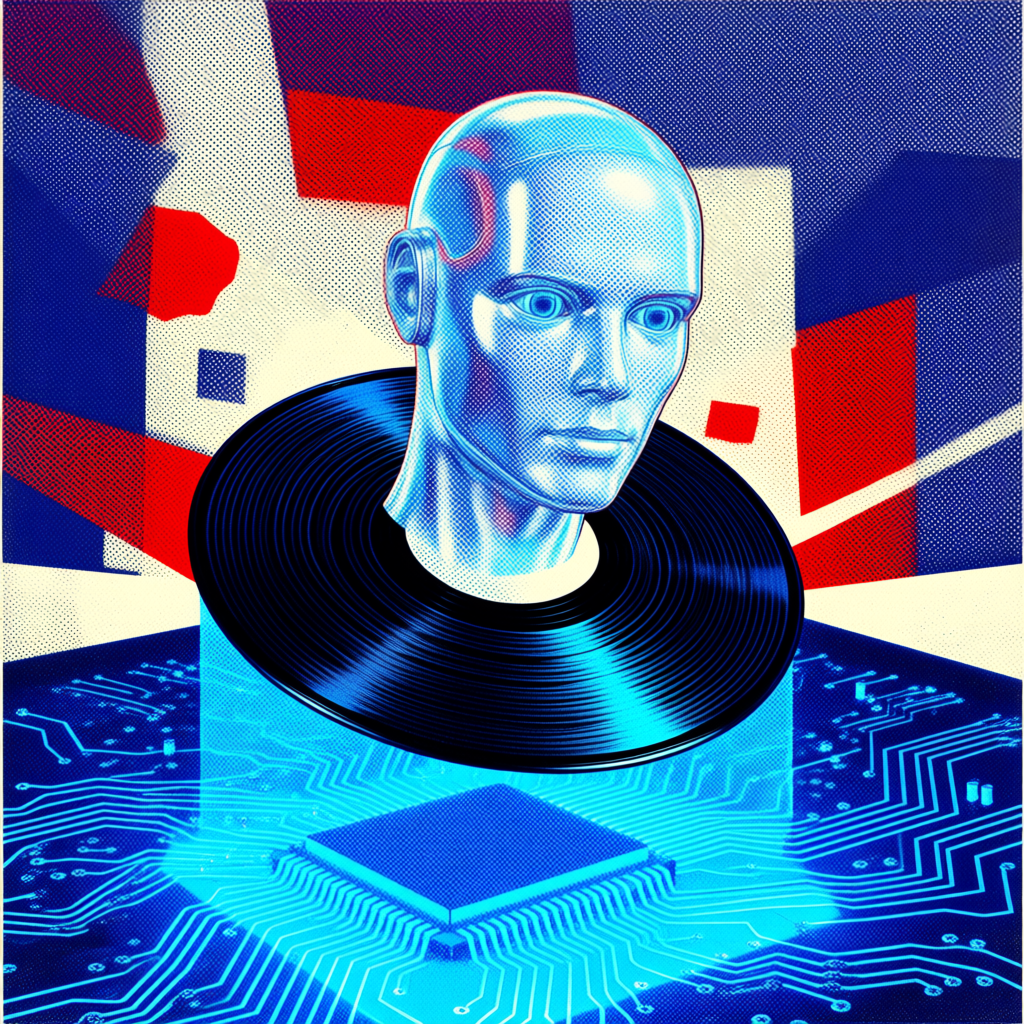
- Napster has officially pivoted from music streaming to providing AI agents via Microsoft Azure.
- The company offers a low-cost pricing model at approximately one cent per minute, significantly undercutting competitors.
- An asset-light strategy leverages existing LLMs on Azure while Napster manages the front-end interface.
- Early deployment of the AI concierge 'Jack' at the Belgian F1 Grand Prix showed strong revenue potential and multilingual reach.
The name Napster once served as the primary catalyst for the disruption of the global music industry, forcing a total rewrite of copyright laws and distribution models. Now, the brand is attempting a second act that is equally ambitious, though the medium has shifted from MP3s to Large Language Models. In a strategic pivot, Napster has transitioned from streaming music to what CEO John Acunto describes as streaming intelligence.
This transformation is not a gradual evolution but a hard break from the past. The original music-streaming service was shut down in January, clearing the path for a new business model centered on agentic AI. This new direction is underpinned by a deep integration with Microsoft, specifically utilizing the Azure cloud platform to deploy AI agents designed for business-to-customer interactions.
The economics of the one-cent agent
The most aggressive aspect of Napster's new strategy is its pricing structure. In an industry where AI implementation often carries a premium, Napster is positioning itself as the low-cost leader. According to Acunto, the company's chat-based technology operates at roughly one cent per minute. This represents a stark contrast to the prevailing market rates, where competitors typically charge between 25 cents and one dollar per minute.
By slashing the cost of entry, Napster aims to make AI agents accessible to a broader range of businesses, from small retailers to large enterprises. The goal is to remove the financial friction that often prevents companies from deploying sophisticated AI interfaces. For the end-user business, the cost difference is designed to be the most immediate and tangible advantage of choosing the Napster ecosystem over existing alternatives.
An asset-light approach to intelligence
To achieve such aggressive pricing, Napster has adopted an asset-light operational model. Rather than investing the billions of dollars required to build and maintain a proprietary compute stack or training its own foundational models from scratch, the company plugs its agents into established large language models hosted on Azure.
In this arrangement, Microsoft manages the underlying infrastructure and the heavy lifting of the AI processing, while Napster focuses on the front-end experience and the specific application of the agents. This allows Napster to scale rapidly without the overhead of massive hardware investments. The focus remains on the interaction layer, ensuring that the AI agents can effectively bridge the gap between a business and its clientele, whether those interactions occur in a digital storefront or a physical location.
Measuring success through the Jack concierge
The theoretical potential of this model has already been tested in a high-pressure environment. Napster deployed an AI concierge named Jack during the Spa Formula 1 Grand Prix in Belgium. The results provided a proof-of-concept for the scalability and utility of their agentic AI. Jack handled over 17,000 chats and operated across 21 different languages, demonstrating the ability to manage diverse, international crowds in real-time.
Beyond mere engagement metrics, the company claims that the deployment of Jack contributed to a projected 5,000 in additional revenue. This data point is critical for Napster's pitch to future business clients: the AI is not just a customer service tool for reducing headcount, but a revenue-generation engine capable of identifying why shoppers might abandon a purchase and intervening to secure the sale.
Data ownership and the Microsoft partnership
One of the primary hurdles for enterprises adopting AI is the fear of data leakage or the loss of proprietary customer information to the AI provider. Napster has addressed this by leveraging the security frameworks of the Azure ecosystem. Under the current arrangement, clients retain full ownership of their data and maintain direct ties to their customers.
Furthermore, businesses are not locked into a generic model; they preserve control over their own models, ensuring that the AI's behavior and knowledge base remain aligned with their specific brand guidelines and operational needs. This balance of low cost and high control is intended to attract risk-averse corporate entities that have previously been hesitant to integrate third-party AI agents into their customer journey.
Napster really changed the world of music, and we're really looking to change the world of agentic AI specifically.
The road from Infinite Reality to AI
The pivot is the result of a leadership shift following Infinite Reality's 7 million acquisition of Napster last year. CEO John Acunto, who was instrumental in that takeover, is now steering the brand toward this disruptive AI path. While the music app is gone, Acunto has not entirely ruled out the possibility of returning to the creative arts. He suggested that the brand could eventually be revived through AI-driven music experiences, though he acknowledged that the creative sector remains a sensitive area regarding AI integration.
For now, the priority is the B2B market. By shifting the brand identity from a music repository to a provider of streaming intelligence, Napster is betting that its history of disruption will translate well into the AI era. The company is no longer selling songs; it is selling the ability for a business to communicate with every single customer simultaneously and affordably.
Global implications for US and UK enterprises
For entrepreneurs and business owners in the USA and UK, Napster's entry into the AI agent market introduces a significant new variable in the cost-benefit analysis of digital transformation. The primary implication is the potential for a price war in the AI services sector. If a one-cent-per-minute model becomes sustainable, the barrier to entry for implementing AI-driven customer acquisition and retention will drop precipitously.
In the US market, where the focus is heavily on rapid scaling and ROI, the ability to deploy multilingual agents that directly impact revenue—as seen with the F1 example—makes this an attractive proposition for retail and hospitality sectors. In the UK and broader global markets, the emphasis on data ownership and the use of Azure's established compliance frameworks will be key. As businesses navigate the complexities of data privacy, the guarantee that they retain ownership of their customer data while utilizing a low-cost front end reduces the legal and operational risks associated with AI adoption.
Ultimately, the Napster pivot signals a shift in the AI industry: the move from the era of building massive, expensive models to the era of deploying lean, specialized agents. For the international business community, this means that the value is shifting away from the underlying compute power and toward the efficiency of the user interface and the affordability of the deployment.
FAQ
What happened to the original Napster music streaming service?
Napster officially shut down its original music-streaming business in January to pivot entirely toward AI agents.
How does Napster's AI pricing compare to its competitors?
Napster offers its AI agents at approximately one cent per minute, whereas competitors typically charge between 25 cents and one dollar per minute.
Does Napster build its own AI models from scratch?
No, Napster uses an asset-light approach, integrating its agents with established large language models hosted on Microsoft's Azure cloud platform.
Who owns the data when a business uses Napster's AI agents?
According to CEO John Acunto, clients retain ownership of their data and maintain direct ties to their customers through the Microsoft Azure arrangement.
Scrivila qui: Susanna, l assistente AI di glacom, ti risponde via email con un approfondimento gratuito.
Nessuna consulenza personalizzata (finanziaria, legale o medica): solo informazione e fonti. Email usata solo per rispondere.
oppure scrivile su: WhatsApp · Telegram · SimpleX · Delta Chat · Email