



Council of Europe Redefines AI Literacy as a Sociotechnical Skill

- Council of Europe adopts a recommendation treating AI as a sociotechnical phenomenon rather than a neutral tool.
- A new three-dimensional literacy model balances human, technological, and practical dimensions.
- The initiative implements Article 20 of the first legally binding international treaty on AI and human rights.
- 22 guiding principles aim to protect democracy and the rule of law across education and public administration.
The global conversation around artificial intelligence has long been polarized between those who view it as an existential threat and those who see it as an unbounded engine for progress. In a decisive move to bridge this gap through education, the Council of Europe has adopted a comprehensive recommendation aimed at redefining how 46 member states approach AI literacy. Approved by the Committee of Ministers during a meeting in Munich on September 2, 2026, the initiative shifts the focus from mere functional usage to a deeper understanding of AI as a sociotechnical phenomenon.
Beyond the tool: AI as a sociotechnical phenomenon
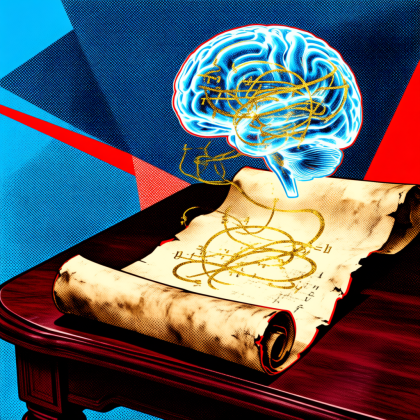
The core premise of the Council of Europe's new guidelines is the rejection of the idea that AI is a neutral technology. Instead, the organization defines AI as a system that reflects the values, design choices, and inherent biases of its developers, as well as the socio-economic and political contexts in which it is deployed. By labeling AI a sociotechnical phenomenon, the Council emphasizes that the technology is inextricably linked to the people, institutions, and social practices that shape its creation.
This perspective is critical for entrepreneurs and policymakers because it acknowledges that AI does not think, reason, or learn in the way humans do. The systems are probabilistic and prone to error, meaning that relying on them without a critical framework can lead to the systemic reinforcement of prejudices. The goal is to move beyond technical proficiency—knowing which buttons to press or which prompts to write—toward a critical awareness of how these tools impact human rights and the rule of law.
The three dimensions of AI literacy
To operationalize this vision, the Council of Europe has introduced a tridimensional model for AI literacy. This framework is designed to guide national educational policies and ensure that the workforce of the future is not just capable of using AI, but capable of questioning it.
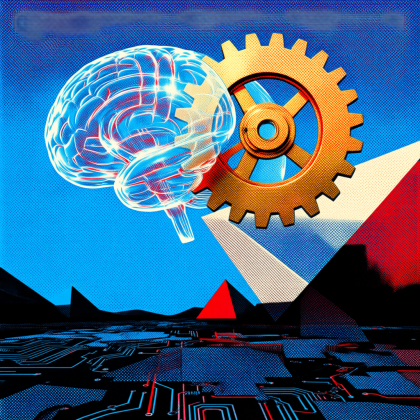
The first and most essential pillar is the human dimension. This encompasses the ethical, sociopolitical, cognitive, and environmental implications of AI. It focuses on human dignity, privacy, autonomy, and non-discrimination, treating these not as optional add-ons but as the foundation of AI interaction. The second pillar is the technological dimension, which deals with the actual mechanics of the systems: their dependence on data, operational limits, and the nature of their design. Finally, the practical dimension addresses the application of AI in real-world contexts, weighing the tangible benefits against the systemic risks.
Integrating the AILit Framework and legal mandates
This recommendation does not exist in a vacuum. It serves as a practical implementation of Article 20 of the Framework Convention on Artificial Intelligence, Human Rights, Democracy and the Rule of Law. This convention represents the first legally binding international treaty designed to ensure that AI usage complies with legal standards regarding democratic values and human rights.
Furthermore, the initiative aligns with the Council of Europe's strategy to place education at the heart of the AI response. This effort is complemented by the AILit Framework, presented in June 2026 by the European Commission and the OECD. While the AILit Framework provides practical tools for primary and secondary education, the Council of Europe's recommendation provides the overarching ethical and civic architecture.
AI literacy means understanding the effects of AI on society, not just knowing how the tools work.
A roadmap of 22 guiding principles
To assist member states in translating these high-level concepts into classroom and office reality, the Council has provided 22 guiding principles. These are organized into four primary themes: the fundamental understanding of AI, the protection of human rights and dignity, the preservation of democracy and the rule of law, and the promotion of social action and critical thinking.
The implementation strategy is divided into seven operational recommendations that cover a wide spectrum of society:
- Governance and policy frameworks for AI adoption.
- Updating school curricula to include sociotechnical AI analysis.
- New methods for teaching and assessment in the age of generative AI.
- Continuous professional development for teachers and public officials.
- Integrating ethics into higher education and AI research.
- Public awareness campaigns to inform the general citizenry.
- Strategies for lifelong learning to prevent digital exclusion.
Expanding the scope of AI education
One of the most significant aspects of the recommendation is that it extends far beyond the traditional classroom. The Council of Europe explicitly calls for the training of public officials and professionals across various sectors. The logic is that if the people managing the state's infrastructure do not understand the probabilistic nature and potential biases of AI, the risk to the rule of law increases exponentially.
The guidelines also clarify that AI literacy must cover more than just generative AI, such as Large Language Models. It must include predictive systems, decision-making algorithms, and recommendation engines—many of which are already invisibly integrated into daily digital environments. By broadening the scope, the European guidelines aim to prevent a gap where users are aware of chatbots but oblivious to the algorithms determining their credit scores or job prospects.
Global implications for international business
For entrepreneurs and companies operating in the USA, UK, and global markets, the Council of Europe's move signals a shift in the expected standard of AI corporate responsibility. While the US typically follows a more market-driven, sectoral approach to AI regulation and the UK has leaned toward a pro-innovation, non-statutory framework, the European approach is increasingly codified and rights-centric.
Companies providing AI tools to European markets or employing European citizens will likely see a demand for higher transparency regarding the sociotechnical origins of their products. The emphasis on the human dimension means that AI audits will move beyond technical accuracy to include assessments of social agency and equity. For global firms, this creates a divergence in compliance: while a tool might be legally permissible in the US based on performance, it may face scrutiny in Europe if it cannot be integrated into a framework of democratic literacy and human rights.
Moreover, as the Council of Europe influences 46 states, its model of AI literacy may become a benchmark for international standards. Businesses that proactively adopt these three dimensions—human, technological, and practical—in their internal training and product design will be better positioned to navigate the evolving regulatory landscape of the 2030s.
FAQ
What is the main difference between AI literacy and technical AI skills?
Technical skills focus on how to use AI tools, while AI literacy, as defined by the Council of Europe, involves understanding AI as a sociotechnical phenomenon, including its impact on human rights, democracy, and the rule of law.
Who is the target audience for these new guidelines?
The recommendations are addressed to the governments of the 46 Council of Europe member states to help students, teachers, parents, workers, public officials, and citizens of all ages.
Is the Framework Convention on AI legally binding?
Yes, it is the first legally binding international treaty aimed at ensuring that the use of AI systems respects human rights, democracy, and the rule of law.
What are the three pillars of the AI literacy model?
The three pillars are the human dimension (ethics and rights), the technological dimension (how the systems work), and the practical dimension (real-world use, risks, and benefits).
Sources: Orizzontescuola, Orizzonteinsegnanti, Eunews ·
Scrivila qui: Susanna, l assistente AI di glacom, ti risponde via email con un approfondimento gratuito.
Nessuna consulenza personalizzata (finanziaria, legale o medica): solo informazione e fonti. Email usata solo per rispondere.
oppure scrivile su: WhatsApp · Telegram · SimpleX · Delta Chat · Email