



ClosedQuorum: The First AI-Driven Autonomous Windows Malware
- ClosedQuorum is the first documented Windows implant using LLMs for autonomous command-and-control (C2).
- It queries DeepSeek, Qwen, Mistral, and Google Gemini to vote on the next attack phase.
- The malware targets Windows credentials, browser passwords, and cryptocurrency wallets.
- This shift represents effort displacement, removing the human operator as a bottleneck in the attack chain.
The traditional architecture of a cyber attack has always relied on a central nervous system: the command-and-control (C2) server. In this model, a human operator sits at the helm, analyzing the infected machine and manually sending instructions on whether to steal data or move deeper into a network. However, a new discovery by Cisco Talos reveals a fundamental shift in this dynamic. A Windows malware dubbed CLOSEDQUORUM has emerged, replacing the human operator with a democratic panel of artificial intelligence models.
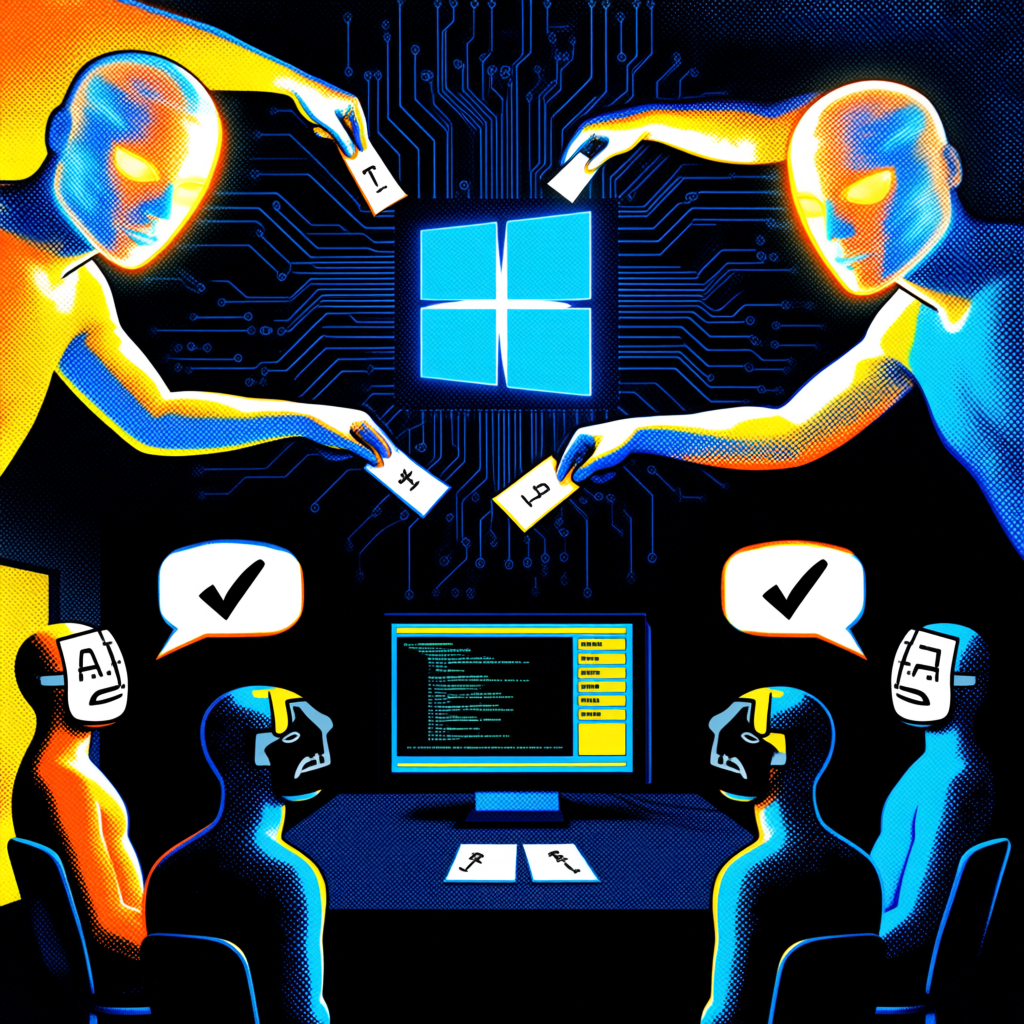
According to researchers, CLOSEDQUORUM is a Go-based implant that does not wait for a human to tell it what to do. Instead, it gathers basic telemetry from the host—such as the Windows version, processor count, and administrator status—and submits this data to up to four commercial large language models (LLMs). These models, which include DeepSeek, Qwen, Mistral, and Google Gemini, act as a strategic board, voting on the most effective next move from a predefined menu of malicious actions.
The mechanics of an AI-driven quorum
The name CLOSEDQUORUM refers to its decision-making structure. Rather than relying on a single point of failure or a human's intuition, the malware seeks a consensus. It queries the four AI services in sequence, requiring each to respond in a strict JSON format. If a model fails to follow the format, its vote is discarded. The action with the most votes is executed.
In cases where the models cannot reach a clear majority, the malware employs a deterministic tie-breaking hierarchy. DeepSeek holds the highest priority, followed by Qwen, then Mistral, and finally Google Gemini. This bureaucratic approach ensures that the malware never stalls due to indecision. If no usable responses are received at all, the program simply pauses and retries later, rather than defaulting to a random action.
Effort displacement and the end of the human bottleneck
The significance of CLOSEDQUORUM lies in what Cisco Talos describes as effort displacement. While AI has previously been used to write malicious code or generate convincing phishing emails, the human operator remained the primary driver of the attack. The human decided the target and the timing.
The session is closed; no humans are admitted, Talos analyst Ryan Fetterman noted, highlighting that the binary acts based on the judgment of the models.
By transferring the tactical decision-making phase to AI, attackers remove the inherent limitations of human biology. Human operators are constrained by sleep cycles, working hours, and cognitive load. An autonomous system, however, does not go offline. It can continue to probe a network and execute post-compromise actions while the attacker is asleep, effectively compounding the speed and scale of the intrusion.
Targeted assets and execution modules
While the decision-making is autonomous, the capabilities are constrained to a specific set of modules. The AI is prompted to act as an advanced malware strategist, choosing from four primary options:
The Steal module is the most comprehensive, designed to harvest LSASS memory for Windows credentials, extract saved passwords from Google Chrome, Microsoft Edge, and Mozilla Firefox, and drain cryptocurrency wallets including Ethereum, Exodus, and MetaMask. The Inject module utilizes sophisticated techniques like process hollowing or Early Bird APC injection to run malicious code within the memory of a trusted process, evading detection by security software. The Persist module ensures the malware survives a system reboot, while the Move module is intended for lateral movement across a network, though researchers noted this specific feature was non-functional in the analyzed version.
Tracking the origins via CAIRN
The discovery of this implant was made possible through CAIRN (Cognitive Artifact Intelligence Research Network), an open-source toolkit released by Cisco Talos to hunt for AI-integrated malware. The analysis suggests the malware is at least three months old, with code artifacts dating back to June 17, 2026.
While there is no confirmed evidence of a widespread campaign in the wild, the developer's fingerprints are visible. Clues within the binary link the creator to criminal forums specializing in carding—the trade of stolen credit card data—with posts dating back to 2025. This suggests that the developer is an experienced threat actor experimenting with AI to optimize the monetization of stolen data.
The role of API keys and Discord reporting
Despite its autonomy, CLOSEDQUORUM is not a completely independent entity. To function, each instance of the malware requires valid API keys for the LLM providers and a real Discord webhook. The attacker does not send commands, but they remain informed. Every decision made by the AI, along with the reasoning provided by the model, is posted to a Discord channel via the webhook. Stolen data is also exfiltrated to this same channel.
In the public version of the malware analyzed by The Register and other sources, these keys are placeholders. This indicates that the malware is distributed as a template, allowing individual operators to insert their own API keys and reporting addresses before deployment.
Global business impact: Risks for US and UK enterprises
For entrepreneurs and IT leaders in the USA and UK, CLOSEDQUORUM serves as a critical warning about the evolution of the threat landscape. The shift toward autonomous C2 means that traditional detection windows—which often rely on identifying patterns of human interaction with a C2 server—may become obsolete. When the decision-making happens via legitimate API calls to Google or Mistral, the traffic may blend in with normal corporate AI usage.
From a regulatory and risk management perspective, this development underscores the need for a Zero Trust architecture. Since the malware can autonomously decide to move laterally or inject code, the assumption that a perimeter firewall is sufficient is no longer viable. Companies should prioritize the monitoring of API traffic and the implementation of strict endpoint detection and response (EDR) tools that can spot process hollowing in real-time.
Furthermore, as the US and UK continue to develop frameworks for AI safety, the emergence of AI-integrated malware highlights a gap in current defenses. The ability of attackers to outsource tactical reasoning to commercial LLMs means that the speed of an attack is now limited only by the latency of an API call, not the reaction time of a human hacker. Enterprises must now prepare for a world where the adversary is an algorithm that never sleeps.
FAQ
Does CLOSEDQUORUM use a traditional C2 server?
No, it replaces the traditional attacker-controlled server with a voting system involving four commercial AI models (DeepSeek, Qwen, Mistral, and Google Gemini) to decide its next move.
Is this malware currently infecting thousands of computers?
There is no confirmed evidence of widespread in-the-wild deployment; Cisco Talos identified it as a workable design and a warning, but the public version contains placeholder keys.
What specific data does the malware try to steal?
It targets Windows credentials via LSASS memory, saved passwords from Chrome, Edge, and Firefox, and cryptocurrency wallet data from MetaMask, Exodus, and Ethereum.
How does the malware resolve a tie in the AI vote?
It uses a fixed priority list: DeepSeek's vote wins first, followed by Qwen, then Mistral, and finally Google Gemini.
Sources: Thehackernews, Dev, Cybersecuritynews ·
Scrivila qui: Susanna, l assistente AI di glacom, ti risponde via email con un approfondimento gratuito.
Nessuna consulenza personalizzata (finanziaria, legale o medica): solo informazione e fonti. Email usata solo per rispondere.
oppure scrivile su: WhatsApp · Telegram · SimpleX · Delta Chat · Email