



AI Metacognition: How Internal Confidence Drives LLM Behavior
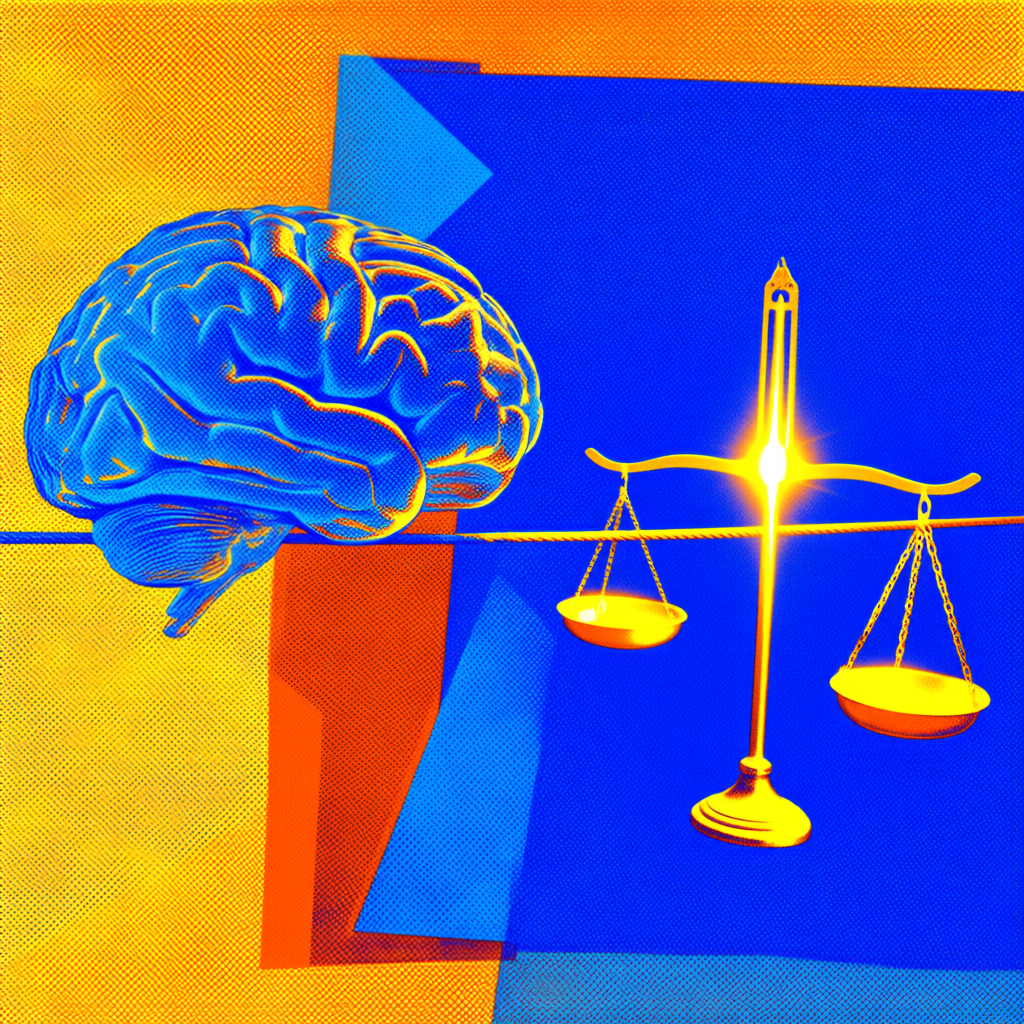
- Google DeepMind researchers found that LLMs possess metacognitive abilities, using internal confidence to regulate their responses.
- A four-phase study proves a causal link between internal confidence levels and the decision to abstain from answering.
- LLMs operate via a multidimensional internal representation of confidence and threshold-based policies.
- This discovery is critical as global enterprise AI agent deployment is projected to hit 2.2 billion by 2030.
The quest for reliable artificial intelligence has long been hindered by the unpredictability of Large Language Models (LLMs), particularly their tendency to hallucinate or provide confident but incorrect answers. However, recent breakthroughs from researchers at Google DeepMind in London suggest that the seeds of self-awareness—or at least a functional equivalent—are already present within these architectures. New evidence indicates that AI agents are not merely predicting the next token but are utilizing internal confidence signals to govern their behavior, a process known in biological entities as metacognition.
The mechanics of AI self-regulation
Metacognition is the ability to assess the quality of one's own cognitive performance. In humans and animals, this internal awareness allows for adaptive behavior; if we feel uncertain about a fact, we might hesitate, seek more information, or simply remain silent. According to research published in Nature Machine Intelligence, LLMs exhibit a strikingly similar capacity. The study demonstrates that these models do not just output text based on probability, but apply an implicit threshold to their internal confidence when deciding whether to answer a question or abstain.
The research team employed a rigorous four-phase paradigm to isolate this behavior. In the initial phase, baseline confidence was established without offering the model an option to abstain. Subsequent phases revealed that the effect sizes of confidence on the decision to remain silent were roughly an order of magnitude larger than any other alternative mechanism. This suggests that confidence is not a byproduct of the output, but a primary driver of the model's decision-making process.
Causal evidence through activation steering
One of the most significant contributions of the DeepMind study is the move from correlation to causation. By using a technique called activation steering, researchers were able to manually boost or suppress the internal confidence signals of the models. The results were definitive: increasing the confidence signal decreased the likelihood of the model abstaining, while suppressing it increased abstention.
This mediation analysis confirms that confidence redistribution is the primary mechanism at play. Furthermore, when the models were explicitly instructed to abstain at different confidence levels, they adjusted their behavior accordingly. This proves that LLMs can read out and act upon their own internal confidence to set specific abstention policies, moving them closer to the role of dependable agents rather than simple text generators.
The paradox of overconfidence and underconfidence
Despite these metacognitive capabilities, the path to perfect reliability is complicated by competing internal biases. A separate study published in Nature highlights a paradox in how LLMs handle feedback. Users have frequently noted that models can be stubbornly inflexible when updating an initial response, yet simultaneously overly sensitive to contradictory feedback.
The researchers identified that LLM confidence is governed by two competing mechanisms. One of these is a choice-supportive bias, which leads the model to overvalue its initial decision. This internal tension explains why an AI might seem certain of a wrong answer until a human nudges it, at which point it may swing too far in the opposite direction. Understanding these competing biases is essential for developers aiming to create AI that is both flexible and firm in its accuracy.
Decoding the internal representation of certainty
A critical distinction emerged in the research regarding how confidence is expressed. The study compared verbal confidence—where the model explicitly states how sure it is in a separate forward pass—with internal activation decoding (token log probabilities). While verbal confidence can predict whether a model will abstain, it is less discriminatory of actual correctness than the internal representations.
The findings suggest that both verbal cues and log probabilities are essentially lossy read-outs of a much richer, multidimensional internal confidence representation. This means the AI knows more about its own uncertainty than it is typically able to communicate in plain English. For entrepreneurs and engineers, this implies that the key to reducing hallucinations lies not in asking the AI if it is sure, but in accessing these deeper internal signals to trigger safety protocols.
Scaling the agentic economy by 2030
The timing of these discoveries is not accidental. The global economy is currently witnessing a massive shift toward agentic AI—systems that can plan, execute, and self-correct without constant human oversight. The scale of this transition is staggering. In 2025, enterprises had deployed approximately 28.6 million active AI agents. Projections indicate this number will explode to over 2.2 billion active agents globally by 2030.
As AI agents move from simple chatbots to autonomous operators in high-stakes environments, the ability to say I don't know becomes a critical safety feature. An agent that can accurately gauge its own confidence can trigger a human-in-the-loop intervention before a costly error occurs. This transition from AGI (Artificial General Intelligence) toward more specialized, self-aware systems is a central theme in recent DeepMind publications, which explore everything from the politics of AI consciousness to the risks of superintelligence.
Strategic implications for US and UK enterprises
For business leaders in the USA and UK, these findings shift the conversation from AI capability to AI reliability. In the US market, where the deployment of AI in healthcare and finance is accelerating, the ability to implement threshold-based abstention policies can significantly mitigate legal and operational risks. While the US lacks a centralized AI law similar to the EU AI Act, industry standards are increasingly leaning toward the transparency and reliability metrics described in these metacognition studies.
In the UK, where the government has positioned itself as a hub for AI safety, this research provides a technical roadmap for auditing AI behavior. Companies integrating LLMs into their workflows should move away from relying on the AI's verbal assurances of accuracy. Instead, the focus should be on developing middleware that monitors internal confidence signals to determine when a task should be escalated to a human expert. The goal for the global entrepreneur is no longer just to find the most powerful model, but the one with the most calibrated sense of its own limitations.
FAQ
What is AI metacognition?
It is the ability of a Large Language Model to assess the quality of its own cognitive performance and use that internal confidence to guide its behavior, such as deciding whether to answer or abstain from a prompt.
How did researchers prove that confidence drives AI behavior?
They used activation steering to manually increase or decrease internal confidence signals. They found that boosting confidence decreased the model's tendency to abstain, proving a causal link.
Why is this important for businesses?
With the number of AI agents expected to reach 2.2 billion by 2030, businesses need agents that can recognize their own uncertainty to avoid hallucinations and critical errors in high-stakes environments.
Is verbal confidence the same as internal confidence?
No. Verbal confidence is a simplified, lossy read-out. Internal representations (like token log probabilities) are more accurate indicators of whether the model is actually correct.
Sources: Deepmind, Psychologytoday, Nature ·
Scrivila qui: Susanna, l assistente AI di glacom, ti risponde via email con un approfondimento gratuito.
Nessuna consulenza personalizzata (finanziaria, legale o medica): solo informazione e fonti. Email usata solo per rispondere.
oppure scrivile su: WhatsApp · Telegram · SimpleX · Delta Chat · Email