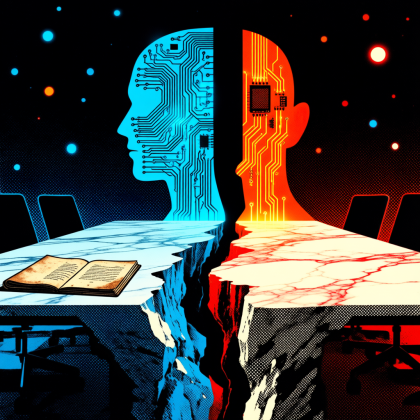




Canva London Event Disrupted by Pull The Plug AI Activists

- Activists from Pull The Plug crashed Canva's AI Vision event in London to protest Big Tech's control.
- Protesters highlighted environmental risks, specifically water consumption by data centers and drought risks.
- The movement calls for the UK government to establish binding Citizens' Assemblies on AI.
- Concerns were raised regarding data theft and the potential existential risks of unchecked AI development.
The intersection of corporate optimism and grassroots anxiety reached a boiling point in London during a recent AI showcase hosted by Canva. The event, designed to highlight the future of design and artificial intelligence, was interrupted by an activist representing the movement Pull The Plug. The disruption, which has since circulated widely across social media platforms, serves as a stark reminder that the rapid deployment of generative AI is meeting significant resistance from those who feel excluded from the decision-making process.
A clash of visions at the Canva showcase
The incident occurred during the AI Vision event, where the atmosphere of corporate innovation was shattered by a protester who confronted the speakers and the audience. According to reports from Times Now, the activist accused the leaders of the global AI race of being completely incompetent. The protester's rhetoric focused on the disconnect between the glitzy presentations of tech companies and the fears of everyday citizens.
The activist claimed that AI steals from people and leads local communities into impoverished conditions. While the audience remained largely silent, the protester's voice echoed through the venue, questioning whether the current trajectory of AI development is the world people actually want to inhabit. The disruption was not a random act of vandalism but a coordinated effort by Pull The Plug to bring visibility to their demands for democratic oversight.
The environmental cost of the AI race
Beyond the philosophical and economic arguments, the protest brought a critical environmental dimension to the forefront. The activist specifically cited the impact of data centers on natural resources, claiming that 500 operational data centers are leading two-thirds of the country into droughts. This focus on water consumption highlights a growing tension in the tech industry: the massive energy and cooling requirements of Large Language Models (LLMs) versus the sustainability goals of national governments.
The call for a moratorium on data centers is a central pillar of the current unrest. By linking the digital expansion of AI to tangible ecological disasters like drought, the movement is attempting to shift the conversation from software capabilities to physical infrastructure. This approach targets the material reality of AI, reminding the public that the cloud is not an ethereal space but a series of power-hungry facilities with a significant local footprint.
Democratic control versus Big Tech hegemony
Pull The Plug defines itself as a non-violent grassroots movement composed of ordinary people concerned about the impact of AI on industries, communities, and the environment. They explicitly state that they are not anti-tech or anti-AI, but are instead opposed to the undemocratic control exerted by a handful of US-based tech companies. The movement argues that these corporations currently overshadow every aspect of modern life without public consent.
To counter this, the group is proposing a structural shift in how AI is regulated. Their primary demand is for the UK government to fund and implement binding Citizens' Assemblies on AI. The vision is to bring together juries of ordinary people, informed by expert testimony, to make decisions that are legally binding. This model seeks to move AI governance away from industrial lobbyists and toward a more participatory democratic framework.
Existential dread and the Hugging Face reference
The protest also touched upon the more extreme risks associated with artificial intelligence. The activist mentioned a 10 per cent chance of AI killing everyone within a decade, reflecting the existential risk discourse that has permeated both academic and activist circles. This fear is compounded by a perceived lack of competence among those steering the technology.
Furthermore, the activist referenced the Hugging Face fiasco, suggesting that such events serve as warnings of what happens when AI development proceeds without sufficient safeguards. By blending these high-level existential fears with immediate concerns about data theft and economic displacement, the protesters are building a broad coalition of anxiety that spans from the academic to the working class.
The broader movement against the machines
The disruption at the Canva event is part of a larger strategy. Pull The Plug has organized a national demonstration titled March Against The Machines, scheduled for December 5th at BBC Portland Place in London. This event aims to consolidate the various grievances—environmental, economic, and ethical—into a unified political demand for regulation.
AI steals from people. You are leading local communities into impoverished conditions. Do you think this is the world we want to be led into?
The movement's reach extends into academia as well. Internal discussions within the group, such as those led by Tom Stoneham, have questioned the irony of returning to closed exams to prevent students from using LLMs to cheat, arguing that such measures are inherently discriminatory and fail to address the root of the technological shift.
Global implications for business and regulation
For entrepreneurs and business leaders in the USA, UK, and global markets, the disruption of a high-profile event like Canva's is a signal that the social license for AI deployment is narrowing. While the US has largely followed a market-led approach with voluntary commitments from tech giants, the UK is attempting to balance innovation with safety. However, the demand for binding Citizens' Assemblies suggests that voluntary guidelines may no longer be sufficient to appease public anxiety.
In the UK, the pressure is mounting for the government to move beyond advisory boards and toward more transparent, public-facing regulatory mechanisms. For companies operating globally, this means that the risk of 'activist disruption' is no longer limited to climate change or labor rights but now encompasses the very nature of the algorithms they deploy. Businesses must prepare for a landscape where data provenance and the environmental impact of their compute power are scrutinized by a public that feels increasingly disenfranchised by the speed of the AI transition.
Key concerns raised by the movement
- Democratic Deficit: The concentration of AI power in a few US companies.
- Ecological Strain: Water consumption and drought risks caused by data centers.
- Economic Theft: The use of human-generated data to train models without compensation.
- Existential Risk: The potential for catastrophic outcomes due to incompetent management of AGI.
FAQ
What is the main goal of the Pull The Plug movement?
The movement seeks to end the undemocratic control of AI by Big Tech and calls for the UK government to establish binding Citizens' Assemblies to decide the role of AI in society.
Why did the activist mention data centers during the Canva event?
The activist highlighted the environmental impact of AI, specifically claiming that the water consumption of 500 operational data centers is contributing to droughts in two-thirds of the country.
Is Pull The Plug an anti-technology group?
No, the group states they are not against tech or AI itself, but rather against the way it is currently developed and implemented without public input.
What is a Citizens' Assembly in the context of AI?
It is a proposal to bring together a representative group of ordinary citizens, informed by experts, to make binding decisions on AI regulation and implementation.
Sources: Pulltheplug, Dailytelegraph, Timesnownews ·
Scrivila qui: Susanna, l assistente AI di glacom, ti risponde via email con un approfondimento gratuito.
Nessuna consulenza personalizzata (finanziaria, legale o medica): solo informazione e fonti. Email usata solo per rispondere.
oppure scrivile su: WhatsApp · Telegram · SimpleX · Delta Chat · Email