



Nvidia and SETI Use Generative AI to Hunt for Extraterrestrial Life
- SETI Institute and Breakthrough Listen are using Nvidia GPUs to automate astronomical observations.
- The Holoscan platform enables real-time processing of 300 GB per second, eliminating the need for disk storage.
- Generative AI agents now handle antenna orientation, calibration, and data correction via natural language.
- Analysis timelines that previously took weeks or years are now reduced to a few hours.
The search for extraterrestrial intelligence has historically been a game of patience and massive data archives. For decades, the primary challenge for astronomers has not been the lack of data, but the overwhelming volume of it. Radio telescopes capture a torrent of signals from the cosmos, most of which are noise, requiring researchers to record vast amounts of information onto disks for later, painstaking analysis. This traditional workflow created a significant bottleneck between the moment a signal hit the antenna and the moment a scientist could actually interpret it.
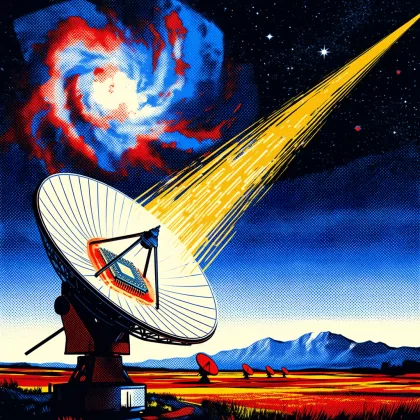
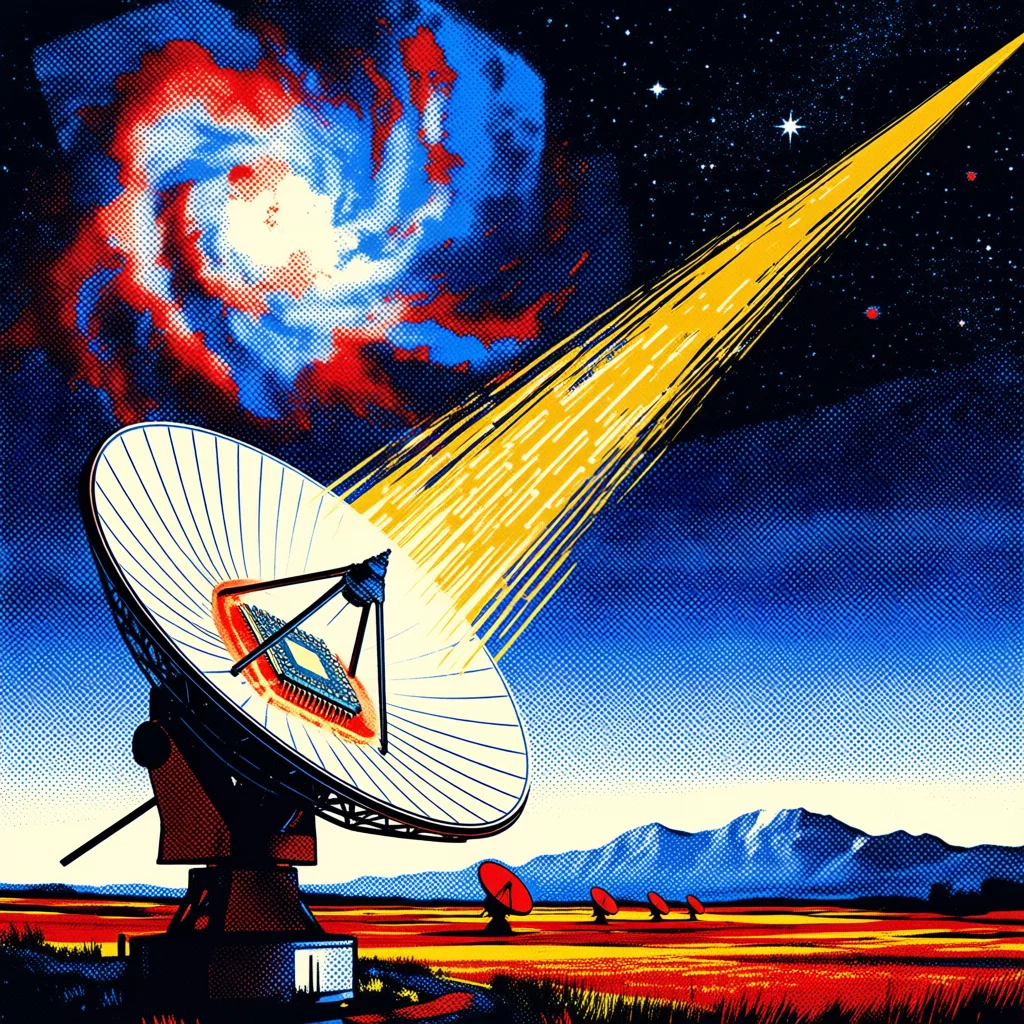
A new collaboration between the SETI Institute, Breakthrough Listen, and Nvidia is fundamentally altering this paradigm. By integrating generative AI and high-performance GPU acceleration at the Allen Telescope Array in Northern California, the search for artificial signals from other civilizations has moved from retrospective analysis to real-time discovery.
Eliminating the disk bottleneck
The technical core of this evolution lies in how data is handled the moment it is captured. Traditionally, the sheer scale of radio telescope output made immediate processing impossible. The new system leverages Nvidia Holoscan, a platform specifically designed for the real-time processing of sensor data. Instead of routing the signal to a hard drive, the data is streamed directly into GPU memory.
This architectural shift allows the system to handle a staggering throughput of 2.4 terabits per second, which equates to approximately 300 GB/s. By performing the computation on-site, right next to the antennas, the SETI Institute has effectively removed the latency associated with data storage and retrieval. The result is a seamless pipeline where the cosmos is analyzed as it is observed, rather than weeks after the event.
AI agents as astronomical operators
Beyond the raw hardware power, the integration of generative AI has introduced a new layer of operational efficiency. The project now employs AI agents that act as intermediaries between the researcher and the complex machinery of the radio telescope. Rather than manually configuring every parameter of the array, a researcher can now formulate a request using natural language.
These AI agents translate verbal instructions into technical actions. They are capable of orienting the antennas toward specific coordinates, calibrating the instruments to ensure a clean signal, and correcting data errors in real-time. This automation extends all the way to the generation of the final graphical output. According to Nvidia, this integration has a dramatic impact on productivity: tasks that previously demanded weeks or even years of human effort can now be completed in a matter of hours.
Proven success with the Crab Nebula
This real-time processing capability is not merely theoretical. The framework has already demonstrated its efficacy through the study of the Crab Nebula pulsar. A pulsar is the dense remnant of an exploded star that rotates rapidly, emitting regular radio pulses similar to a lighthouse.
In a study published last November, a collaborative team from the SETI Institute, the University of Berkeley, and Nvidia detailed a deep learning model that successfully captured giant pulses from this pulsar in real-time at the Allen Telescope Array. At the time of that specific operation, the system was managing approximately 100 gigabits per second. The current upgrade to 300 GB/s represents a massive scaling of that initial success, providing a more robust foundation for detecting the more elusive, artificial signals that Breakthrough Listen seeks.
The transition from disk-based analysis to real-time GPU processing represents a quantum leap in our ability to monitor the electromagnetic spectrum for signs of intelligent life.
The synergy of hardware and deep learning
The success of the Allen Telescope Array upgrade highlights a broader trend in scientific research: the convergence of specialized hardware and deep learning. The ability to process 300 GB/s requires more than just a fast processor; it requires a software stack that can parallelize the workload across thousands of GPU cores while maintaining the precision required for astronomical measurements.
By utilizing accelerated computing, SETI is not just looking for a needle in a haystack; they are using AI to burn away the hay in real-time. This allows the human researchers to focus on the anomalies—the signals that do not fit natural patterns—rather than spending their careers managing data pipelines.
Implications for global enterprise and tech
While the search for aliens captures the public imagination, the underlying technology has immediate implications for the global business community, particularly in the USA and UK. The transition from batch processing to real-time sensor analysis is a blueprint for any industry dealing with massive data streams.
For enterprises in the US and UK, the SETI-Nvidia model demonstrates the viability of edge computing at an extreme scale. Industries such as high-frequency trading, autonomous vehicle network management, and real-time cybersecurity monitoring can apply similar logic: moving the computation to the point of data ingestion to eliminate latency. In the US, where the regulatory environment for AI is currently shaped by executive orders focusing on safety and innovation, this type of scientific application showcases the positive, non-disruptive potential of generative AI agents.
Furthermore, the use of natural language interfaces to control complex industrial hardware suggests a shift in the labor market. The role of the technician is evolving into that of an orchestrator. Companies investing in AI-driven automation will find that the ability to translate high-level business intent into machine execution—without manual coding or configuration—will be a primary competitive advantage in the coming decade.
FAQ
What is the main technical improvement in the SETI telescopes?
The shift from recording data on disks for later analysis to real-time processing using Nvidia GPUs and the Holoscan platform.
How much data can the new system process?
The platform can handle up to 2.4 terabits per second, which is roughly 300 GB/s.
What role does generative AI play in this project?
AI agents allow researchers to use natural language to point antennas, calibrate instruments, and correct data errors.
Has this system already found something?
It has been successfully used to detect giant pulses from the Crab Nebula pulsar in real-time, proving the deep learning model works.
Sources: Dday (2), Innovation ·
Scrivila qui: Susanna, l assistente AI di glacom, ti risponde via email con un approfondimento gratuito.
Nessuna consulenza personalizzata (finanziaria, legale o medica): solo informazione e fonti. Email usata solo per rispondere.
oppure scrivile su: WhatsApp · Telegram · SimpleX · Delta Chat · Email