



Nvidia CEO Jensen Huang and Donald Trump Align on AI Acceleration
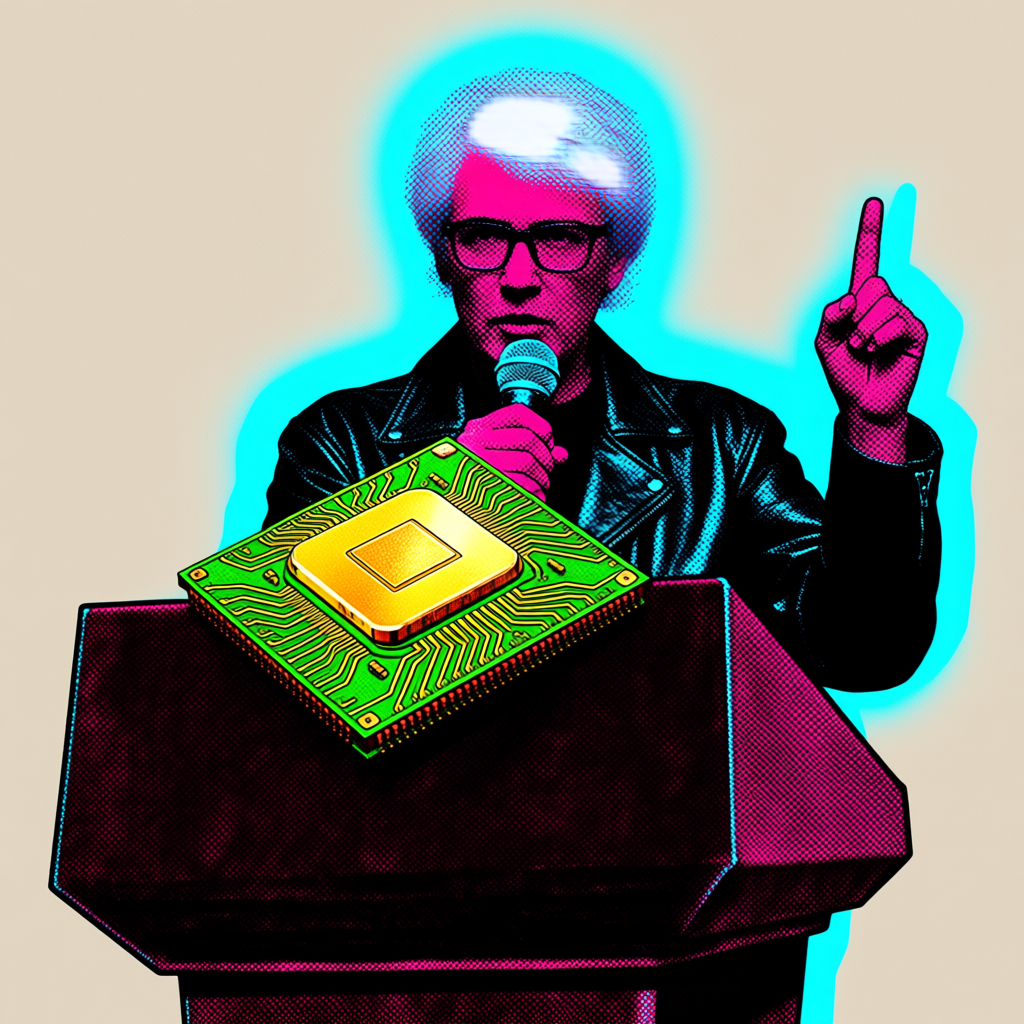
- Jensen Huang took a live speakerphone call from President Trump during the All-In Summit in Los Angeles.
- Both leaders dismissed AI existential risk and safety concerns, with Trump labeling the panic a hoax.
- Huang explicitly pledged that Nvidia would not let an AI slowdown occur, aligning with the US administration.
- The exchange highlights a growing tension between AI safety advocates (like Anthropic) and the US political-industrial complex.
The intersection of silicon and state power reached a theatrical peak this week in Los Angeles. During the All-In Summit, Nvidia CEO Jensen Huang received a live phone call from President Donald Trump, a moment that served as more than just a high-profile interruption. It functioned as a public alignment between the world's most critical AI hardware provider and the US executive branch on a matter of global strategic importance: the speed of artificial intelligence development.
The interaction occurred while Huang was onstage with the hosts of the All-In podcast, including venture capitalists Chamath Palihapitiya and Jason Calacanis, as well as White House advisers David Friedberg and David Sacks. In a move that bypassed traditional corporate diplomacy, Huang placed the President on speakerphone, allowing the audience to witness a candid exchange about the trajectory of the AI industry.
Dismissing the AI safety panic
The timing of the call was not accidental. Prior to the interruption, Huang and the summit hosts had been discussing the cautionary stance of Anthropic CEO Dario Amodei, who has called for a reduction in the pace of AI capability improvements. While other industry titans like Elon Musk and OpenAI CEO Sam Altman have expressed varying degrees of agreement with the need for caution, Huang has consistently diverged from this doomer sentiment.
President Trump wasted no time in framing the AI safety movement not as a scientific or ethical necessity, but as a strategic liability. He argued that those pushing for a slowdown are playing into the hands of political opponents and foreign adversaries. Specifically, Trump asserted that the real winners of an AI panic would be China and certain political actors, describing the existential risk narrative as a hoax.
Huang's response was immediate and unequivocal.
You’re right. We’re not going to let that happen, sir,he replied, as the crowd erupted in applause. This public commitment signals that Nvidia is firmly positioned against any regulatory or voluntary pauses in the development of large-scale AI models.
The strategic imperative of AI dominance
For the US administration, the logic is rooted in geopolitical competition. Trump described AI as a technology bigger than the internet, suggesting that any hesitation in its deployment would be a surrender of American leadership. This perspective is shared by allies such as Y Combinator CEO Garry Tan, who have suggested that opposition to the physical infrastructure of AI—specifically data centers—is part of an international effort to stifle US economic growth.
However, the resistance to AI expansion is not merely a geopolitical plot. Local data suggests a significant domestic divide. According to recent Gallup polling, seven out of ten Americans oppose the construction of data centers in their immediate vicinity. The primary drivers of this opposition are environmental concerns, cited by over 50% of respondents, followed by worries regarding the cost of living and general quality of life.
Trump acknowledged the need for prudence in execution but remained firm that the industry must not be halted. His message to Huang was clear: the US intends to lead, and the administration will support the infrastructure necessary to maintain that lead.
Hardware as a political instrument
The optics of the call also highlighted the personal rapport between the tech elite and the presidency. Beyond the policy alignment, the event featured a moment of levity when Trump teased Huang about his technical abilities, joking that while Huang can develop the most complex computer chips in the world, he struggled to operate a speakerphone. In reality, Huang was coordinating with stagehands to secure an additional microphone to ensure the President's voice reached the entire audience.
Observers noted that Huang's appearance—complete with his signature alligator leather jacket—and his use of a foldable phone (which was initially misidentified by some reports as an Apple device) projected an image of a CEO who is as much a cultural icon as a business leader. This visibility is crucial for Nvidia, as its market valuation is inextricably linked to the continued, aggressive expansion of AI labs.
Market reactions and corporate stakes
While the public display of alignment with the White House is generally positive for long-term government contracts and regulatory ease, the market's immediate reaction was mixed. Nvidia's share price saw a slight dip of a few percentage points following the event, despite having grown 33% over the past year. This volatility suggests that investors are weighing the benefits of political patronage against the potential for increased scrutiny or the risks associated with ignoring safety warnings.
From a business perspective, Huang's stance is the only logical one for his current trajectory. Nvidia's revenue model relies on the insatiable demand for H100s and subsequent chip generations. Any successful movement to slow the pace of AI development would directly impact the order books of the world's most valuable chipmaker. By framing safety concerns as a hoax, Huang aligns his corporate interests with the national security interests of the US government.
Implications for the global business community
The dialogue between Huang and Trump provides a roadmap for how the US will likely handle AI governance moving forward. Unlike the European Union's approach, which focuses on a comprehensive regulatory framework via the AI Act to mitigate risk, the US is leaning toward an accelerationist model. For entrepreneurs and investors in the USA and UK, this suggests a regulatory environment that prioritizes growth, speed, and competitive dominance over precautionary principles.
In the United Kingdom, which has attempted to position itself as a bridge between the US and EU approaches, this shift toward aggressive acceleration may force a choice. Businesses operating across these jurisdictions must prepare for a fragmented landscape where the US promotes a maximum-speed deployment strategy, while other regions may maintain stricter guardrails.
For global enterprises, the takeaway is that the US government views AI not just as a commercial sector, but as a critical arm of national power. Companies that align their roadmaps with this accelerationist vision are likely to find more support in the US market, while those focusing on slow-burn safety may find themselves at odds with the prevailing political wind in Washington. The era of the voluntary AI pause appears to be ending, replaced by a state-backed mandate for dominance.
Key takeaways for international firms
The current trajectory indicates that US-based AI development will likely avoid the stringent "precautionary" bottlenecks seen in other markets. For UK and global firms, this means the competitive bar for AI capabilities will continue to rise rapidly. Those relying on a global slowdown for safety or ethical alignment may find the US market moving forward regardless of international consensus.
FAQ
Why did Jensen Huang put President Trump on speakerphone?
It was a public gesture of comfort and alignment with the President during the All-In Summit, allowing the audience to hear their agreement on AI acceleration.
What is the disagreement between Nvidia and companies like Anthropic?
Anthropic CEO Dario Amodei has called for a slowdown in AI capability improvements to ensure safety, whereas Jensen Huang and President Trump view such delays as a strategic risk and a hoax.
How do American citizens feel about the AI infrastructure needed for this growth?
There is significant local opposition; Gallup polling shows 70% of Americans oppose data center construction in their areas, primarily due to environmental concerns.
Does this mean the US will ignore AI safety regulations?
While the administration emphasizes leading and not slowing down, President Trump mentioned that things must be done prudently, though he explicitly rejected the idea of stopping the industry.
Sources: TechCrunch, Tech, Wired ·
Scrivila qui: Susanna, l assistente AI di glacom, ti risponde via email con un approfondimento gratuito.
Nessuna consulenza personalizzata (finanziaria, legale o medica): solo informazione e fonti. Email usata solo per rispondere.
oppure scrivile su: WhatsApp · Telegram · SimpleX · Delta Chat · Email