



Computing Limits, AI Threats and Financial Risks: The 2026 Outlook
- Computing is shifting from transistor miniaturization to brute-force data center expansion as physical limits loom.
- AI has exposed a decade-old PHP vulnerability, triggering a massive surge in global exploit attempts.
- Financial institutions in Latin America are facing automated attacks powered by AI agents like Claude and Grok.
- Environmental reporting from Alaska highlights the dangerous feedback loop between forest fires and thawing permafrost.
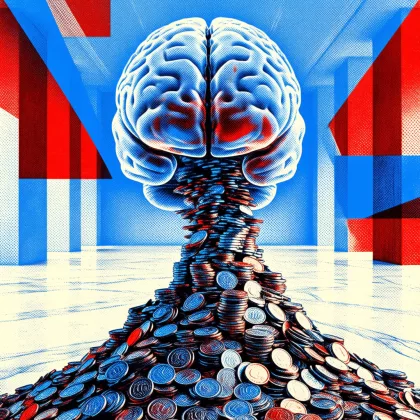
The trajectory of modern technology has long been defined by a predictable rhythm of shrinkage. For decades, the industry relied on the steady halving of transistor sizes to drive performance, a process that felt almost automatic. However, as we move through 2026, that easy descent has stalled. The industry now finds itself at a crossroads where the laws of physics are clashing with the insatiable demand for processing power, forcing a pivot toward brute-force infrastructure.
The end of the easy descent in computing
In 1959, physicist Richard Feynman proposed a provocative idea in his lecture
Today, that era of effortless scaling is over. The industry is increasingly relying on the construction of massive data centers to maintain performance gains, effectively trading spatial efficiency for sheer scale. Yet, researchers argue that we have not yet hit the absolute ceiling. The current focus is shifting toward unlocking new leaps in computing that move beyond simple transistor shrinkage, exploring the remaining room at the bottom that Feynman first identified.
AI as a double-edged sword for web security
While AI is being leveraged to push the boundaries of hardware and biology, it is simultaneously exposing the fragility of the digital foundations we take for granted. A critical example is the recent discovery of a decade-old flaw in PHP, the server-side scripting language that powers a vast portion of the global web. This vulnerability remained hidden for ten years until AI tools uncovered it, turning a dormant risk into an active crisis.
The aftermath of this disclosure has been chaotic. Governments have been forced to urge website owners to either patch their systems immediately or take their sites offline to prevent compromise. The scale of the threat became evident almost instantly; exploit attempts skyrocketed from a few thousand to millions shortly after the flaw became public knowledge. This incident highlights a new reality where AI can audit legacy code at a speed and scale that human developers cannot match, potentially uncovering thousands of similar computing flaws across the internet.
Automated warfare in the financial sector
The weaponization of AI is not limited to code auditing. In the financial sector, a new breed of automated attacks is emerging. Hackers have begun utilizing sophisticated AI agents, specifically mentioning models like Claude and Grok, to automate cyberattacks against banking institutions. These attacks have been particularly aggressive in Latin America, where over 400 banks have been targeted.
This shift toward AI-driven automation allows attackers to scale their efforts with minimal human intervention, creating a persistent and adaptive threat landscape. The impact of AI on the financial workforce is also becoming apparent. For instance, Barclays has indicated that the integration of AI is allowing the firm to cut 5,000 jobs, demonstrating that the technology is restructuring the industry's labor requirements even as it introduces new security vulnerabilities.
The biological frontier and AI-designed life
Beyond silicon and security, generative AI is venturing into the realm of synthetic biology. In 2025, Samuel King, a PhD student at Stanford University, utilized a generative AI model to propose genetic blueprints for microscopic viruses. While this does not yet constitute the creation of fully AI-generated life, it represents a fundamental shift in how we approach biology.
By treating genetic sequences as a language that can be modeled and generated, researchers are opening the door to designing new life forms with specific functions. This capability brings the industry closer to a future where biological engineering is as programmable as software, though it raises profound ethical and safety questions regarding the creation of synthetic organisms.
Climate tipping points in the Alaskan wilderness
While the digital world faces its own instabilities, the physical world is grappling with a critical climate feedback loop. Recent reporting from the forests of Alaska has shed light on the precarious state of permafrost. This frozen soil layer is not merely melting due to rising temperatures; it is being actively threatened by forest fires.
The relationship between fire and permafrost is complex and dangerous. When fires ravage Alaskan forests, they strip away the insulating organic layer of the soil, accelerating the thaw of the permafrost beneath. This process releases stored carbon and methane into the atmosphere, which in turn drives further warming and more frequent fires. This cycle represents a significant tipping point in the global climate puzzle, where localized environmental disasters trigger systemic global effects.
Global implications for business and regulation
For entrepreneurs and executives in the USA, UK, and global markets, these developments signal a shift in risk management. The discovery of the PHP flaw proves that legacy systems are no longer safe simply because they have been stable for a decade; AI has effectively reset the clock on technical debt. Companies must now implement continuous, AI-driven auditing of their infrastructure to stay ahead of automated threats.
In the financial sector, the use of AI agents for attacks means that traditional perimeter security is insufficient. Firms in the US and UK will likely need to accelerate the adoption of AI-based defensive layers to counter the automation seen in the Latin American banking attacks. Furthermore, the labor shifts seen at institutions like Barclays suggest that AI-driven operational efficiency will continue to displace traditional roles, necessitating a strategic rethink of human capital.
From a regulatory perspective, the ability of AI to design genetic blueprints for viruses will likely trigger new oversight frameworks in the US and UK, similar to the scrutiny applied to dual-use technologies. Meanwhile, the climate volatility in regions like Alaska serves as a reminder for global supply chain managers that environmental tipping points can create unpredictable disruptions in resource availability and infrastructure stability. The intersection of climate threats and tech limits is no longer a theoretical concern but a core business risk.
FAQ
Why is the computing industry moving toward larger data centers?
Because the traditional method of increasing performance by shrinking transistors (miniaturization) has stalled, forcing companies to use brute-force scaling through larger infrastructure.
What is the risk associated with the PHP vulnerability?
AI uncovered a decade-old flaw in PHP, which powers most websites. This has led to millions of exploit attempts, forcing governments to advise patching or taking sites offline.
How are AI agents being used in financial cyberattacks?
Hackers are using agents like Claude and Grok to automate attacks on banks, with over 400 institutions in Latin America already targeted.
What is the link between Alaskan forest fires and permafrost?
Fires destroy the insulating layer of the soil, which accelerates the thawing of permafrost and releases greenhouse gases, creating a warming feedback loop.
Sources: Technologyreview, Winzheng, Daily ·
Scrivila qui: Susanna, l assistente AI di glacom, ti risponde via email con un approfondimento gratuito.
Nessuna consulenza personalizzata (finanziaria, legale o medica): solo informazione e fonti. Email usata solo per rispondere.
oppure scrivile su: WhatsApp · Telegram · SimpleX · Delta Chat · Email