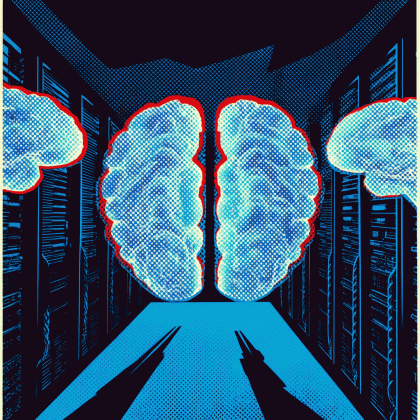




NYC Bans Generative AI in Schools: A Bold Move for Human Learning

- NYC implements a one-year moratorium on generative AI for students from 2-K through 8th grade.
- The policy affects nearly 600,000 students, prioritizing human interaction over AI-powered instruction.
- High schoolers will receive AI literacy modules, while teachers can still use AI for administrative tasks.
- New screen time caps are introduced, limiting device use for younger grades to 30-45 minutes daily.
New York City has just launched what is being described as the most expansive student-facing artificial intelligence moratorium in the United States. Mayor Zohran Kwame Mamdani and Schools Chancellor Kamar H. Samuels have announced a sweeping policy that effectively halts the use of generative AI for students from 2-K through eighth grade for the 2026-2027 school year. This decision impacts nearly 600,000 students, representing roughly two-thirds of the city's total public school enrollment.
The move represents a sharp pivot away from the rapid integration of EdTech tools that has characterized the last few years. By removing student-facing generative AI and companion chatbots from the classroom, the city administration is betting on the primacy of human-led instruction. Mayor Mamdani has been explicit about the motivation behind the ban, stating that children require teachers and human connection to grow, and must learn to wrestle with complex problems independently rather than relying on algorithmic assistance.
The push for human-centric education
At the heart of this policy is a philosophical rejection of the idea that AI integration in early education is an inevitable necessity. While the tech industry often frames AI as an essential tool for modern literacy, the Mamdani administration views it as a potential barrier to the development of fundamental social and cognitive skills. The administration argues that students need to build relationships with educators and develop problem-solving abilities alongside their peers without the intervention of generative software.
Chancellor Kamar Samuels, speaking both as an administrator and a parent, emphasized that the goal is to protect the curiosity and creativity that drive childhood development. The administration believes that innovation does not always equate to more technology. Instead, the city will spend the coming year studying the actual impacts of these technologies to ensure that, if they return, they serve the learning process rather than hindering it.
Strict new rules for the classroom
The moratorium is not a blanket ban on all technology, but it is highly specific regarding generative AI. The policy eliminates all software that utilizes student-facing generative AI for the affected grades. However, the administration has maintained a distinction between student use and professional use. Teachers are still permitted to utilize AI for lesson planning and administrative duties, provided the tools meet the city's safety standards.
Beyond the AI ban, the city is tackling the broader issue of digital saturation. New screen time guidelines have been introduced to limit the amount of time students spend on devices. For students in grades 3-5, the recommended daily cap is 30 minutes, while students in grades 6-8 are limited to 45 minutes. These restrictions aim to shift the focus from clicking and scrolling back to active, human-led learning.
A tiered approach for high schoolers
Recognizing that older students are closer to entering a workforce where AI is prevalent, the city has opted for a different strategy for high school students. Rather than a total ban, the administration is implementing a framework of controlled exposure and critical analysis. High schoolers will participate in AI critical thinking modules twice a year, focusing on ethics, bias, and AI literacy.
Furthermore, a small number of high school classrooms will be selected for limited AI pilot programs. These pilots will be closely monitored to gather evidence on how the technology can be used effectively without compromising academic integrity or critical thinking. This tiered approach suggests that the city is not anti-technology, but is instead advocating for a developmental timeline where human cognitive foundations are laid before AI tools are introduced.
Local pressure and the role of educators
The decision did not happen in a vacuum. It follows significant pressure from parent advocacy groups and members of the City Council, more than half of whom signed a letter urging the Department of Education to halt the expansion of AI in classrooms. Michael Mulgrew, President of the United Federation of Teachers (UFT), noted that parents have become increasingly protective of their children due to horror stories regarding AI, describing the technology as a
very dangerous thingif not properly vetted.
The rollout has not been without friction. Some school leaders reported a lack of clear guidance in the weeks leading up to the school year. Principals had been told to pause software purchases as early as July, but the specific grade-based restrictions and screen time caps were only finalized recently. Despite this, the administration maintains that the moratorium is a necessary commitment to getting the future of education right.
The broader political alignment
The policy has received strong backing from higher levels of government. Governor Kathy Hochul praised Mayor Mamdani for his commitment to ensuring children focus on growing rather than screens, noting that New York State has been leading efforts to prioritize human learning. Public Advocate Jumaane D. Williams also supported the move, arguing that the city government has a responsibility to ensure technology serves development rather than hurting it.
By framing the moratorium as a safety and developmental measure, the city is positioning itself as a leader in the global debate over the role of AI in childhood. The administration's stance is that the rapid expansion of AI into students' lives requires immediate guardrails to protect the well-being of New Yorkers.
Global implications for AI and EdTech businesses
For international entrepreneurs and EdTech firms in the USA and UK, the New York City moratorium serves as a critical warning: the era of frictionless AI adoption in education is ending. We are seeing a shift from proactive integration to cautious regulation.
In the US market, where education is largely decentralized, this move by one of the largest school districts in the world could trigger a domino effect. Companies that have built their value proposition on AI-powered tutoring or automated grading for primary education may find their total addressable market shrinking as more districts prioritize human-centric models. The emphasis is shifting toward AI literacy and ethics—areas where there is now a significant opportunity for businesses to develop curriculum-based tools for older students.
In the UK and globally, this trend aligns with a growing skepticism toward screen-based learning for young children. While the EU's AI Act focuses heavily on risk categories and transparency, the NYC approach is more visceral, focusing on the psychological and social development of the child. Businesses should expect a future where evidence-based technology is the only kind permitted in early education. The demand will likely pivot from AI that replaces the teacher's role to AI that empowers the teacher's administrative efficiency, leaving the student-teacher interaction untouched.
FAQ
Which students are affected by the AI ban in NYC?
The moratorium applies to students from 2-K through eighth grade in New York City public schools.
Can teachers still use AI in the classroom?
Yes, teachers are permitted to use AI for administrative work and lesson planning, provided the tools meet city safety standards.
What happens to high school students under this new policy?
High schoolers are not banned from AI; instead, they will receive AI literacy modules twice a year and some will participate in limited, monitored pilot programs.
Are there other restrictions besides the AI ban?
Yes, the policy introduces screen time caps, recommending a maximum of 30 minutes daily for grades 3-5 and 45 minutes for grades 6-8.
Sources: Eldiario, Larepublica, Nyc ·
Scrivila qui: Susanna, l assistente AI di glacom, ti risponde via email con un approfondimento gratuito.
Nessuna consulenza personalizzata (finanziaria, legale o medica): solo informazione e fonti. Email usata solo per rispondere.
oppure scrivile su: WhatsApp · Telegram · SimpleX · Delta Chat · Email