



AI Blackout: ChatGPT, Claude, and Grok Suffer Simultaneous Failures

- OpenAI, Anthropic, and xAI experienced significant service interruptions on September 3, 2026.
- ChatGPT's failure affected 15 different components, including the Codex programming tool.
- The simultaneous nature of the outages sparked speculation, though no coordinated cyberattack was confirmed.
- The event highlights a critical vulnerability for companies integrating AI APIs into their core operations.
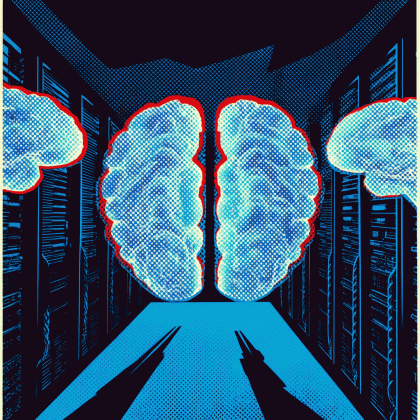
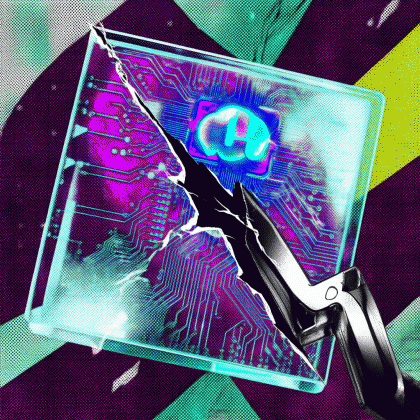
The global business community received a stark reminder of its growing dependence on artificial intelligence on September 3, 2026. In a series of nearly simultaneous disruptions, the world's most prominent AI chatbots—including OpenAI's ChatGPT, Anthropic's Claude, and xAI's Grok—experienced significant service outages. While the technical glitches were resolved relatively quickly, the ripple effect across the digital economy revealed a precarious reliance on a handful of centralized AI providers.
The anatomy of the OpenAI collapse
The most severe impact was felt by users of OpenAI. The disruption was not a simple interface glitch but a systemic failure. According to official reports, the incident was categorized as ChatGPT Work Mode High Error Rates. The outage began at 12:04 UTC and lasted until 12:10 UTC, but the internal scale of the problem was vast, affecting 15 different components of the ChatGPT ecosystem.
Users reported erratic behavior from the platform, with some noting that the site attempted to trigger unusual file downloads. The failure extended beyond the standard chat interface to include Codex, the specialized tool used by developers to integrate AI into programming workflows. This particular failure point is critical for the tech sector, as thousands of software engineering pipelines rely on Codex for real-time code generation and debugging.
A pattern of instability across rivals
While OpenAI struggled, the instability appeared to be contagious across the AI landscape. Anthropic reported a high error rate specifically affecting requests to the Claude Sonnet 5 model. This disruption started at 12:37 UTC, shortly after the OpenAI incident began to stabilize. Anthropic attributed the issue to infrastructure problems and noted that the same model had already suffered an incident the previous day.
Simultaneously, users of Grok, the AI developed by Elon Musk's xAI, reported similar difficulties in accessing the service and processing queries. Reports from El País indicated that other major players, including Copilot and Gemini, were also flagged by users experiencing connectivity issues during the same window.
Coincidence or coordinated attack?
The temporal proximity of these failures led to immediate speculation on social media and among cybersecurity analysts. The fact that three of the most utilized AI tools failed within a narrow timeframe suggested to some a possible coordinated cyberattack or a shared underlying infrastructure failure. However, no official confirmation of a breach or a common external attack has been provided by the companies involved.
OpenAI maintained that the episode was a temporary technical incidence. The lack of a confirmed common cause suggests that these may have been independent failures occurring during a period of extreme load or shared cloud infrastructure stress. Nevertheless, the coincidence served as a catalyst for a broader conversation about the fragility of the current AI stack.
The domino effect on integrated businesses
The outage was more than a nuisance for individual users who joked about having to use their own brains at work. For the global business market, the disruption triggered a domino effect. A vast number of third-party websites and enterprise applications have built their core functionality on top of OpenAI's APIs. When ChatGPT went offline, these dependent services failed instantly.
The disruption of these AI services effectively paralyzed a segment of the digital economy that has integrated LLMs into customer support, content generation, and automated data analysis.
This systemic vulnerability is particularly acute for startups and SMEs that have replaced human personnel with AI agents. The total loss of service for even ten minutes can lead to significant revenue loss and a breakdown in customer trust, especially when there is no manual fallback system in place.
Infrastructure warnings and recurring glitches
This event did not happen in a vacuum. Reports from La Cuarta highlighted that OpenAI had registered several other incidents in the days leading up to the September 3rd crash. This pattern suggests that the rapid scaling of these models is pushing current cloud infrastructure to its absolute limits.
The recurring nature of these glitches points to a fundamental tension in the AI industry: the drive for more powerful, resource-heavy models versus the need for enterprise-grade stability. As models like Claude Sonnet 5 and GPT-4 evolve, their computational demands increase, making them more susceptible to infrastructure bottlenecks that can trigger global outages.
Strategic implications for US and UK enterprises
For entrepreneurs and executives in the USA and UK, the September 3rd blackout is a critical case study in risk management. In these markets, where AI integration is moving faster than in almost any other region, the reliance on a single AI provider represents a single point of failure (SPOF) that is no longer acceptable for mission-critical operations.
From a regulatory and operational perspective, US companies are increasingly looking at redundancy strategies. The trend is shifting toward a multi-model approach, where businesses distribute their AI workloads across different providers—such as using both OpenAI and Anthropic—to ensure that a failure in one does not lead to a total business shutdown. In the UK, where the government has been promoting an AI-driven economy, this event underscores the need for robust digital resilience standards.
While the EU AI Act focuses heavily on ethics and safety, the lesson for the global market is purely operational. Businesses must now evaluate their AI dependency not just in terms of cost and performance, but in terms of availability. The transition from AI as a productivity tool to AI as a core infrastructure component requires a shift in mindset: treating AI APIs with the same criticality as electricity or internet connectivity.
FAQ
Which AI services were affected by the outage on September 3, 2026?
The primary services affected were ChatGPT (OpenAI), Claude (Anthropic), and Grok (xAI), with some users also reporting issues with Copilot and Gemini.
What caused the ChatGPT failure?
OpenAI reported an incidence called ChatGPT Work Mode High Error Rates, which affected 15 different components of the system.
Was there a coordinated cyberattack?
While the simultaneous nature of the outages led to speculation, there has been no official confirmation of a coordinated attack; the companies pointed toward technical and infrastructure issues.
How did this affect businesses?
Many third-party applications and websites that rely on OpenAI's APIs for their AI features experienced simultaneous failures, disrupting automated workflows and customer services.
Sources: Independentespanol, Lacuartaonline, Elpais ·
Scrivila qui: Susanna, l assistente AI di glacom, ti risponde via email con un approfondimento gratuito.
Nessuna consulenza personalizzata (finanziaria, legale o medica): solo informazione e fonti. Email usata solo per rispondere.
oppure scrivile su: WhatsApp · Telegram · SimpleX · Delta Chat · Email