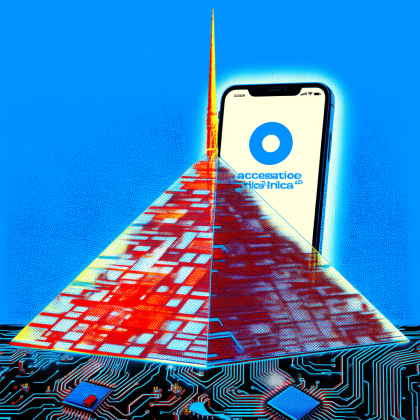




Google Pays Developers for Private Code to Fuel AI Training

- Google is paying developers and small businesses for access to non-public, proprietary code repositories.
- The pilot program allows participants to propose their own prices via an online portal.
- Developers retain 100% IP ownership while granting Google a non-exclusive license for training.
- The move targets high-quality, real-world logic to improve AI benchmarks and developer products.
The race for high-quality training data has moved beyond the open web. As large language models exhaust the available public datasets, the frontier of AI development is shifting toward proprietary, offline silos. Google is now aggressively pursuing this untapped territory through an expanded pilot program that transforms private codebases into liquid assets.
Known as the Content Offer Pilot, the initiative allows developers and small businesses to sell access to their proprietary code and other specialized, non-public content. Unlike traditional data scraping, this is a transactional relationship where the provider chooses the material and proposes the price. A deal is finalized only when both parties reach a mutual agreement on the valuation of the data.
Turning dormant repositories into revenue
For many small software houses and independent Android developers, the codebase of a legacy project or a failed prototype is often a sunk cost—intellectual property that sits idle in a repository. Google is repositioning this waste as a revenue-generating asset. By offering a path to monetize production codebases, archived projects, and side projects, the company is providing a form of non-dilutive funding for founders who may not want to seek venture capital or take on debt.
One technology startup CEO, in a testimonial provided by Google, noted that the pilot allowed their firm to recapture investment by turning proprietary code into a financial asset. This shift in perspective treats the codebase not merely as the infrastructure required to run a product, but as a separate, licensable product in its own right.
The mechanics of the Content Offer Pilot
The process is managed through a dedicated online portal designed to lower the barrier to entry for smaller entities that lack the legal resources to negotiate complex corporate partnerships. According to VentureBeat, hundreds of third-party developers across approximately 100 countries have already participated. The appetite for this model is high, with over 90% of partners expressing interest in returning to the program.
The legal framework of these deals is a critical point for participants. Based on communications sent to select Google Play app developers, the terms generally stipulate that the developer retains 100% of their intellectual property. Google receives a non-exclusive license to use the code, which allows the developer to continue using, selling, or modifying their software without restriction.
Why private code outweighs the open web
Google is not simply looking for more data, but for high-quality, real-world logic. While GitHub and other public repositories provide vast amounts of data, they are often noisy or contain suboptimal patterns. Private, production-grade codebases offer a window into how complex logic is actually implemented in successful, scaled applications.
The company has indicated that this data is essential for:
- Improving the accuracy of developer tools and AI-assisted coding products.
- Understanding complex architectural logic that is rarely documented in public forums.
- Developing more rigorous coding evaluations and benchmarks to test the limits of frontier models.
While the initial outreach to Android developers focused on improving developer tools, links within the program's documentation lead directly to Google's AI partnerships page, confirming that this data is a primary fuel for the next generation of generative AI.
The strategic timing of Gemini 4 Argon
This data acquisition push coincides with a fierce pricing war in the frontier model market. The launch of Gemini 4 Argon on September 30, 2026, signals Google's intent to compete on both performance and economics. By setting introductory pricing at per million input tokens and per million output tokens, Google has matched the pricing floor established by OpenAI's GPT-6.1 Sol.
As reported by Yahoo Finance, this convergence suggests that frontier intelligence is becoming commoditized. To maintain a lead in benchmarks, Google cannot rely on pricing alone; it needs a technical edge. Access to proprietary, non-public code provides a moat that competitors cannot simply scrape from the internet, potentially giving Gemini a superior understanding of professional software engineering.
Risks for venture-backed enterprises
While the prospect of a quick payout is attractive for bootstrapped developers, the program introduces significant diligence risks for venture-backed startups. Selling access to a codebase, even under a non-exclusive license, creates a paper trail that future investors or acquirers will scrutinize.
The core concern for a scaling company is whether granting a license to a tech giant for AI training compromises the company's own technical moat or violates existing customer commitments regarding data privacy and security.
Furthermore, companies must navigate open-source obligations. If a proprietary codebase contains integrated open-source components with restrictive licenses, granting Google a license to that code could lead to legal complications. The trade-off is a balance between immediate liquidity and long-term intellectual property defensibility.
Global implications for tech businesses
For entrepreneurs in the USA and UK, this move by Google marks the beginning of a new data economy. We are moving from an era of data harvesting to an era of data procurement. Businesses that have spent years building proprietary libraries, specialized algorithms, or unique datasets now have a potential new revenue stream.
In the US market, where IP protection is paramount, the non-exclusive nature of these licenses is the only reason such a program is viable. However, the lack of transparency regarding payment ranges means that the burden of valuation falls on the developer. Businesses must determine if the one-time payment outweighs the risk of their logic being internalized by the very AI tools that may eventually automate their core services.
In the UK and other global markets, this trend highlights the growing divide between the 'model owners' and the 'data providers'. As Google continues to expand this pilot to more countries, it is effectively creating a global marketplace for specialized knowledge, where the most valuable currency is no longer just the software that works, but the code that teaches the AI how to work.
FAQ
Do developers lose ownership of their code in Google's pilot?
No, according to the program terms, developers retain 100% of their intellectual property and grant Google a non-exclusive license to use the material.
How are the payments determined in the Content Offer Pilot?
The program uses a proposal-based system where the participant suggests a price for their content, and the deal proceeds only if Google agrees to that price.
What specific types of code is Google looking for?
Google is seeking high-quality, real-world codebases, including production code, archived projects, prototypes, and side projects to improve AI benchmarks and developer tools.
Is this program available to all developers?
It is currently a pilot program involving a select group of developers and small businesses across roughly 100 countries.
Sources: Venturebeat, Runtimewire, Winbuzzer ·
Scrivila qui: Susanna, l assistente AI di glacom, ti risponde via email con un approfondimento gratuito.
Nessuna consulenza personalizzata (finanziaria, legale o medica): solo informazione e fonti. Email usata solo per rispondere.
oppure scrivile su: WhatsApp · Telegram · SimpleX · Delta Chat · Email