



Europe's €387.8M LUMI-AI Supercomputer: A Leap for Sovereign AI
- Europe is investing €387.8 million in the LUMI-AI supercomputer, to be operational in Finland by 2027.
- The system will deliver ten times the AI capacity of the current LUMI, utilizing AMD Instinct MI430X GPUs and 256-core EPYC CPUs.
- Funded 50% by EuroHPC JU and 50% by a consortium including Finland, Poland, and Norway, it targets "sovereign AI" for SMEs and research.
- The facility will use Direct Liquid Cooling to feed excess heat into Kajaani's district heating network.
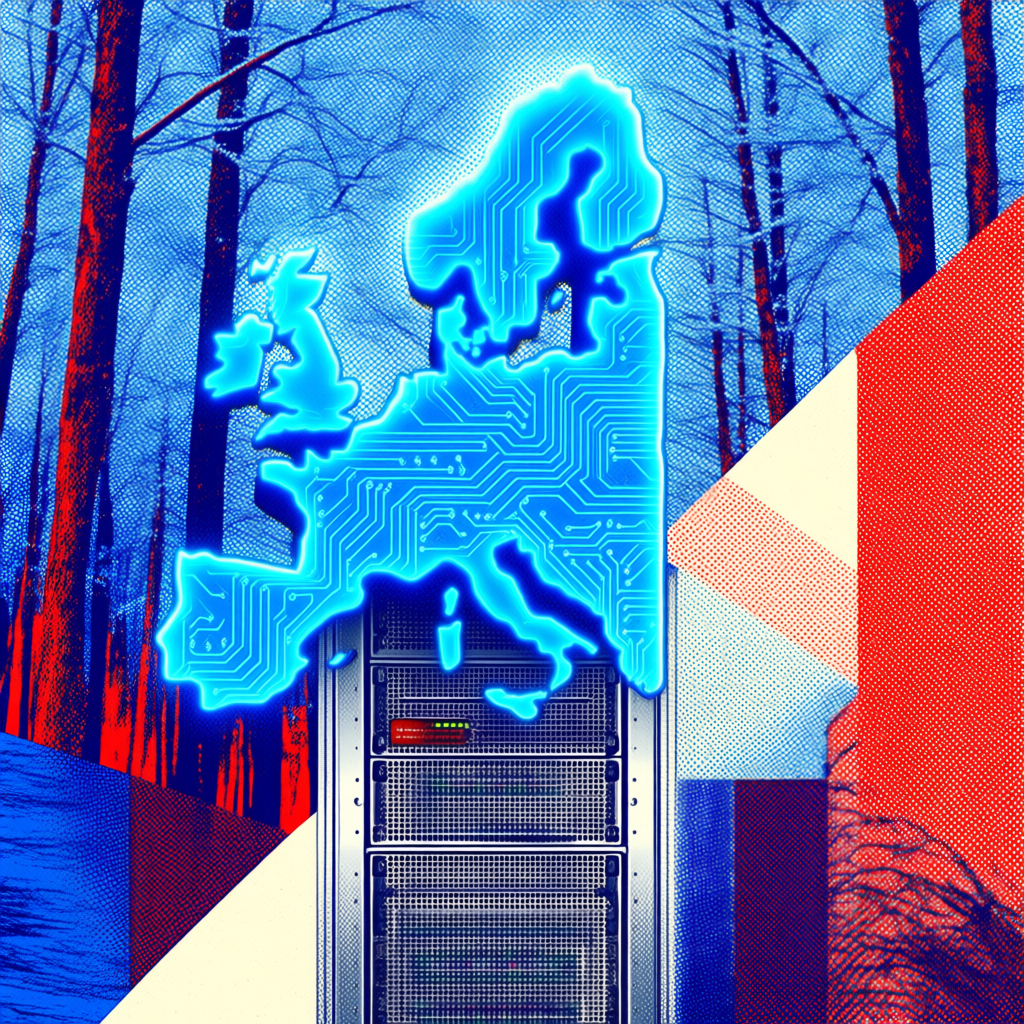
The geopolitical struggle for artificial intelligence supremacy is moving beyond software algorithms and into the realm of physical infrastructure. In a decisive move to secure its technological autonomy, Europe has committed 387.8 million euros to the creation of LUMI-AI, a next-generation supercomputer designed to serve as the backbone of a new European AI Factory. Located in Kajaani, Finland, at the CSC - IT Center for Science, this installation represents a strategic effort to decouple European innovation from a total dependency on American hyperscalers.
A massive leap in raw computing power
The technical specifications of LUMI-AI signal a significant escalation in Europe's processing capabilities. According to project estimates, the new system will offer approximately ten times the AI processing capacity of the existing LUMI supercomputer, while nearly doubling its traditional high-performance computing (HPC) performance. This is not merely a marginal upgrade but a fundamental shift in scale intended to support the most demanding AI workloads.
The hardware architecture is built around the BullSequana XH3500, with the French company Bull selected to deliver and maintain the system. At its core, LUMI-AI will leverage AMD's upcoming Instinct MI430X accelerators and sixth-generation EPYC processors, the latter boasting an impressive 256 cores per CPU. This high thread density is specifically engineered to handle the massive parallelization required for training large-scale models and running complex scientific simulations.
Funding the vision of a Sovereign AI
The financial structure of the project reflects a collaborative European approach to industrial policy. The 387.8 million euro cost is split evenly: 50% is provided by the EuroHPC Joint Undertaking via the Digital Europe Programme, and the remaining 50% is funded by the LUMI AI Factory consortium. This consortium brings together a diverse group of nations, including Finland, the Czech Republic, Denmark, Estonia, Norway, and Poland.
While the machine will be physically housed in Finland, its resources are designed for broader distribution. Access will be granted to the entire consortium and the wider European research and industrial community based on investment criteria. This model ensures that the benefits of world-class computing are not siloed within a single nation but are available to a network of startups, SMEs, and academic institutions across the continent.
Beyond LLMs: Diverse workloads and scientific research
While the current global hype focuses on Large Language Models (LLMs), the architects of LUMI-AI have a broader objective. The system is designed to manage workflows characterized by massive, dynamic, and often confidential datasets. This makes it an essential tool for sectors where data privacy is paramount and where reliance on public cloud providers poses a security risk.
LUMI-AI’s modern capabilities combined with the LUMI-IQ quantum computer will help European researchers and industry tackle unforeseen research and innovation challenges in key fields such as health, climate and disruptive technologies.
By integrating with the LUMI-IQ quantum computer, the facility aims to create a hybrid computing environment. This will allow researchers to tackle challenges in climate modeling, healthcare breakthroughs, and disruptive materials science that would be impossible on standard cloud infrastructure. The goal is to provide a sandbox where European companies can innovate without the restrictive costs or data-sharing terms often associated with proprietary US-based AI platforms.
Sustainability through industrial symbiosis
The environmental footprint of AI has become a critical concern for global regulators and investors. To mitigate the energy demands of such a massive installation, LUMI-AI is integrating sustainability into its physical design. The facility will be powered entirely by renewable electricity and will employ Bull's patented Direct Liquid Cooling solution.
This cooling system does more than just prevent hardware failure; it creates a circular energy economy. The warm water used to cool the processors captures the excess heat generated by the supercomputer, which is then fed directly into Kajaani's district heating network. This transformation of waste heat into a community resource significantly increases the share of heating produced from recovered data center energy, setting a benchmark for energy-efficient large-scale computing.
The strategic roadmap toward 2027
The timeline for LUMI-AI is precise, with deployment scheduled for the second half of 2027. This project is the sixth AI Factory procurement contract signed by EuroHPC JU, indicating a systematic rollout of AI-optimized infrastructure across the EU. The integration of AMD hardware, IBM storage, and Nokia networking underscores a desire to build a diversified supply chain that avoids single-vendor lock-in.
For the European entrepreneurial ecosystem, this means that by 2027, the barrier to entry for AI-driven industrial innovation will drop. Startups will no longer need to build their own prohibitively expensive data centers or surrender their intellectual property to third-party cloud providers to access the compute power necessary for training state-of-the-art models.
Global Implications: What this means for US and UK firms
For entrepreneurs and investors in the USA and UK, the emergence of LUMI-AI is a signal that the era of undisputed US cloud dominance in AI is facing organized competition. While the US continues to lead in consumer-facing AI and venture capital, Europe is pivoting toward Sovereign AI—infrastructure owned and governed by public-private partnerships rather than corporate entities.
For US and UK companies operating in Europe, this shift suggests a future where access to high-tier compute may be tied to local partnerships or compliance with European data residency requirements. While the EU AI Act focuses on regulation, LUMI-AI is the physical manifestation of that same desire for control. UK firms, now navigating their own post-Brexit tech strategy, may find the LUMI-AI consortium a vital point of entry for collaborative research, provided they can align with the EuroHPC framework.
Ultimately, the global market is moving toward a fragmented infrastructure landscape. The competition is no longer just about who has the best model, but who owns the silicon and the power grids that run them. LUMI-AI ensures that Europe is not just a consumer of AI, but a provider of the industrial capacity required to build it.
FAQ
When will LUMI-AI be available for use?
The system is scheduled for deployment in 2027, with availability to users expected in the second half of that year.
Which hardware powers the LUMI-AI supercomputer?
It utilizes AMD Instinct MI430X GPUs and sixth-generation AMD EPYC processors with 256 cores per CPU, integrated into the BullSequana XH3500 architecture.
How is the project funded?
The €387.8 million cost is split 50% between the EuroHPC Joint Undertaking (via the Digital Europe Programme) and 50% by the LUMI AI Factory consortium, which includes Finland, Czechia, Denmark, Estonia, Norway, and Poland.
What makes LUMI-AI sustainable?
It is powered by renewable electricity and uses a Direct Liquid Cooling system that recovers waste heat to feed into Kajaani's district heating network.
Sources: Hwupgrade, Nexttechworld, Bull ·
Scrivila qui: Susanna, l assistente AI di glacom, ti risponde via email con un approfondimento gratuito.
Nessuna consulenza personalizzata (finanziaria, legale o medica): solo informazione e fonti. Email usata solo per rispondere.
oppure scrivile su: WhatsApp · Telegram · SimpleX · Delta Chat · Email