




Custom Agentic Chatbot Guide: Scaling Proactive Enterprise AI
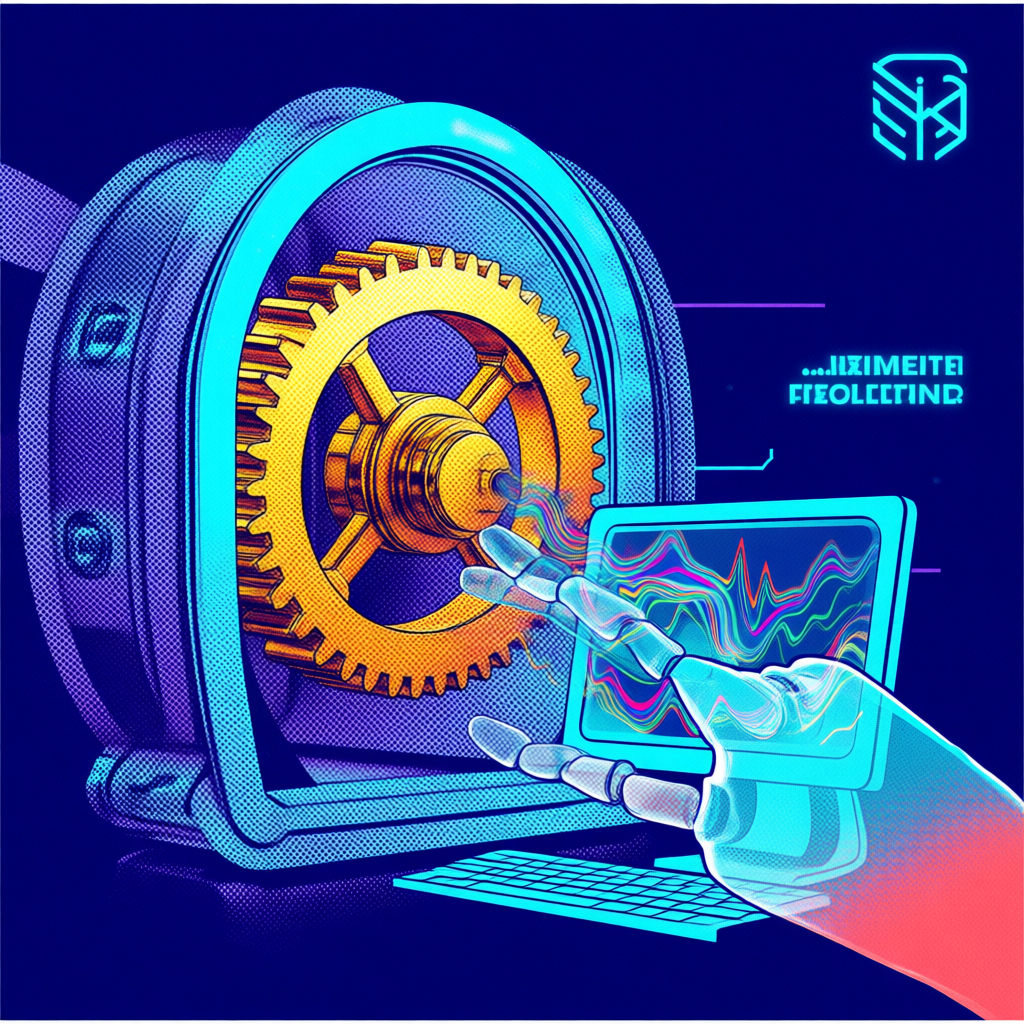
- Agentic AI shifts the paradigm from simple Q&A chatbots to autonomous systems capable of planning and executing end-to-end business tasks.
- Private AI infrastructure ensures data ownership and security, allowing agents to handle sensitive corporate workflows without external leaks.
- Integration with real-time tools, such as session replay and CRM, enables agents to act on user behavior rather than waiting for prompts.
- Implementation costs vary from free token-based tiers to high-capacity enterprise plans, depending on the required autonomy and volume.
The evolution of artificial intelligence in the corporate sector has reached a critical inflection point. For years, the primary interface for AI was the chatbot—a reactive tool that answered questions based on a provided knowledge base. However, the emergence of the chatbot agentico (agentic chatbot) marks a transition from conversational AI to operational AI. Unlike its predecessors, an agentic system does not simply talk; it acts.
The fundamental shift from chat to action
To understand the value of an agentic chatbot, one must distinguish between a standard LLM interface and an autonomous agent. A traditional support chatbot might explain a company's refund policy to a customer, providing a link to a documentation page. In contrast, an agentic system can verify the order status, confirm the customer's eligibility for a refund, draft the response, initiate the financial transaction in the backend, and update the CRM record—all without human intervention.
This capability stems from the ability to plan, use software, and coordinate tasks across different departments. According to industry trends, the agentic enterprise is defined by a shift where humans set the goals, policies, and metrics, while AI agents handle the repetitive coordination that typically slows down organizational velocity. This move toward autonomy is expected to involve over half of all customer support interactions by mid-2026, as businesses move from experimental pilots to core infrastructure.
How a private AI agentic architecture works
A professional agentic chatbot requires more than a prompt; it requires an ecosystem. The architecture generally consists of three layers: the reasoning engine, the toolset, and the memory layer.
The reasoning engine is the brain that breaks a complex goal into smaller, executable steps. The toolset consists of approved APIs and software integrations that allow the agent to interact with the real world. For instance, an agent might connect to a calendar to book a meeting or a payment gateway to process a subscription. The memory layer allows the agent to learn from previous interactions and act unprompted based on stored data.
For enterprises, the deployment of a private AI is non-negotiable. Using open-source foundations allows companies to maintain total data ownership. By self-hosting the storage and capture mechanisms, firms can simplify GDPR reviews and ensure that sensitive product context remains within their own secure perimeter. This is particularly vital when integrating tools like open source session replay, which allows the system to analyze exactly how a user interacted with a product before the agent steps in to provide a proactive solution.
Integrating proactive capabilities into CX
The true power of an agentic chatbot lies in its proactivity. Instead of waiting for a user to type a query, these systems use real-time data to anticipate needs. This is the core of modern AI in customer experience strategies.
Proactive agents can monitor user behavior and trigger actions based on specific events. For example, if a user lingers on a pricing page for several minutes without converting, an agentic chatbot can analyze the user's previous interactions, identify the specific point of friction, and offer a tailored discount or a direct invitation to a demo. This level of hyper-personalization is no longer a luxury; a significant majority of consumers now expect tailored interactions as a baseline, expressing frustration when AI fails to recognize their specific context.
Evaluating costs and deployment models
Choosing the right agentic solution depends on the scale of the operation and the required level of autonomy. The market currently offers a variety of pricing structures, ranging from accessible entry points to high-end enterprise tiers.
The winners in the agentic era will not be the companies with the most impressive demos, but those that successfully connect agents to real, messy business workflows.
Based on current market offerings, such as those seen in high-end agentic models, pricing typically follows these patterns:
- Free Tiers: Often provided to encourage adoption, these may offer a generous amount of tokens (e.g., up to 100 million per week) but require a credit card for identity verification.
- Professional/Power Plans: Monthly subscriptions (averaging around ) that increase usage limits for individual power users or small teams.
- Enterprise/Maximum Plans: High-capacity weekly or monthly billing (sometimes reaching 0 per week) designed for heavy operational loads where the AI is acting as a full-time digital employee.
Security and governance in autonomous systems
As AI agents gain the ability to make purchases, send emails, and modify records, the risk profile changes. The primary concern is no longer just data leakage, but unauthorized action. To mitigate this, the agentic enterprise implements strict governance frameworks.
Modern security implementations often include secured cloud virtual machines (VMs) for each user, ensuring that the agent operates in an isolated environment. Furthermore, the introduction of system-level gating—often referred to as sentinel services—prevents the AI from performing unrestricted actions on the open internet. Governance also involves mandatory identity logs and human-in-the-loop approvals for high-risk tasks, ensuring that while the AI handles the coordination, the human retains the final authority.
Global implications for US and UK enterprises
For businesses operating in the USA and UK, the adoption of agentic chatbots necessitates a nuanced approach to regulation and competition. In the US, the focus remains heavily on the commercial race for superintelligence and the integration of AI into the existing software stack. However, there is a growing movement among industry leaders to slow the development of the most powerful models to ensure safety measures keep pace with autonomy.
In the UK and global markets, the emphasis is shifting toward the Agentic Enterprise model, where AI is viewed as a workforce multiplier rather than a tool. Companies must navigate a landscape where independent evaluators are increasingly being embedded within AI labs to scrutinize model safety. For the international entrepreneur, the priority should be building a modular architecture: using private, open-source components for data capture and storage, while leveraging powerful agentic models for reasoning. This hybrid approach balances the need for cutting-edge autonomy with the legal requirements of data residency and user privacy.
FAQ
What is the main difference between a chatbot and an agentic chatbot?
A chatbot is reactive and provides information; an agentic chatbot is proactive and executes tasks by using tools, planning steps, and coordinating across different software applications.
Is it safe to give an AI agent access to company data?
It is safe if implemented via private AI infrastructure and secure virtual machines. Using open-source capture and self-hosted storage ensures the company retains full ownership and control over the data.
How much does implementing an agentic AI system cost?
Costs vary widely. Some models offer free tiers with token limits, while professional plans can cost around /month, and high-capacity enterprise plans can reach 0/week or more.
Can agentic chatbots work without human supervision?
While they can handle end-to-end tasks, the agentic enterprise model relies on human oversight. Humans define the goals and policies, and the AI escalates exceptions to a human when it reaches a boundary.
Sources: Rrweb, Latentview, Progressiverobot, Techwize, Leavesnet, Glacom ·
Scrivila qui: Susanna, l assistente AI di glacom, ti risponde via email con un approfondimento gratuito.
Nessuna consulenza personalizzata (finanziaria, legale o medica): solo informazione e fonti. Email usata solo per rispondere.
oppure scrivile su: WhatsApp · Telegram · SimpleX · Delta Chat · Email