



Anthropic's Billion Compute Bet and the OpenAI-SpaceX Split

- Anthropic signs a billion computing agreement with Nvidia-backed cloud provider Lambda.
- OpenAI terminates its partnership with SpaceX's Cursor, citing security and contract distrust.
- SpaceX reveals OpenAI models only account for 5% of Cursor's user traffic.
- Elon Musk predicts AI will boost the global economy by up to 30%.
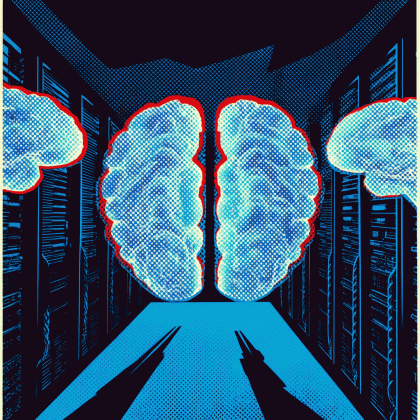
The race for artificial intelligence supremacy has shifted from a battle of algorithms to a war of infrastructure. In a move that underscores the desperate need for raw processing power, Anthropic has entered into a staggering billion cloud computing deal with Lambda, a cloud provider backed by Nvidia. This massive investment is designed to aggressively expand the capacity of the Claude models, ensuring that the startup can scale its operations at a pace that rivals the industry's largest incumbents.
This capital expenditure comes at a pivotal moment for the AI sector. While the focus has long been on the capabilities of Large Language Models (LLMs), the bottleneck has become the physical hardware required to train and run them. By partnering with Lambda, Anthropic is not just buying server space; it is securing a strategic lifeline in a market where GPU availability often dictates the speed of innovation. This move aligns with a broader trend of AI labs diversifying their compute sources to avoid total dependency on a single cloud giant.
The fallout between OpenAI and SpaceX
While Anthropic secures its future, a high-profile partnership in the AI ecosystem has collapsed. OpenAI has officially notified SpaceX that it intends to wind down its contract providing models to Cursor, a platform SpaceX acquired in a billion all-stock deal in mid-August. The proposed shutoff date is set for November 12, 2026.
The termination is not a result of technical failure but of deep-seated institutional distrust. OpenAI cited concerns regarding the security of its proprietary technology and expressed a lack of confidence that SpaceX would adhere to the terms of service. The company explicitly referenced past experiences with Elon Musk's other ventures, suggesting a pattern of contract violations that made the partnership untenable.
The tension is a public manifestation of the bitter feud between Sam Altman and Elon Musk. This animosity has evolved from philosophical disagreements over AI safety into a commercial conflict, where proprietary technology is used as a lever in a larger corporate power struggle. For the international business community, this split highlights the volatility of the AI supply chain when personal grievances between founders intersect with multi-billion dollar enterprises.
Cursor's pivot to Anthropic
Despite the loss of OpenAI's models, SpaceX and Cursor appear largely unfazed. Michael Truell, co-founder and CEO of Cursor, indicated that the impact on the user base would be minimal. According to SpaceX, OpenAI models serve only about 5% of Cursor user traffic, suggesting that the platform had already diversified its model integration long before the formal split.
Anthropic has moved quickly to fill the vacuum left by OpenAI. Tom Brown, Anthropic's co-founder and Chief Compute Officer, has publicly vowed to increase compute support for Claude models within Cursor. This strategic pivot allows Anthropic to capture a significant portion of the developer traffic flowing through SpaceX's ecosystem, effectively turning a competitor's loss into a growth opportunity.
OpenAI models serve about 5% of Cursor user traffic, and we’re speaking with the OpenAI team to resolve this. Cursor has been a trusted partner of Anthropic since Sonnet 3.5.
The synergy between Anthropic and Cursor represents a shift toward a more fragmented AI landscape where developers can swap underlying models based on performance and reliability rather than being locked into a single ecosystem.
Economic projections and the AI capital race
The scale of these investments is mirrored by the optimistic economic forecasts coming from the industry's most prominent figures. During a G20 meeting, Elon Musk predicted that AI will increase the global economy by up to 30%. While such figures are often viewed with skepticism, they drive the aggressive fundraising and spending patterns currently seen in the market.
The capital race is not limited to the US. Global players are mobilizing massive sums to maintain their standing. For instance, SoftBank is planning a record .3 billion retail bond sale to fund its commitments to OpenAI, while Alibaba has raised .2 billion to secure its lead in the competitive Asian market. These movements indicate that AI is no longer a speculative venture but a core pillar of global financial strategy.
The shifting leadership at Big Tech
As the AI infrastructure war intensifies, the leadership of the world's most valuable companies is also evolving. John Ternus has officially taken over as the CEO of Apple. His appointment comes at a critical juncture as the company prepares to unveil new products that are expected to integrate AI more deeply into the hardware ecosystem. Apple's approach has traditionally been more cautious than that of Anthropic or OpenAI, but the pressure to deliver AI-driven value to its massive user base is mounting.
The intersection of Apple's hardware dominance and the compute needs of AI startups creates a complex dynamic. While companies like Anthropic focus on the cloud, the next frontier is edge computing—bringing these massive models onto devices. The transition in leadership at Apple suggests a readiness to pivot toward this new era of product development.
Strategic implications for global enterprises
For businesses operating in the USA, UK, and other global markets, the current volatility in the AI sector provides several key lessons. First, the reliance on a single AI provider is a significant operational risk. The OpenAI-SpaceX split demonstrates that even the largest players can have their access to critical models revoked due to contractual or personal disputes.
Second, the massive investments in compute—such as the deal between Anthropic and Lambda—suggest that the cost of high-end AI services may fluctuate as providers pass on the costs of infrastructure. Enterprises should prepare for potential price hikes as the industry moves toward more sustainable, yet expensive, hardware scaling.
From a regulatory perspective, the US and UK markets remain more flexible than the EU, focusing on innovation and strategic competition. However, the increasing concentration of compute power in the hands of a few Nvidia-backed providers could eventually trigger antitrust scrutiny. For now, the priority for international firms is to maintain a model-agnostic strategy, ensuring that their AI integrations can pivot between Claude, GPT, and other emerging models without disrupting core business operations.
FAQ
How much is Anthropic investing in compute?
Anthropic has agreed to a billion cloud computing deal with Lambda, an Nvidia-backed provider.
Why did OpenAI end its partnership with SpaceX's Cursor?
OpenAI cited concerns over the security of its proprietary technology and a lack of confidence that SpaceX would follow the terms of service, referencing past contract violations by Elon Musk's companies.
How much of Cursor's traffic relied on OpenAI?
According to SpaceX and Cursor leadership, OpenAI models served approximately 5% of Cursor user traffic.
Who is the new CEO of Apple?
John Ternus has officially taken over as the CEO of Apple.
Scrivila qui: Susanna, l assistente AI di glacom, ti risponde via email con un approfondimento gratuito.
Nessuna consulenza personalizzata (finanziaria, legale o medica): solo informazione e fonti. Email usata solo per rispondere.
oppure scrivile su: WhatsApp · Telegram · SimpleX · Delta Chat · Email