



AI Compliance Certification: ASCOM Launches AICOM Standard
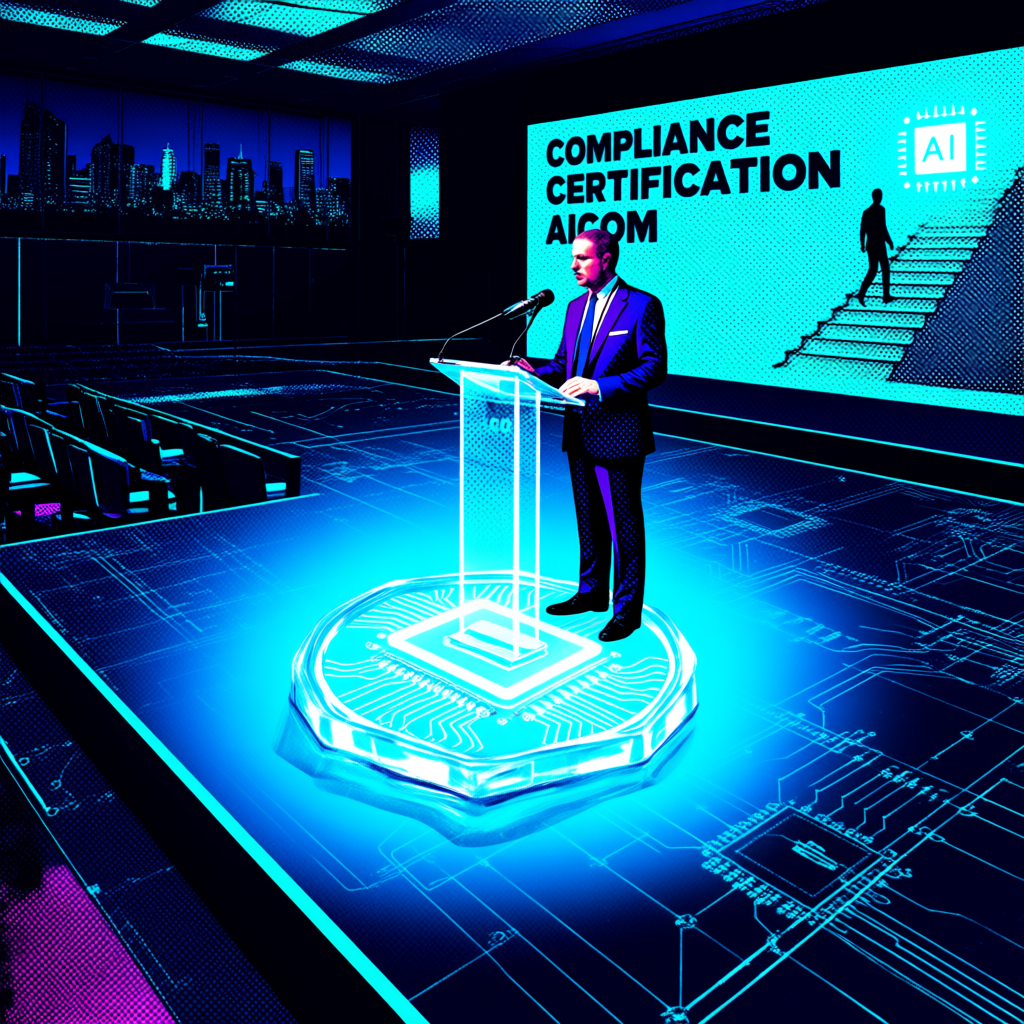
- ASCOM has launched AICOM, a professional certification for AI compliance officers.
- The move responds to the EU AI Act's mandate for AI literacy among staff.
- The certification covers legal, ethical, technical, and reputational risks of AI.
- AICOM aims to standardize how organizations prove the competence of their AI supervisors.
The rapid integration of artificial intelligence into corporate decision-making has created a critical gap between technical deployment and regulatory oversight. While the tools for automation and data management are evolving at breakneck speed, the professional standards for those supervising these systems have remained largely undefined. To address this vacuum, the Spanish Association of Compliance (ASCOM) has introduced AICOM®, a professional certification designed to validate the expertise of individuals responsible for AI compliance within organizations.
The launch of AICOM comes at a pivotal moment for global business operations. According to data presented during the certification's unveiling in Madrid, approximately 88% of organizations have already integrated some form of artificial intelligence into their workflows. This widespread adoption has shifted AI from a niche experimental tool to a core component of institutional governance, affecting everything from automated customer service to complex financial forecasting and human resources management.
Closing the AI literacy gap
The primary catalyst for this certification is the European Union Artificial Intelligence Act (EU AI Act). Specifically, Article 4 of the regulation, which takes effect in February 2025, mandates that providers and deployers of AI systems ensure a sufficient level of AI literacy among their personnel. While the law establishes the obligation to be literate in AI, it provides no specific roadmap or standardized metric for how a company can prove that its staff meets this threshold.
ASCOM intends for AICOM to fill this regulatory void. By providing a formal credential, the association offers companies a tangible way to demonstrate that their compliance officers possess the necessary knowledge to oversee AI systems. This is not merely about reading the text of the law; it is about the practical ability to identify and mitigate the risks inherent in machine learning and automated processing.
Beyond the legal text
A recurring theme in the rollout of AICOM is the insistence that AI compliance cannot exist in a silo. The certification is structured to provide a holistic view of the risks associated with AI, moving beyond simple legal checklists. Professionals seeking the credential must demonstrate proficiency in managing a spectrum of challenges, including ethical dilemmas, technical vulnerabilities, and operational failures.
The framework integrates several overlapping regulatory domains. AI compliance officers must navigate the intersection of the EU AI Act with existing data protection laws, cybersecurity mandates, sector-specific regulations, and the broader landscape of civil and criminal liability. This multidisciplinary approach ensures that the supervisor can integrate AI risks into the general compliance system of the organization rather than treating AI as an isolated technical issue.
The architecture of the AICOM standard
To maintain relevance in a field where a single software update can change the risk profile of a company, ASCOM has designed the certification as a dynamic process. The training itinerary is bilingually delivered and subject to permanent review, ensuring that the curriculum evolves alongside the technology it seeks to regulate.
The certification focuses on four primary pillars of AI governance:
The goal is to empower those responsible for the governance, implementation, and supervision of AI systems with a solid and updated knowledge base, allowing them to act with solvency and effectiveness across any type of organization.
The process for obtaining the certification is managed through a virtual campus, with examinations scheduled for 2027 to allow professionals time to align their skills with the new standards. This structured approach allows for a scalable rollout across different types of organizations, from small enterprises to large public administrations.
Managing systemic AI risks
The necessity for a dedicated AI compliance role stems from the specific ways AI introduces risk into the corporate structure. Unlike traditional software, AI systems can exhibit emergent behaviors or produce biased outputs that lead to significant reputational damage or legal penalties. ASCOM's initiative emphasizes that the role of the compliance officer is to act as a bridge between the technical teams developing the AI and the executive board managing the company's liability.
By standardizing the knowledge required for this role, AICOM aims to reduce the volatility associated with AI deployment. When a company can certify that its AI supervisor understands the nuances of algorithmic transparency and data governance, it reduces the likelihood of catastrophic compliance failures that could lead to heavy fines under the new European regime.
Strategic implications for global firms
While AICOM is a Spanish-led initiative, its implications extend to any global firm operating within the European market. The trend toward professionalizing AI oversight is likely to spread as other jurisdictions consider similar frameworks to manage the risks of generative AI and automated decision-making. For entrepreneurs and business leaders, the move toward certification signals a shift from the 'move fast and break things' era of AI to a period of disciplined, audited implementation.
Companies that proactively adopt these standards may find themselves at a competitive advantage, not only in terms of regulatory safety but also in building trust with clients and partners who are increasingly concerned about the ethical use of their data. The availability of a professional standard like AICOM provides a benchmark for what 'sufficient AI literacy' looks like in a professional corporate setting.
Global perspective: Impact on USA and UK markets
For business leaders in the United States and the United Kingdom, the launch of AICOM serves as a leading indicator of how AI governance will likely evolve. While the US currently relies more on a patchwork of executive orders and voluntary commitments from AI labs, and the UK pursues a more 'pro-innovation,' decentralized approach, the gravitational pull of the EU AI Act is significant.
Any US or UK firm with European operations must comply with the EU AI Act, meaning the requirement for AI literacy among staff is already a reality for them. The emergence of certifications like AICOM provides these international firms with a blueprint for auditing their own internal expertise. In the US, where liability is often managed through rigorous internal risk assessments and insurance, having a certified AI compliance officer could become a key factor in reducing premiums or satisfying corporate governance requirements.
Furthermore, as the UK continues to refine its AI regulatory framework, the pressure to establish professional standards for AI oversight will grow. International entrepreneurs should view the AICOM model as a precursor to a global trend where AI expertise is no longer just a technical skill for engineers, but a mandatory certification for the C-suite and legal departments. Ensuring that the team managing AI deployment is certified according to a recognized standard—whether through professional certifications or rigorous internal training—will be essential for mitigating the legal and operational risks of the AI era.
FAQ
What is AICOM?
AICOM is a professional certification launched by the Spanish Association of Compliance (ASCOM) to accredit professionals responsible for AI compliance within an organization.
Why is this certification necessary now?
It responds to the EU AI Act, specifically Article 4, which requires providers and deployers of AI to ensure their staff has a sufficient level of AI literacy starting in February 2025.
What does the certification cover?
It covers a comprehensive range of risks including legal, ethical, technical, operational, and reputational risks, as well as data protection and corporate governance.
Who is the target audience for AICOM?
It is designed for compliance officers, legal professionals, and executives who oversee the implementation and governance of AI systems in companies or public administrations.
Sources: Confilegal, Ecija, Asociacioncompliance ·
Scrivila qui: Susanna, l assistente AI di glacom, ti risponde via email con un approfondimento gratuito.
Nessuna consulenza personalizzata (finanziaria, legale o medica): solo informazione e fonti. Email usata solo per rispondere.
oppure scrivile su: WhatsApp · Telegram · SimpleX · Delta Chat · Email