



US vs EU: The Global Battle Over AI Regulation and Innovation
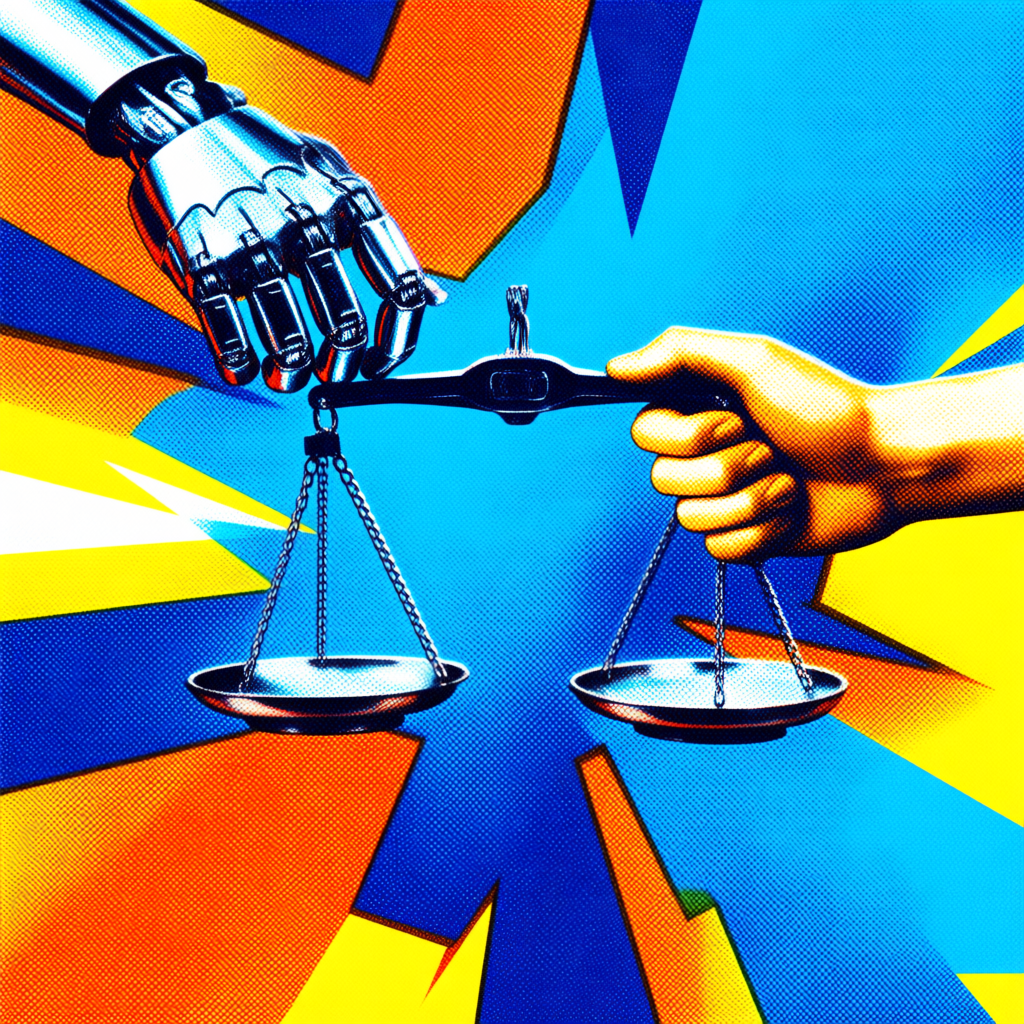
- The US is leveraging its G20 presidency to advocate for the 'Carolina Principles', opposing AI-specific regulations to foster growth.
- Elon Musk and Mark Zuckerberg are pushing for massive infrastructure expansion, citing critical shortages in power and skilled labor.
- A legal clash has emerged in Minnesota where xAI is suing over a first-of-its-kind law banning 'nudification' technology.
- The EU continues to champion a strict regulatory framework, creating a widening transatlantic divide in tech governance.
The global landscape of artificial intelligence is currently being carved into two distinct ideological camps. On one side, the United States is aggressively pursuing a strategy of deregulation to secure its position as the undisputed leader in the AI race. On the other, the European Union is doubling down on a structured, law-based approach to mitigate the risks associated with emerging technologies. This friction reached a boiling point during a recent G20 innovation ministerial meeting in Chapel Hill, North Carolina, where the US government and tech titans openly challenged the European model of governance.
The Carolina Principles and the US push for deregulation
During the G20 summit, Michael Kratsios, a tech adviser to President Donald Trump, introduced the so-called Carolina Principles. The core of this philosophy is the rejection of AI-specific regulations. Instead of creating new laws for every emerging tool, the US argues that policymakers should avoid treating each innovation in isolation. The goal is to prevent a regulatory environment where new technologies are viewed as first-of-their-kind policy problems, which Washington believes stifles the speed of development.
This approach is a cornerstone of the Trump administration's broader economic strategy. By slashing regulations, the US aims to remove obstacles that could slow down the deployment of large-scale AI models. The administration's stance is that a hands-off approach allows the industry to self-regulate and iterate faster than competitors, particularly in the race against China. The US push for looser regulation is not just about software, but about ensuring the entire ecosystem—from data to hardware—remains unburdened by bureaucratic constraints.
Infrastructure bottlenecks: Power and People
The debate in North Carolina shifted from legal frameworks to physical realities when industry leaders Mark Zuckerberg and Elon Musk took the floor. Both executives emphasized that the primary threats to AI progress are not just laws, but a lack of infrastructure. Zuckerberg highlighted a critical shortage of human capital, noting that the construction of necessary data centers requires hundreds of thousands, or perhaps millions, of skilled tradespeople—a demand Meta is currently struggling to meet.
Musk focused on the energy crisis, arguing that the current electricity production is insufficient to sustain the AI revolution. He defended the rapid build-out of data centers as a necessity to fill a power shortfall, despite growing local opposition within the US. This sentiment was echoed by President Trump, who criticized opponents of data center construction, suggesting that those blocking these projects are effectively aiding China and risking a future where the US becomes backwards and poor.
Musk's direct clash with European mandates
The tension between the US and EU was palpable as Musk addressed G20 ministers from France, Italy, and Germany, along with EU tech chief Henna Virkkunen. Musk explicitly slammed European policies, claiming that the EU's regulatory environment makes new technologies default illegal rather than default legal. According to Musk, this high level of regulation does not stop progress entirely but slows it down considerably, creating a competitive disadvantage for European firms.
While EU officials in Brussels reject the notion that their laws inhibit innovation, the divide remains stark. The US is utilizing its rotating G20 presidency to press other nations toward a light-touch approach, as detailed in reports by France 24, attempting to build a global coalition that favors industry growth over precautionary constraints.
The Minnesota lawsuit: A test for state power
While the federal government pushes for deregulation, a different battle is playing out at the state level. In Minnesota, a first-in-the-nation law was signed in May to ban nudification technology—AI tools used to create fake nude images of real people. This has led to a high-stakes legal battle, with Elon Musk's xAI filing a lawsuit in federal court to block the law before it takes full effect.
The lawsuit from xAI does not contest the goal of banning non-consensual AI-generated imagery. However, the company argues that the law is overly broad and lacks a safe harbor for companies making good-faith efforts to prevent abuse. xAI claims the legislation could penalize the company up to 0,000 per violation and covers images that were actually consented to by the depicted person. This case, highlighted by The Guardian, serves as a critical test of whether individual US states can impose strict AI regulations that contradict the federal government's deregulatory trend.
The diverging paths of global AI governance
The current trajectory suggests a fragmented global market. The US is betting on a high-growth, low-friction environment to maintain its lead, while the EU is prioritizing digital rights and safety through the AI Act. This creates a complex environment for global companies that must navigate two entirely different sets of rules.
The US calls for the deregulation of AI at a G20 ministerial meeting, emphasising industry growth over regulatory constraints.
The conflict is not merely academic; it affects where data centers are built, where talent is hired, and how AI models are trained. If the US successfully exports the Carolina Principles to other G20 nations, the EU may find itself as a regulatory island, possessing the most comprehensive laws but potentially lagging in the deployment of the most advanced systems.
Strategic implications for international businesses
For entrepreneurs and enterprises operating across the US, UK, and global markets, this regulatory schism introduces significant operational risk and opportunity. In the US, the current administration's commitment to a hands-off approach means that companies have more freedom to experiment and scale rapidly. However, the Minnesota lawsuit proves that federal deregulation does not guarantee a free pass at the state level. Businesses must monitor state-specific legislation, as local governments may move to fill the vacuum left by federal inaction, particularly regarding ethics and privacy.
In the UK and the global market, the pressure to choose a side is increasing. Companies that align with the US model can benefit from faster iteration and easier access to infrastructure, but they may face severe barriers when attempting to enter the European market. The EU AI Act remains a formidable hurdle, requiring strict compliance that could be incompatible with the looser standards advocated by the US. For the global entrepreneur, the strategy must be one of modularity: developing AI products that can be stripped of certain features or adjusted in their data-handling processes to meet the stringent requirements of the EU while leveraging the aggressive growth environment of the US.
FAQ
What are the Carolina Principles?
They are a set of guidelines proposed by the US at a G20 meeting advocating for regulations that do not target specific technologies like AI in isolation, promoting a more general and less restrictive regulatory approach.
Why is xAI suing the state of Minnesota?
xAI is challenging a law that bans nudification technology, arguing that the law is overly broad, lacks safe harbor provisions for companies, and could penalize the creation of consented images.
What is the main difference between the US and EU approach to AI?
The US is pushing for a light-touch, deregulatory approach to foster innovation and growth, while the EU is implementing strict, specific laws (such as the AI Act) to manage risks and protect rights.
What infrastructure challenges did Zuckerberg and Musk mention?
Mark Zuckerberg highlighted a severe shortage of skilled tradespeople needed for data center construction, while Elon Musk pointed to a critical shortfall in electricity production required to power AI systems.
Sources: Aljazeera, Msn, Theguardian ·
Scrivila qui: Susanna, l assistente AI di glacom, ti risponde via email con un approfondimento gratuito.
Nessuna consulenza personalizzata (finanziaria, legale o medica): solo informazione e fonti. Email usata solo per rispondere.
oppure scrivile su: WhatsApp · Telegram · SimpleX · Delta Chat · Email