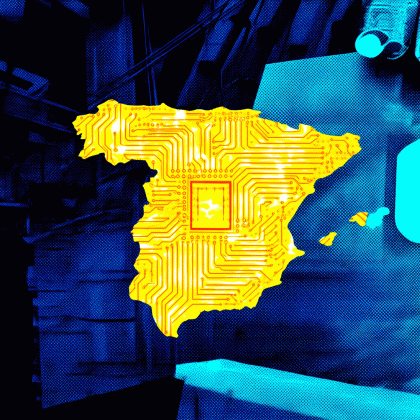




The AI Divide: Why 76% of Italian SMEs are Falling Behind
- 76% of Italian small and medium enterprises (SMEs) are failing to integrate AI into their operations.
- The gap extends beyond production, threatening the visibility and communication strategies of these firms.
- A severe talent shortage exists, with 316,000 AI technicians missing from the workforce.
- The EU AI Act now mandates AI training even for micro-businesses with as few as ten employees.
The digital transformation of the European industrial heartland is hitting a significant bottleneck. While global headlines focus on the capabilities of large language models and autonomous agents, a stark reality is emerging within the small and medium enterprise (SME) sector in Italy. Recent data reveals that 76% of Italian SMEs are lagging behind in the adoption of artificial intelligence, creating a productivity and visibility gap that could prove fatal in an increasingly automated global market.
This stagnation is not limited to the factory floor or the logistics chain. The crisis is bleeding into the corporate identity and market positioning of these firms. For many, the risk is no longer just a loss of efficiency in production, but a total disappearance from the communication landscape. As AI begins to mediate how customers discover products and how brands interact with their audience, companies that ignore these tools are effectively becoming invisible to the modern consumer.
The invisible wall of AI adoption
The disparity between the potential of AI and its actual implementation in the Italian SME sector suggests a systemic failure in transition. When three-quarters of a country's business backbone remains hesitant to adopt transformative technology, the result is a fragmented economy where a few early adopters accelerate while the majority stall. This hesitation often stems from a lack of strategic vision, where AI is viewed as a luxury for tech giants rather than a fundamental utility for survival.
The danger is particularly acute in the realm of communication. In an era where AI-driven algorithms determine search rankings and customer engagement, the inability to leverage these tools means SMEs are losing their voice. The shift is moving toward a model where companies must act as trusted publishers of their own expertise to remain relevant, yet the majority lack the technical infrastructure to execute this transition.
A critical void in technical expertise
The desire to innovate is often throttled by a brutal reality: there is simply no one to do the work. According to data from Confartigianato, the Italian market is facing a staggering deficit of 316,000 AI technicians. This gap represents 51% of the total demand expressed by businesses, meaning that for every two positions a company seeks to fill in the AI sector, one remains vacant.
This talent drought creates a vicious cycle. SMEs cannot implement AI because they lack the experts, and they cannot attract experts because their internal infrastructure is outdated. This shortage is not merely a human resources issue but a structural economic risk that hinders the ability of these firms to compete with US and UK counterparts who have more fluid talent pipelines and aggressive investment strategies in AI literacy.
Regulatory pressure and the EU AI Act
While market forces provide the incentive, the European Union is providing the mandate. The EU AI Act has introduced stringent requirements that leave no room for avoidance, regardless of company size. One of the most significant shifts is the obligation for AI training. This mandate is not reserved for multinational corporations; it extends down to micro-businesses with as few as ten employees.
The regulatory environment has shifted from theoretical guidelines to active enforcement. Controls have already begun, placing immense pressure on small business owners who may not even understand the technical definitions of the systems they are using. For a ten-person firm, the requirement to document AI literacy and ensure ethical usage is a daunting administrative burden that further complicates the adoption process.
Beyond production: The communication crisis
The narrative surrounding AI in business has long been dominated by automation and cost-cutting in production. However, the current crisis in the Italian SME sector highlights a more nuanced threat: the erosion of market communication. When a business fails to integrate AI into its outreach, it doesn't just produce slower; it communicates worse.
The modern customer journey is increasingly mediated by machines. From AI-powered chatbots to personalized recommendation engines, the interface between the buyer and the seller is now algorithmic. SMEs that remain in the 76% of laggards are finding that their traditional marketing methods are no longer reaching the target audience. To survive, these firms must evolve from simple vendors into trusted editorial entities, using AI to curate and deliver value-driven content that resonates with both humans and the algorithms that guide them.
The risk for SMEs is no longer just about losing a few percentage points of efficiency in the warehouse, but about vanishing entirely from the digital conversation that drives global commerce.
The path to recovery for lagging firms
Closing the gap requires a dual approach: aggressive upskilling and a shift in corporate mindset. The reliance on external consultants is often too expensive for a small firm, making internal training the only viable path. This is where the mandates of the AI Act, while burdensome, could actually serve as a catalyst for growth by forcing owners to invest in their staff's digital literacy.
The focus must shift from seeing AI as a replacement for human labor to seeing it as an augmentative tool for communication and strategy. By addressing the 51% vacancy rate in technical roles through partnerships with educational institutions and internal academies, the Italian SME sector can begin to reclaim its competitive edge in the international arena.
Global implications for US and UK enterprises
For entrepreneurs and investors in the USA and UK, the situation in Italy serves as a cautionary tale and a strategic indicator. The struggle of European SMEs highlights the volatility of the global supply chain when key regional partners fail to digitize. Many UK and US firms rely on Italian SMEs for high-end manufacturing, luxury goods, and specialized components. If these suppliers become technologically obsolete, the ripple effect will be felt in quality control, lead times, and collaborative innovation.
From a regulatory perspective, the EU AI Act's reach is extraterritorial. Any US or UK company partnering with or acquiring an Italian SME must now account for the strict training and transparency mandates imposed by Brussels. The fact that even ten-person companies are under scrutiny means that due diligence for international mergers and acquisitions must now include an AI compliance audit.
Furthermore, the massive talent gap in Europe creates an opportunity for global firms to export AI consultancy and implementation services. As Italian firms are forced by law to train their staff and modernize their communication, there is a growing market for scalable AI training platforms and managed services that can bridge the gap between the current 76% failure rate and the required standard of digital maturity.
FAQ
What percentage of Italian SMEs are struggling with AI adoption?
Approximately 76% of Italian SMEs are lagging behind in integrating artificial intelligence into their business processes.
How severe is the AI talent shortage in Italy?
There is a deficit of 316,000 AI technicians, which accounts for 51% of the total demand from businesses.
Does the EU AI Act apply to very small companies?
Yes, the obligation for AI training applies even to small enterprises with as few as ten employees, and enforcement controls have already started.
Why is AI adoption critical for communication, not just production?
Because AI algorithms now mediate how customers find and interact with brands; without AI integration, SMEs risk becoming invisible in the digital marketplace.
Sources: Giornaledellepmi (2), Mincioedintorni ·
Scrivila qui: Susanna, l assistente AI di glacom, ti risponde via email con un approfondimento gratuito.
Nessuna consulenza personalizzata (finanziaria, legale o medica): solo informazione e fonti. Email usata solo per rispondere.
oppure scrivile su: WhatsApp · Telegram · SimpleX · Delta Chat · Email