




Spain Bids for EU AI Gigafactory: A €5 Billion Tech Power Play
- Spain is competing for one of four EU-funded AI gigafactories to ensure sovereign computing power.
- The bid proposes a dual-hub model located in San Fernando de Henares (Madrid) and Móra la Nova (Tarragona).
- A public-private consortium led by Telefónica includes giants like Nvidia, ACS, and MasOrange.
- Total investment is estimated between €4 billion and €5 billion, with operations targeted for 2027-2028.
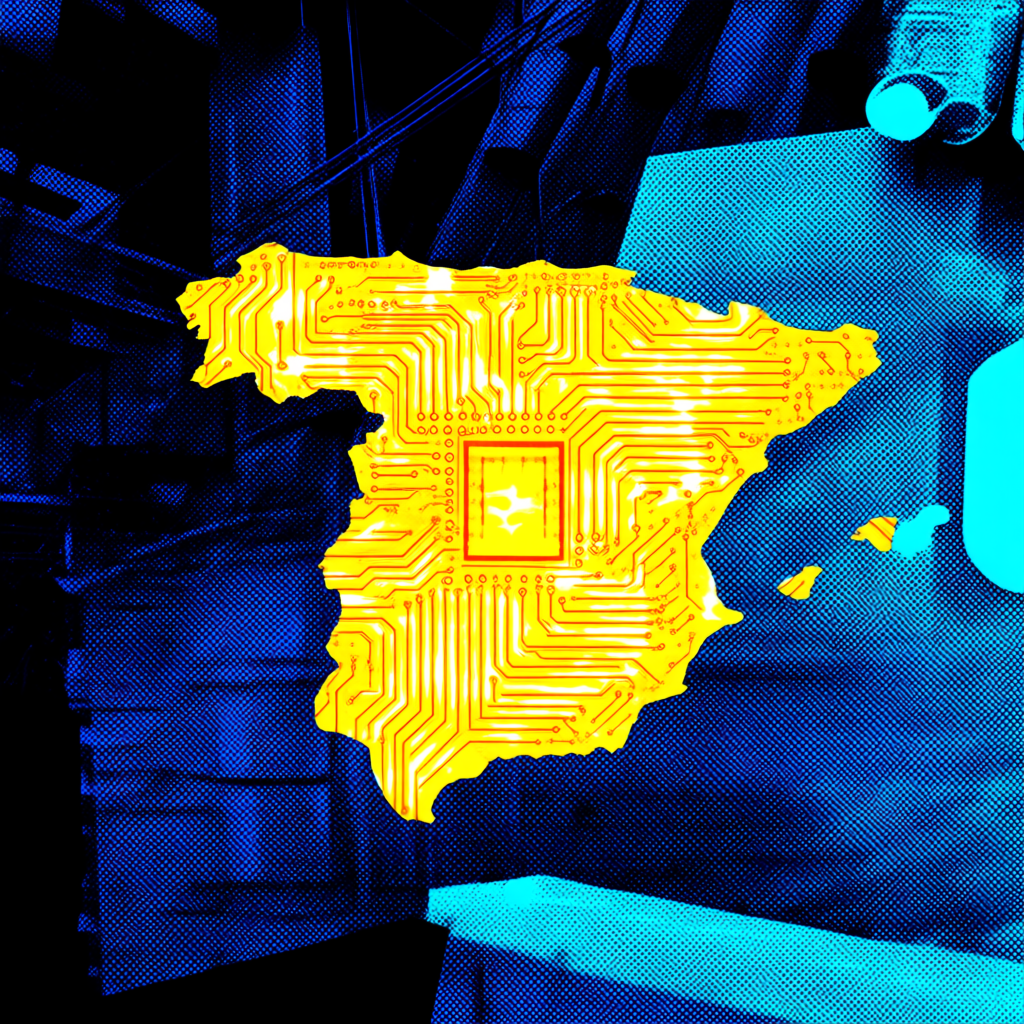
The European Union is moving to decouple its artificial intelligence infrastructure from total dependence on non-European providers. At the heart of this strategic shift is a plan to establish at least four AI gigafactories across member states. Spain has now formalized an aggressive bid to secure one of these installations, positioning itself as a primary hub for the continent's sovereign AI capabilities.
A strategic alliance between Madrid and Catalonia
In a move designed to project national unity and industrial strength, the Spanish government has presented a joint candidacy. Rather than a single site, the proposal outlines a dual-hub project with complementary functions. The two designated locations are San Fernando de Henares in Madrid and Móra la Nova in Tarragona. Minister for Digital Transformation and Civil Service Óscar López has framed this tandem as a way to transform Spain into an unstoppable AI champion within the EU, specifically noting that the partnership seeks to overcome intentional divisions.
The choice of Móra la Nova in the Ribera d'Ebre region is not incidental. The site is strategically positioned near the existing AI Factory—Spain's national center for AI experimentation—and the Barcelona Supercomputing Center (BSC-CNS), which serves as a European reference point for high-performance computing. By linking the capital's administrative and corporate reach with Catalonia's existing technical ecosystem, Spain aims to offer the European Commission a comprehensive infrastructure package.
The financial scale of the sovereign AI push
The economic commitment required for such an undertaking is massive. While initial estimates suggested a public-private investment exceeding €4 billion, more recent figures from the Moncloa presidential office place the projected investment closer to €5 billion. This funding is intended to build and operationalize a facility capable of handling the immense computational loads required for next-generation large language models and industrial AI applications.
A critical component of the financial structure is the InvestAI program. If the Spanish bid is successful, the project will receive significant public subsidies from the European Commission. The EU's goal is to ensure that these gigafactories are not merely data centers but sovereign assets that allow Europe to develop AI without relying exclusively on American or Chinese hardware and cloud ecosystems.
Industrial heavyweights backing the consortium
The bid is not a government-only initiative but a sophisticated public-private consortium. Telefónica leads the corporate side of the proposal, coordinating closely with the President's Economic Office and the Ministry of Digital Transformation. The breadth of the consortium indicates a desire to integrate every layer of the AI stack, from physical construction to software and hardware.
Confirmed members of the consortium include:
- Telefónica: Leading the strategic and connectivity framework.
- Nvidia: Providing the essential GPU architecture.
- ACS: Managing the large-scale industrial construction.
- MasOrange: Contributing to the telecommunications infrastructure.
- Submer and Multiverse Computing: Specializing in cooling technologies and quantum-inspired computing.
- SETT (SEPI Digital): The state-owned vehicle for technological transformation.
Beyond these names, the Spanish government has confirmed that negotiations are ongoing to bring in a major international investment partner to further bolster the project's financial viability and global reach.
Technical specifications and the GPU race
To qualify as a gigafactory in the eyes of the European Commission, the facility must meet staggering hardware requirements. Each selected installation is expected to be equipped with approximately 100,000 GPUs. This scale of compute power is necessary to train frontier models and provide the infrastructure for thousands of European enterprises to deploy AI agents at scale.
The timeline for this rollout is tight. According to reports on the bidding process, the European Commission will conduct an initial selection process, with finalists invited to submit definitive proposals by December. The ultimate goal is for these facilities to be fully operational between 2027 and 2028, coinciding with the expected maturity of the next generation of AI hardware.
The geopolitical drive for AI sovereignty
Spain's ambition reflects a broader European anxiety regarding the concentration of AI power. Currently, the vast majority of the world's high-end compute is concentrated in a few US-based hyperscalers. By funding these gigafactories, the EU is attempting to create a 'third way'—a regulated, sovereign environment where European data remains under European jurisdiction and European companies have guaranteed access to compute.
The Spanish government is convinced that the country will host one of the first European gigafactories because the proposal is built on a foundation of vision and ambition.
This move is also a play for industrial leadership. By integrating companies like Nvidia into the consortium, Spain ensures that the hardware is cutting-edge, while the involvement of local firms like Submer suggests a focus on the sustainability and energy efficiency of these massive power-hungry installations.
Global implications for US and UK enterprises
For entrepreneurs and tech firms in the USA and UK, Spain's bid for an AI gigafactory signals a shift in where the next great clusters of compute power will emerge. While the US remains the epicenter of AI development, the EU's push for sovereignty creates a new set of opportunities and hurdles for international business.
US companies specializing in AI infrastructure, energy management, and liquid cooling will find a massive opening in the Spanish market as these facilities move toward the 2027 operational date. However, the emphasis on sovereignty means that the EU will likely favor partnerships that involve technology transfer and local data residency. The EU AI Act will be the governing framework for any model trained or deployed on this infrastructure, meaning US and UK firms operating there must ensure strict compliance with European transparency and risk-management standards.
For UK firms, this represents a strategic pivot point. As the UK develops its own AI safety and innovation hubs, the emergence of a €5 billion hub in Spain offers a potential gateway into the Single Market's AI ecosystem. Companies that can bridge the gap between the UK's research strengths and the EU's new industrial capacity will be well-positioned to capture the spillover effects of this investment.
FAQ
What is an AI gigafactory in the context of the EU plan?
It is a massive industrial installation designed to provide sovereign AI computing capacity, equipped with approximately 100,000 GPUs to train and deploy large-scale AI models.
Where exactly would the Spanish gigafactory be located?
The bid proposes a dual-site model with installations in San Fernando de Henares (Madrid) and Móra la Nova (Tarragona).
Who are the main private companies involved in the Spanish bid?
The consortium is led by Telefónica and includes Nvidia, ACS, MasOrange, Submer, and Multiverse Computing.
When is the project expected to be operational?
The European Commission expects the selected gigafactories to be operational between 2027 and 2028.
Sources: Expansion, Rtve, Eleconomista ·
Scrivila qui: Susanna, l assistente AI di glacom, ti risponde via email con un approfondimento gratuito.
Nessuna consulenza personalizzata (finanziaria, legale o medica): solo informazione e fonti. Email usata solo per rispondere.
oppure scrivile su: WhatsApp · Telegram · SimpleX · Delta Chat · Email