




Spain's Data Center Shift: AI Infrastructure Moves Inland
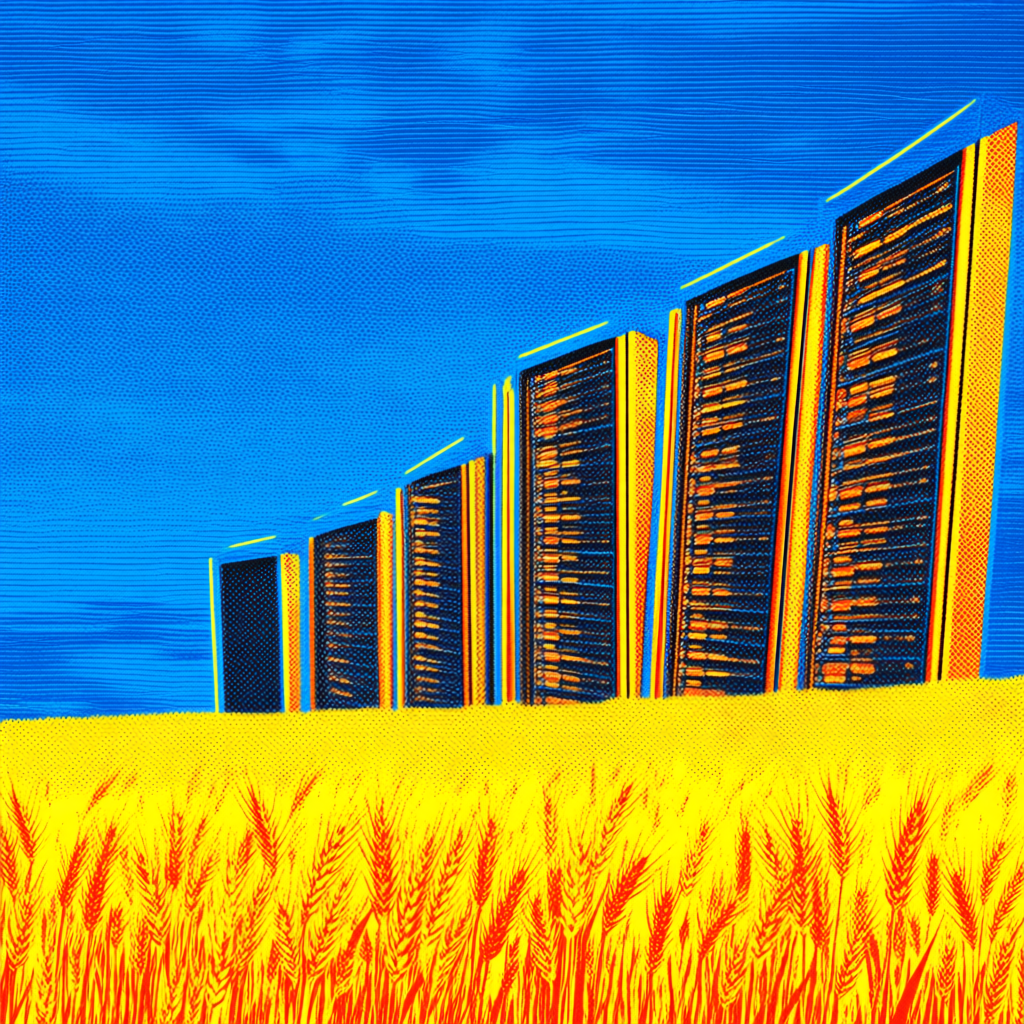
- Spain's commercial data center capacity reached 439 MW by the end of 2025, a 24% annual increase.
- Infrastructure is shifting from Madrid toward inland regions like Aragon and Extremadura to secure land and energy.
- Total accumulated investment in the sector is projected to reach 66.9 billion euros by the end of the decade.
- The growth is primarily driven by the high-density processing requirements of generative AI and cloud services.
The geographical blueprint of digital infrastructure in Southern Europe is undergoing a fundamental transformation. For years, Madrid served as the undisputed gravitational center for data processing in Spain, leveraging its status as a political and financial hub. However, the arrival of the generative AI era has introduced technical requirements that the capital's urban density can no longer sustain. The industry is now migrating toward the Spanish interior, where the availability of land and energy is becoming more valuable than proximity to corporate headquarters.
The migration toward the Spanish interior
The trend is clear: the great factories of artificial intelligence are moving away from the traditional poles. While Madrid retains its leadership in terms of total installed capacity, its relative weight is diminishing. New clusters are emerging in Aragon, Extremadura, and Castilla-La Mancha. According to recent industry analysis, Aragon and Extremadura already concentrate nearly 60% of these new strategic movements. This shift is not accidental but a response to the physical demands of AI workloads, which require significantly more space and power than traditional cloud storage.
Aragon, in particular, has positioned itself as a primary destination for hyperscalers. With an estimated 152 MW, the region offers a logic of deployment based on growth margins and the ability to build massive infrastructures from the ground up. This decentralization is creating a new industrial map where the interior of Spain is becoming the backbone of the nation's digital economy.
Quantifying the AI infrastructure boom
The scale of investment currently flowing into the Spanish market is unprecedented. Projections suggest that accumulated investment could reach 66.9 billion euros by the end of the decade. This financial surge is fueled by a transition from general-purpose cloud computing to high-density AI processing. By the close of 2025, Spain's commercial data centers—including colocation and hyperscale facilities—reached a total installed IT power of 439 MW, representing a 24% increase over the previous year.
Looking further ahead, the potential for growth is staggering. Some industry scenarios suggest that by 2030, the total IT power could climb to 2,537 MW. However, this trajectory is not guaranteed; it depends heavily on the stability of the electrical grid, the speed of administrative permits, and the continued demand for AI processing power. The industry is moving from a phase of organic growth to one of industrial-scale expansion.
Energy availability as the new currency
In the current market, the most critical asset for a data center operator is no longer just fiber connectivity, but the guarantee of sustainable energy. Spain's energy mix, characterized by a high percentage of renewables, makes it an attractive destination for global tech giants aiming to meet carbon-neutral goals. The shift toward regions like Aragon is driven by the need for massive electrical capacity that urban grids in Madrid or Barcelona can no longer provide without risking instability.
The distinction between a standard data center and an AI data center is primarily one of density. While the terms are often used interchangeably in marketing, AI facilities are designed for high-density loads. These centers do not just store data; they execute the complex computations required for large language models. This requires specialized cooling systems and a constant, high-volume power supply, making the strategic positioning in Aragon a competitive advantage for operators.
A fragmented landscape of implementation
Despite the optimistic investment figures, the actual deployment of these facilities is complex and fragmented. The Spanish market is currently divided into four distinct stages of development: operational, under construction, in the permitting process, and merely announced. This distinction is crucial for investors and entrepreneurs, as an announcement of investment does not always translate into a completed building or active megawatt capacity.
The precision is important: there is no public census that allows us to know exactly what portion of the installed capacity is dedicated exclusively to artificial intelligence.
Furthermore, the geography of the data is becoming more nuanced. While Madrid remains the hub, Barcelona is carving out a niche by combining commercial centers with public supercomputing. Meanwhile, projects in locations like Talavera de la Reina represent the next wave of large-scale infrastructure that is yet to become fully operational. This distribution suggests that Spain is not relying on a single hub but is building a distributed network of processing power.
Sustainability and the environmental cost
The rapid expansion of the sector has brought environmental concerns to the forefront. The consumption of electricity and water is under increasing scrutiny. As the industry moves inland, the impact on local ecosystems and water tables becomes a primary point of contention. The challenge for the Spanish government and regional authorities is to balance the economic windfall of these investments with the sustainability of the territory.
The regulatory environment is also evolving. The Spanish government is preparing new rules that could alter the deployment map even before current projects are finished. These regulations are expected to focus on energy efficiency and the integration of data centers into the local energy grid to prevent them from cannibalizing power intended for residential or other industrial uses. For companies operating in this space, staying compliant with sustainability standards is no longer optional but a requirement for operational viability.
Global implications for international enterprises
For entrepreneurs and firms based in the USA, UK, and other global markets, the Spanish shift offers a strategic blueprint for European expansion. Spain is positioning itself as a low-cost, high-energy alternative to the saturated markets of Frankfurt, London, and Amsterdam (the FLAP markets). The availability of renewable energy and the willingness of inland regional governments to provide land make Spain a prime location for establishing AI training hubs.
From a regulatory perspective, international firms must navigate the intersection of Spanish national law and the overarching EU AI Act. While the AI Act focuses on the ethical use and risk categorization of AI systems, the physical infrastructure is governed by local zoning and energy laws. For US companies, the primary advantage in Spain is the ability to scale physical footprints more rapidly than in the UK or Northern Europe, provided they can secure energy contracts in the emerging inland hubs. The movement toward the interior suggests that the next decade of AI growth will be defined by geography and power, not just software and algorithms.
FAQ
Why are data centers moving away from Madrid?
The move is driven by the need for larger plots of land and greater energy availability, which are harder to secure in the saturated urban environment of the capital.
What is the projected investment for Spain's data center sector?
Accumulated investment is expected to reach approximately 66.9 billion euros by the end of the decade.
How does an AI data center differ from a traditional one?
AI data centers are designed for high-density workloads, requiring more power and more advanced cooling systems to handle the intensive processing needs of artificial intelligence.
Which regions are becoming the new hubs for data in Spain?
Aragon and Extremadura are the primary emerging hubs, together concentrating nearly 60% of the new industrial movement.
Sources: Elconfidencial, Ituser, Iasostenible ·
Scrivila qui: Susanna, l assistente AI di glacom, ti risponde via email con un approfondimento gratuito.
Nessuna consulenza personalizzata (finanziaria, legale o medica): solo informazione e fonti. Email usata solo per rispondere.
oppure scrivile su: WhatsApp · Telegram · SimpleX · Delta Chat · Email