




Robot.com and Sodexo Expand Autonomous Delivery with 7-Year Deal
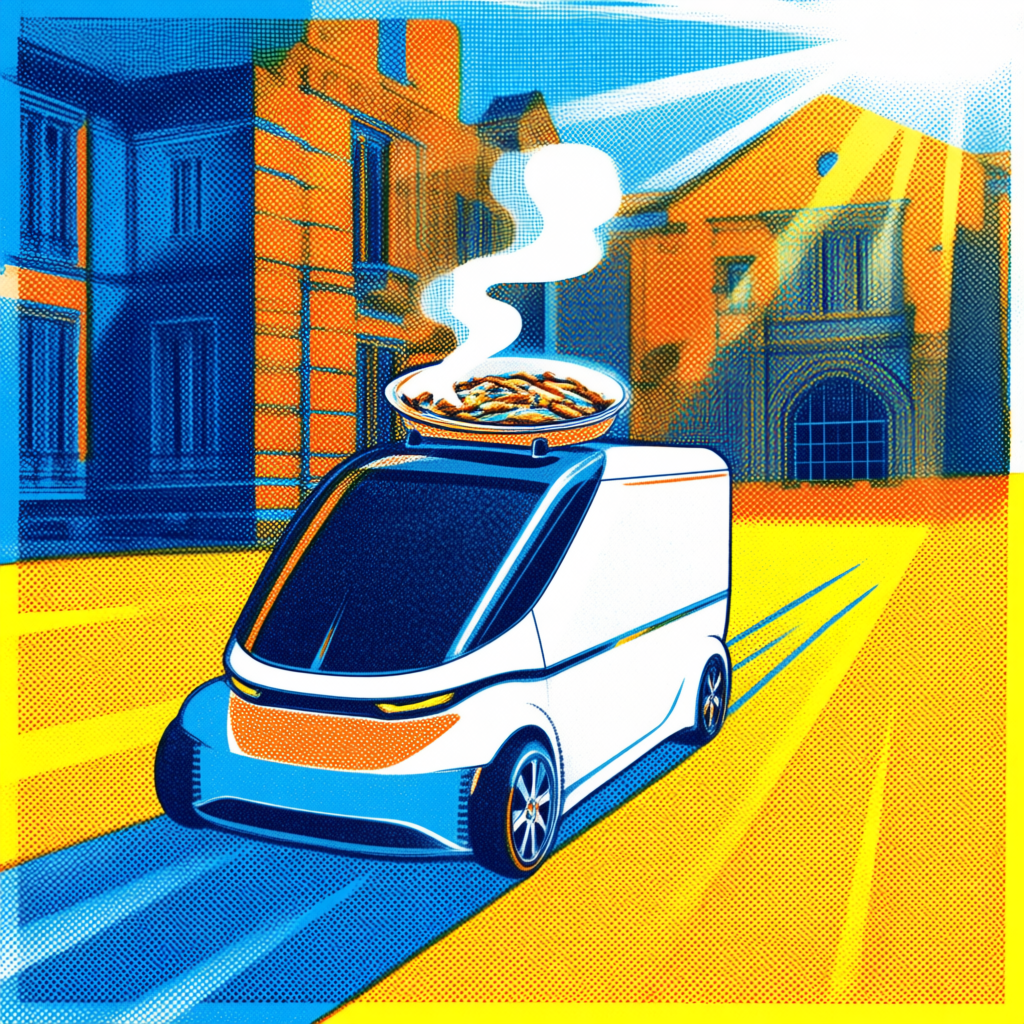
- Robot.com and Sodexo signed a seven-year commercial agreement to expand autonomous delivery.
- The partnership targets North American college campuses to address critical labor shortages.
- The R-Kiwi robot has already completed 2.4 million tasks across campuses and city sidewalks.
- The deal includes a new focus on robot advertising and the use of the Remi implementation platform.
The integration of autonomous systems into the service sector is moving from experimental pilots to long-term infrastructure. In a significant move for the robotics industry, Robot.com has secured a seven-year commercial agreement with Sodexo, a global leader in food and facilities management. This deal represents the largest single enterprise deployment for the San Francisco-based robotics firm and signals a shift toward scalable, permanent automation in complex service environments.
A strategic pivot toward long-term stability
The agreement is not a sudden leap but the result of a partnership that began in 2021. For five years, the two companies collaborated across select Sodexo-operated college campuses in North America, testing the viability of sidewalk delivery. This period of trial and error was essential for establishing the economic and operational models required for a multi-year commitment. Felipe Chavez Cortes, co-founder and CEO of Robot.com, noted that such long-term contracts are rare in the early stages of robotics implementation because both the provider and the client must first understand how to extract actual value from the technology.
For Sodexo, which serves 80 million consumers daily, the move is part of a broader digital transformation. By integrating AI-enabled solutions, the company aims to simplify operations and create more seamless experiences for students and staff. The partnership now extends beyond simple delivery to include robot advertising, creating a new potential revenue stream and a more versatile use of the hardware on campus grounds.
Combatting the labor crisis in North America
The primary driver behind this acceleration is a systemic issue facing the service industry: the inability to fill open positions. Sodexo employs approximately 400,000 people globally, with 120,000 full-time employees in the U.S. alone. Despite this massive workforce, the company has struggled with labor shortages that hinder its ability to maintain traditional service levels.
Autonomous delivery robots act as a force multiplier, filling gaps in the logistics chain without requiring additional human headcount for short-haul food transport. Roberta Frierson, VP of Digital, Campus, Sodexo North America, emphasized that the goal is to enable teams to operate with greater agility. By automating the repetitive task of moving food from a central point to a student, human staff can be redeployed to higher-value roles that require interpersonal interaction and complex problem-solving.
The R-Kiwi track record and the Remi platform
The hardware at the center of this deployment is the R-Kiwi, a sidewalk delivery robot that has already proven its reliability. To date, these units have completed 2.4 million tasks across various campuses and city sidewalks. This volume of data provides a competitive edge in navigation and human-robot interaction, which are the two biggest hurdles for sidewalk autonomy.
However, the hardware is only part of the equation. Robot.com attributes its economic viability to the Remi implementation platform. Developed over nearly a decade, Remi serves as the intelligence layer that blends classical robotics with modern AI. This platform allows the company to deploy robots into environments that are dynamic but not as chaotic as dense urban centers. According to Cortes, college campuses provide an ideal staging environment because they offer a balance of outdoor navigation and human presence without the extreme unpredictability of major city traffic.
College campuses have emerged as a proving ground for sidewalk delivery robots, offering a controlled yet real-world environment to refine autonomous navigation.
Divergent paths in the delivery robot market
The Robot.com and Sodexo deal comes at a time when the autonomous delivery sector is seeing a divergence in strategies. While some providers are scaling up in the campus sector, others are pivoting. For instance, Starship Technologies has recently indicated plans to wind down some of its campus delivery operations to focus more heavily on grocery deliveries.
Robot.com is doubling down on the campus model, viewing it as a scalable entry point into the broader service economy. The ability to secure a seven-year contract suggests that the 'campus-as-a-service' model is becoming a sustainable business vertical, provided the technology can be integrated into existing facility management systems rather than operating as a standalone novelty.
Operational flexibility for the modern campus
The deployment of these robots changes the physical and operational flow of university life. By extending access to food and supplies through autonomous means, Sodexo can offer more flexible service models that do not depend on rigid staffing schedules. This is particularly relevant for students who expect on-demand convenience similar to what they experience in the commercial sector.
The integration process involves more than just dropping robots on a sidewalk; it requires a synchronization of digital ordering systems, campus mapping, and safety protocols. The success of this rollout depends on the ability of the Remi platform to adapt to the specific geography of each campus while maintaining a high completion rate for tasks.
Global implications for international enterprises
For business leaders in the USA, UK, and other global markets, the Sodexo-Robot.com agreement serves as a blueprint for integrating AI and robotics into large-scale operations. The key takeaway is the transition from the 'pilot phase' to the 'infrastructure phase'. Enterprises should note that the most successful deployments are those that address a specific pain point—in this case, labor shortages—rather than those implemented for the sake of innovation alone.
In the United States, the regulatory environment for sidewalk robots remains fragmented, often handled at the municipal or institutional level, which makes private campuses an ideal low-friction environment for scaling. In the UK and Europe, where pedestrian regulations and privacy laws (such as GDPR) are more stringent, the use of cameras and sensors on delivery robots requires a more rigorous approach to data anonymization. However, the labor shortages affecting the hospitality and facilities management sectors are a global phenomenon, meaning the demand for such autonomous solutions will likely mirror the North American trend.
Companies looking to adopt similar technologies should prioritize partners who offer an implementation platform (like Remi) rather than just hardware. The ability to manage a fleet over a seven-year horizon requires a software ecosystem that can evolve as the AI improves, ensuring that the hardware does not become obsolete before the contract expires.
FAQ
What is the duration of the agreement between Robot.com and Sodexo?
The two companies have signed a seven-year commercial agreement.
Which specific robot is being used for the deliveries?
The deployment utilizes the R-Kiwi sidewalk delivery robot.
Why is Sodexo implementing this technology now?
The primary drivers are labor shortages and the need to fulfill open positions, alongside a goal to create more flexible service models for students.
How many tasks has the R-Kiwi robot completed so far?
The R-Kiwi has completed 2.4 million tasks across city sidewalks and campuses.
Sources: Therobotreport, Robot, Finance ·
Scrivila qui: Susanna, l assistente AI di glacom, ti risponde via email con un approfondimento gratuito.
Nessuna consulenza personalizzata (finanziaria, legale o medica): solo informazione e fonti. Email usata solo per rispondere.
oppure scrivile su: WhatsApp · Telegram · SimpleX · Delta Chat · Email