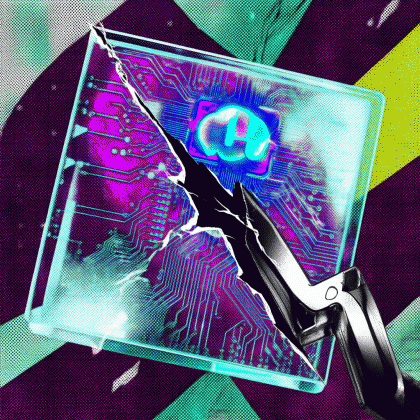




Nvidia Acquires Hugging Face for .9bn to Dominate Open AI

- Nvidia agreed to purchase the open-source AI platform Hugging Face for .9 billion.
- The deal aims to expand AI access for developers and institutions while diversifying Nvidia's revenue beyond hardware.
- Hugging Face will remain an open platform, allowing users to deploy models regardless of the chip architecture used.
- The acquisition follows a trend of rising demand for open-weight models as alternatives to expensive closed-source AI.
Nvidia has officially agreed to acquire Hugging Face, the premier open-source AI community and platform, in a deal valued at approximately .9 billion. This strategic move signals a decisive shift for the semiconductor giant as it seeks to move beyond its dominance in hardware and climb further up the AI software stack. By integrating the world's most popular repository for AI models, Nvidia is positioning itself not just as the provider of the engines that power AI, but as the curator of the ecosystem where those engines are designed and shared.
A strategic pivot toward the AI software stack
The acquisition represents Nvidia's second-largest purchase in company history, trailing only the billion acquisition of Groq assets completed late last year. It significantly eclipses the 2019 purchase of Mellanox for nearly billion, a deal that originally allowed Nvidia to expand into data center infrastructure. This latest move is less about infrastructure and more about intelligence and distribution.
By bringing Hugging Face into its fold, Nvidia gains unprecedented visibility into the preferences of the global developer community. As noted by Naveen Chhabra, a principal analyst at Forrester, the deal allows Nvidia to track which architectures are gaining traction and which datasets are being downloaded weeks before such trends hit mainstream news. This data loop provides a critical competitive advantage, allowing Nvidia to align its future hardware iterations with the actual usage patterns of millions of developers.
The open-source gamble against closed models
The AI industry is currently split between closed-source giants like OpenAI and Anthropic and the burgeoning movement of open-weight models. While closed models offer high performance, they often come with steep deployment costs and restrictive access. In contrast, open-source models allow businesses to customize and run AI on their own hardware, reducing reliance on expensive API calls.
Jensen Huang, CEO of Nvidia, has been a vocal proponent of this duality. He argues that the world requires both frontier closed models and frontier open models to scale sustainably. According to Huang, open weights enable universities, startups, and public institutions to build advanced capabilities without the prohibitive cost of training models from scratch. This philosophy is echoed by other industry leaders; a joint letter supporting the essential nature of open-source software was signed by executives from Nvidia, Microsoft, Google, Meta, and IBM.
Inside the .9 billion deal dynamics
The path to this acquisition was not immediate. Only a year ago, Hugging Face had turned down a 0 million investment from Nvidia to maintain its independence. However, the landscape shifted over the summer of 2026. Clément Delangue, CEO of Hugging Face, revealed that he approached Jensen Huang directly, recognizing that the open-source movement had reached a turning point where it required more scale, resources, and visibility to survive and thrive.
The scale of the platform Nvidia is acquiring is immense. Hugging Face currently serves as the hub for:
- Over 18 million developers who collaborate, test, and share tools.
- Three million open-source models and 500,000 datasets.
- One million AI applications used by more than 200,000 companies globally.
Despite the change in ownership, Nvidia has committed to keeping Hugging Face an open platform. Justin Boitano, Vice President of Enterprise at Nvidia, emphasized that the platform will remain open for the entire AI ecosystem, and crucially, Nvidia's chips will not be required to build or deploy models through the service.
Countering the rise of global competition
The acquisition is also a defensive maneuver against the rapid ascent of Chinese AI labs. Companies such as DeepSeek, Moonshot, and Z.ai have developed open-weight models that rival American counterparts in coding and technical tasks, often at a significantly lower cost. There is a growing concern in the US that domestic firms could become overly reliant on Beijing's open-source models if American alternatives are too expensive or restricted.
By controlling the primary distribution channel for these models, Nvidia can help steer the trajectory of open AI in the West. This is particularly relevant as the 'LittleTech Association'—a group of roughly 200 Silicon Valley startups—has urged the US government not to limit access to Chinese open-source models, fearing that such restrictions would stifle innovation.
The world needs both frontier closed models and frontier open models. That is how AI can scale sustainably into billions of everyday tasks across factories, hospitals, farms, classrooms and Main Street businesses.
Regulatory hurdles and the road to 2027
Nvidia expects to close the acquisition by 2027, but the road will likely be fraught with regulatory scrutiny. Because Nvidia is already the world's most valuable company and the dominant provider of AI chips, regulators in the US and other jurisdictions may view the acquisition of a primary distribution hub as an anti-competitive move. Control over Hugging Face gives Nvidia significant influence over how AI applications are adopted globally.
The tension is further complicated by the lobbying efforts of closed-source companies. While Nvidia and its peers sign letters supporting open source, OpenAI and Anthropic have actively lobbied the US government to introduce stricter regulations on open-source models, citing safety and security risks. This ideological battle over the 'openness' of AI will likely play out in the courtroom and the legislature as the deal moves toward completion.
Global implications for international enterprises
For entrepreneurs and business leaders in the USA, UK, and global markets, this acquisition changes the cost-benefit analysis of AI adoption. The integration of Hugging Face into Nvidia's ecosystem suggests that the 'open' path to AI will be better funded and more robustly supported than previously thought. For UK and US firms, this reduces the risk of vendor lock-in associated with closed-source providers.
From a regulatory perspective, US companies should monitor the Trump administration's stance on open-source access, particularly regarding Chinese models. If the US government moves to restrict certain open-weight models, the role of Hugging Face as a curated, 'safe' repository under Nvidia's stewardship will become even more critical. In the UK, where the government has generally pursued a more flexible, pro-innovation approach to AI regulation compared to the EU's AI Act, the ability to leverage open-source models via a stable, well-resourced platform like Hugging Face provides a significant advantage for SMEs looking to automate operations without massive capital expenditure on proprietary licenses.
Ultimately, the Financial Times and other market analysts suggest that this deal is a bet on the democratization of AI. By ensuring that AI is as ubiquitous as water and electricity, Nvidia ensures that the demand for the underlying compute—the chips—remains high, regardless of which specific model wins the architectural war.
FAQ
Will Hugging Face still be free and open after the Nvidia acquisition?
Yes, Nvidia CEO Jensen Huang and VP Justin Boitano have stated that Hugging Face will remain an open platform for the entire AI ecosystem.
Do I need Nvidia GPUs to use models on Hugging Face?
No, Nvidia has explicitly stated that its chips will not be required to build on or deploy models through the Hugging Face platform.
Why did Nvidia pay .9 billion for a platform that doesn't sell chips?
The acquisition provides Nvidia with direct access to developer trends, a massive distribution channel for AI models, and a way to diversify its business beyond hardware into the AI software stack.
When is the deal expected to be finalized?
Nvidia plans to close the acquisition by 2027, although it is expected to face scrutiny from competition regulators.
Sources: Financial Times, CNBC, Theguardian ·
Scrivila qui: Susanna, l assistente AI di glacom, ti risponde via email con un approfondimento gratuito.
Nessuna consulenza personalizzata (finanziaria, legale o medica): solo informazione e fonti. Email usata solo per rispondere.
oppure scrivile su: WhatsApp · Telegram · SimpleX · Delta Chat · Email