




EU Digital Sovereignty: The Struggle to Break Cloud Dependency
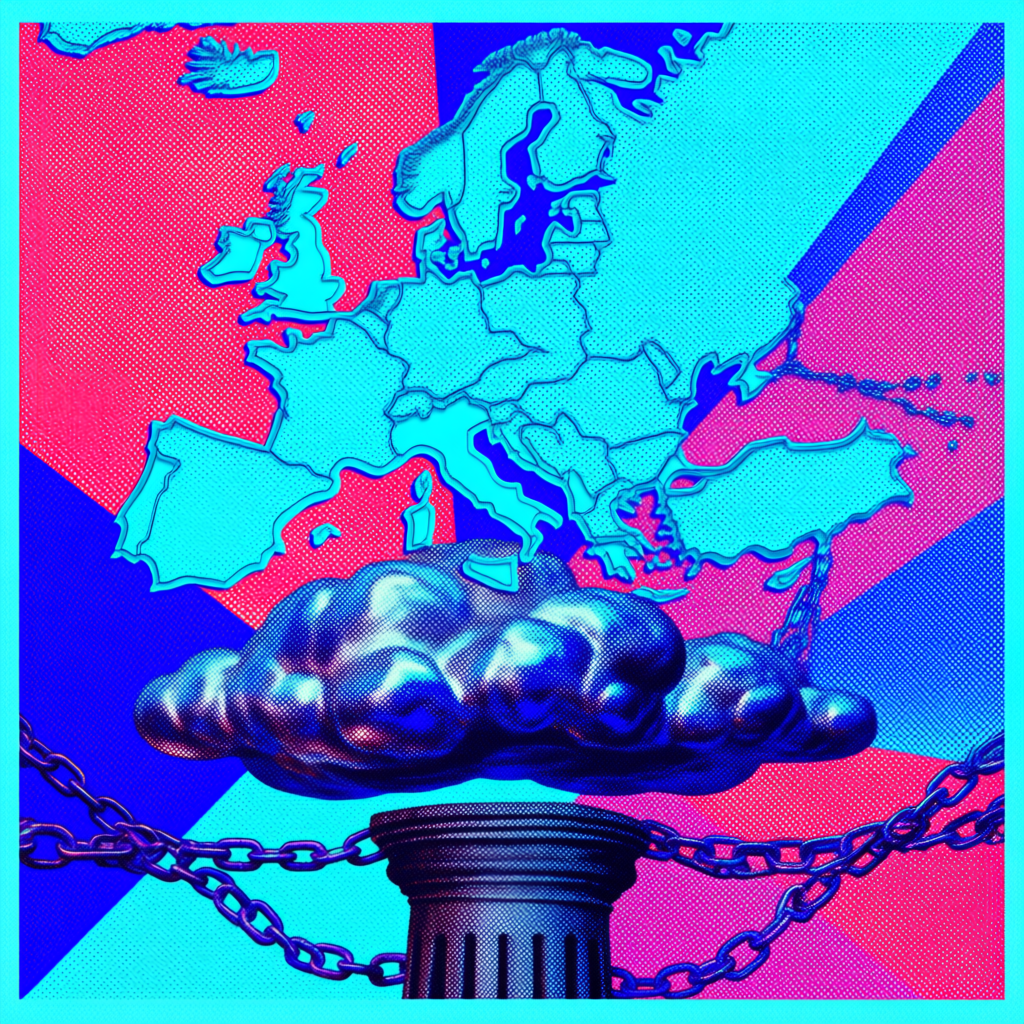
- The EU is developing the Cloud and AI Development Act (CAIDA) to reduce reliance on non-European tech giants.
- Bureaucratic procurement rules and outdated certifications often favor established US providers over local innovators.
- Projects like EduStorage demonstrate that technical viability exists, but regulatory frameworks hinder implementation.
- Continuous delays in legislation reflect the complexity of balancing security, sovereignty, and market competition.
The European Union has long championed the concept of digital sovereignty, a strategic ambition to ensure that the continent is not merely a consumer of foreign technology but a producer and controller of its own digital destiny. However, as the gap between political rhetoric and infrastructure reality widens, a critical question emerges: is Europe building a fortress of protection or a cage of bureaucracy?
At the center of this struggle is the proposed Cloud and AI Development Act (CAIDA). This legislative framework is intended to be the cornerstone of a broader industrial package designed to secure the Union's technological autonomy. The goal is straightforward: to create rules and tools that foster cloud services and AI computing capacities that are truly European. By doing so, Brussels hopes to ensure that sensitive data—ranging from national defense and government communications to healthcare and fiscal records—remains under effective European control.
The CAIDA ambition and the cost of delay
The CAIDA act is not merely a technical regulation; it is a geopolitical statement. For years, the European cloud market has been dominated by a handful of North American giants. While these providers offer unparalleled scalability and efficiency, they introduce a strategic vulnerability. When the core infrastructure of a continent's public administration and critical industries resides on servers governed by foreign laws, sovereignty becomes a theoretical concept rather than a practical reality.
Despite its importance, the presentation of the CAIDA act has been plagued by repeated postponements. These delays suggest a profound tension within the European Commission. On one hand, there is the urgent need to protect data and foster local industry; on the other, there is the risk of implementing rules that could stifle the very innovation they seek to protect. As noted in discussions regarding European cloud legislation, the hesitation in Brussels reflects an intricate web of political and industrial contradictions.
When regulations reinforce the status quo
The paradox of European digital policy is that the rules designed to protect the market often end up cementing the dominance of existing players. This is most evident in the realm of public procurement. In many EU member states, the criteria for awarding government contracts are modeled after the capabilities of the largest global providers. When a tender requires specific certifications or a track record of scale that only a trillion-dollar company can provide, the competition is decided before it even begins.
This creates a feedback loop where European startups and mid-sized providers cannot win the contracts necessary to scale, and because they cannot scale, they fail to meet the requirements of future tenders. The result is a market where public funds, intended to modernize the state, effectively subsidize the growth of extra-European infrastructure.
Lessons from the EduStorage experience
The technical feasibility of a European alternative is not in doubt. A poignant example is EduStorage, a project aimed at creating a federated cloud storage system for the Italian university and research sector. The objective was to build a distributed infrastructure allowing scientific data to be shared and preserved without relying on North American providers. From a technical standpoint, the project worked. The infrastructure was there, the demand was present, and the technology was functional.
However, the project encountered a wall that had nothing to do with software or hardware. The obstacles were administrative: procurement procedures written for established giants, cloud qualifications that reflected a market from a decade ago, and a culture of administrative responsibility that penalizes risk-taking. The EduStorage case illustrates a systemic failure: Europe possesses the technical talent to build its own cloud, but it lacks the regulatory agility to deploy it.
The real problem of innovation in Europe is not a lack of ideas. It is the architecture of the rules.
The tension between protection and stagnation
There is a growing concern that the pursuit of sovereignty might lead to digital isolation or, worse, a slower pace of adoption for critical technologies like Generative AI. AI requires massive computing power—compute that is currently concentrated in the hands of a few global players. If the EU imposes overly rigid requirements for the 'European-ness' of the cloud, it may find its businesses and researchers unable to access the tools necessary to compete globally.
This is the delicate balance the EU must strike. If the rules are too lax, the dependency on US providers continues. If they are too strict, the EU risks creating a protected but stagnant ecosystem that cannot keep pace with the rapid evolution of AI. The debate over whether rules intended to protect Europe end up slowing it down is now a central theme for tech entrepreneurs across the continent.
A fragmented landscape of digital power
The struggle for cloud sovereignty is not just about where the data is stored, but who controls the standards. The current landscape is characterized by a clash between different philosophies of governance. While the US model emphasizes market efficiency and global scale, the European model is increasingly focused on rights, privacy, and strategic autonomy. While these values are commendable, they often translate into a complex web of certifications and compliance requirements that act as a barrier to entry for new, local players.
For the European entrepreneur, this means navigating a landscape where the 'right' technical solution is often the 'wrong' administrative choice. The drive toward sovereignty is noble, but without a fundamental overhaul of how the public sector buys technology, the CAIDA act may remain a symbolic gesture rather than a transformative tool.
Global Implications: What this means for US and UK firms
For international businesses, particularly those based in the USA and the UK, the EU's push for digital sovereignty introduces a new layer of operational complexity. While the EU AI Act has already set a global precedent for risk-based regulation, the potential implementation of CAIDA suggests that 'data residency' will no longer be enough. The focus is shifting toward 'data sovereignty,' which implies not just where the data sits, but who has legal and operational control over the infrastructure.
US-based cloud providers may face increasing pressure to offer 'sovereign cloud' versions of their services—essentially decoupled environments managed by local European entities to satisfy regulatory demands. For UK firms, the situation is nuanced; while the UK maintains its own regulatory trajectory post-Brexit, the interconnectedness of the European market means that any firm serving EU clients must prepare for a more fragmented cloud environment.
Companies operating in the global market should anticipate a shift in procurement trends within the EU. There will likely be a stronger preference for providers who can demonstrate a high degree of transparency and compatibility with European sovereignty standards. The era of the 'one-size-fits-all' global cloud is transitioning into an era of regionalized digital spheres, where compliance is as critical as performance.
FAQ
What is the CAIDA act?
The Cloud and AI Development Act (CAIDA) is a proposed EU legislative framework aimed at reducing dependency on non-European cloud providers and fostering the development of domestic AI computing capacities.
Why is the EU struggling to implement its own cloud infrastructure?
The primary obstacles are not technical but regulatory. Outdated procurement rules and certifications often favor large, established US providers, making it difficult for European alternatives to scale.
How does the EduStorage project relate to this issue?
EduStorage proved that a European federated cloud for research is technically possible, but it highlighted how administrative hurdles and rigid tender processes can block the adoption of local innovations.
Will this affect US cloud providers?
Yes, it may force them to create more autonomous, locally managed 'sovereign cloud' offerings to continue winning public sector contracts within the European Union.
Sources: Agendadigitale, Claudiagiulia, Huffingtonpost ·
Scrivila qui: Susanna, l assistente AI di glacom, ti risponde via email con un approfondimento gratuito.
Nessuna consulenza personalizzata (finanziaria, legale o medica): solo informazione e fonti. Email usata solo per rispondere.
oppure scrivile su: WhatsApp · Telegram · SimpleX · Delta Chat · Email