




Real-Time 3D Configurators: Ending the Era of Empty Quotes
- Traditional asynchronous quoting processes lead to high lead attrition and wasted sales resources.
- Real-time 3D visualization allows customers to configure products and see instant pricing.
- Shifting configuration to the user filters out low-quality leads before they reach sales teams.
- The transition from passive catalogs to active sales tools increases conversion rates in design sectors.
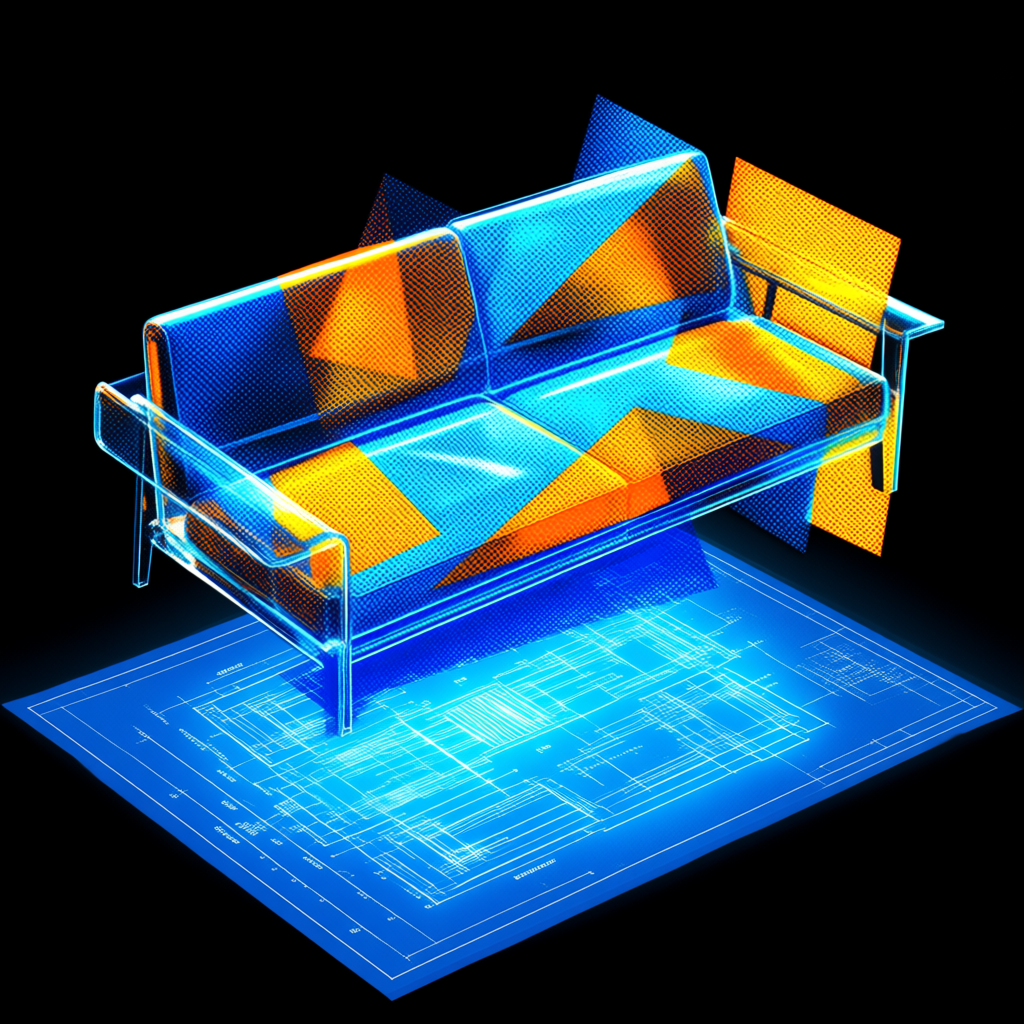
The traditional journey from a customer's desire to a finalized purchase in the high-end design and manufacturing sector has long been plagued by a systemic inefficiency. A client browses a catalog, identifies a piece of furniture, and envisions a specific fabric or a custom dimension to fit their living room. This spark of interest then enters a dormant phase: the client sends an email or makes a call, initiating what is known as the empty quote cycle. The business owner or sales representative must then manually consult price lists, verify technical feasibility, and draft a PDF document. By the time this document reaches the client, hours or days have passed, the initial enthusiasm has cooled, and the price often clashes with the client's internal budget.
The failure of the linear quoting model
This asynchronous interaction between desire and feasibility is the primary bottleneck in modern design sales. When a customer is forced to imagine the final result based on a static image, uncertainty becomes a psychological barrier. The gap between the initial request and the final quote is not just a time delay; it is a zone of friction where potential conversions are lost. The company spends valuable human resources on exploratory quotes that may never materialize into a sale, effectively subsidizing the customer's curiosity with operational costs.
The reliance on static brochures represents a legacy approach to commerce. A brochure presents an idea of a product, not the product itself in its personalized form. In an era of instant gratification, expecting a client to wait for a manual translation of their needs into figures is a strategic liability. This is why the industry is seeing a shift toward tools that eliminate the middleman during the initial configuration phase, as detailed in recent analyses by glacom.news.
How live rendering kills the brochure
Live rendering transforms the website from a passive showcase into an active sales engine. Instead of viewing a fixed image, the user interacts with a 3D model in real time. As they change a material, adjust a measurement, or swap a component, the visual representation updates instantaneously. This removes the cognitive load from the customer, who no longer needs to imagine the outcome but can see it with certainty.
This technological shift is not merely an aesthetic upgrade. It is a fundamental optimization of the sales process. By integrating dynamic materials, measurements, and costs into the visual interface, the system provides instant quotations. The customer is no longer asking 'how much would this cost if I changed the fabric?' but is instead seeing the price fluctuate in real time as they make their selections. This transparency builds trust and accelerates the decision-making process.
Filtering leads through autonomous configuration
One of the most significant business advantages of 3D configurators is the automatic qualification of leads. In the traditional model, sales teams spend a disproportionate amount of time chasing low-quality leads—individuals who are exploring options without a clear intention to buy or whose budgets are fundamentally incompatible with the product.
By shifting the configuration phase to the user, the company implements a natural filter. The sales department stops acting as a pricing service and starts acting as a closing team. When a lead finally reaches a human representative, they arrive with a pre-configured product and a validated price point. The conversation shifts from 'let me check if this is possible' to 'how do we finalize the delivery?'. This optimization of the commercial pipeline ensures that high-value human capital is spent on high-probability conversions.
The technical pillars of automated quoting
For a 3D configurator to function as a legitimate business tool rather than a visual gadget, it must rely on a rigorous integration of data. The visual layer must be perfectly synced with the backend logic of the company's pricing and production rules. If the 3D model allows a configuration that the factory cannot produce, the tool becomes a liability rather than an asset.
The effectiveness of these systems depends on three core elements:
1. Dynamic Geometry: The ability of the model to adapt its dimensions in real time without losing visual fidelity.
2. Material Mapping: High-resolution textures that accurately represent the physical product, ensuring the digital twin matches the final delivery.
3. Instant Cost Calculation: A pricing engine that calculates the cost of customizations on the fly, incorporating labor, material surcharges, and logistics.
Strategic impact on the design market
This evolution is becoming a competitive standard, particularly in design-heavy markets like Italy and Spain, where customization is a core value proposition. Companies that continue to rely on PDF quotes and email chains are finding themselves at a disadvantage against competitors who offer instant transparency. The ability to provide a quote in seconds rather than days is becoming a primary differentiator in the luxury and semi-luxury segments.
The transition from a passive catalog to an interactive configurator represents the death of the asynchronous sale and the birth of the instant conversion.
Furthermore, this approach provides companies with invaluable data. By analyzing which configurations are most frequently selected—and where users drop off due to price—businesses can gain real-time insights into market demand. This allows for a more agile approach to inventory management and product development, as the data reflects actual customer desires rather than the assumptions of a design team.
Global implications for international enterprises
For businesses operating in the USA, UK, and global markets, the adoption of real-time 3D configurators aligns with the broader trend of digital transformation in the D2C (Direct-to-Consumer) space. In the US market, where consumer expectations for speed and autonomy are exceptionally high, removing the friction of the quoting process is critical for scaling. The ability to offer a 'self-service' luxury experience allows brands to expand their reach without linearly increasing their sales headcount.
From a regulatory and operational perspective, these tools help in maintaining clear pricing transparency, which is increasingly scrutinized in various jurisdictions to prevent hidden costs. While the EU AI Act focuses on high-risk AI systems, the implementation of these configurators falls under general digital commerce optimization, though the data collected through user interactions must be managed according to GDPR and similar privacy frameworks in the UK and USA (such as CCPA in California).
Ultimately, for the international entrepreneur, the lesson is clear: the website must stop being a digital brochure and start being a functional part of the production chain. Reducing the time between a customer's desire and a validated price is the most effective way to increase the velocity of the sales cycle and the quality of the bottom line.
FAQ
What is the 'empty quote' cycle?
It is the inefficient process where a customer requests a custom quote and must wait hours or days for a manual response, often leading to a loss of interest or budget misalignment.
How does a 3D configurator improve lead quality?
It forces the customer to configure the product and see the price upfront, meaning only those with a compatible budget and a clear intent to buy will contact the sales team.
Is a 3D configurator just a visual tool?
No, when implemented correctly, it is a business tool that integrates real-time pricing, technical feasibility, and lead qualification into the user interface.
Which markets are currently leading this adoption?
The trend is growing rapidly among design and manufacturing companies in Italy and Spain, and is becoming a necessity for D2C brands in the USA and UK.
Sources: Glacom ·
Scrivila qui: Susanna, l assistente AI di glacom, ti risponde via email con un approfondimento gratuito.
Nessuna consulenza personalizzata (finanziaria, legale o medica): solo informazione e fonti. Email usata solo per rispondere.
oppure scrivile su: WhatsApp · Telegram · SimpleX · Delta Chat · Email