






OpenAI vs SpaceX: the Cursor case and the Change-of-Control risk in AI
- OpenAI will disable its models in Cursor on November 12, 2026, due to SpaceX's acquisition of Anysphere.
- The decision is based on the 'Change-of-Control' clause and a lack of trust in Elon Musk due to alleged past contractual violations.
- SpaceX aims to move Cursor's training to the Colossus supercomputer to reduce retail API costs.
- The operation raises concerns regarding the security of the Astra model and the risk of code 'distillation' to power Grok.
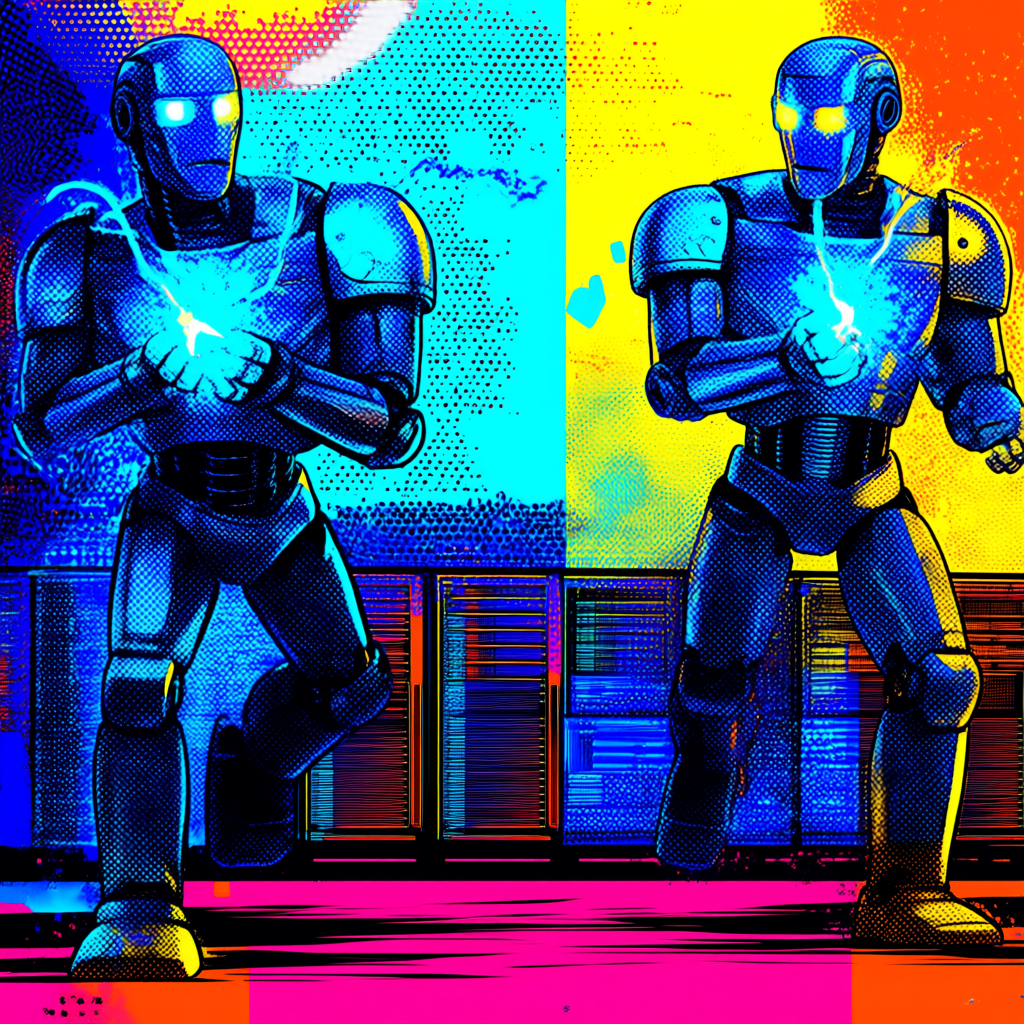
The generative artificial intelligence ecosystem has witnessed a significant legal and strategic precedent: OpenAI has announced the termination of its partnership with Cursor, the popular AI coding assistant, setting the shut-off date for November 12, 2026. The operation is not linked to technical failures by Cursor, but is the direct consequence of the acquisition of the parent company, Anysphere, by SpaceX for a value of 60 billion dollars, officially closed on August 14, 2026.
The 'Change-of-Control' knot: why the purchase of Anysphere triggered the expulsion
The heart of the dispute lies in a Change-of-Control contractual clause. OpenAI has clarified that the decision to interrupt the service is not an accusation of rule violation by Cursor, but a response to the change in ownership. According to OpenAI, the acquisition of Anysphere by SpaceX opened a limited time window to cancel the model supply agreement.
The deeper reason, however, is systemic distrust. OpenAI explicitly stated: 'We cannot be confident that SpaceX will use our technology within our terms of service, based on our experience with Elon Musk’s companies violating contracts'. The company invoked the maximum notice period allowed by custom contracts to allow developers to migrate, but has already frozen the supply of future models.
Strategic Analysis: For an entrepreneur, this case highlights how AI infrastructure is not 'neutral'. The control of intellectual property (IP) passes through service contracts that can be unilaterally revoked in the event of M&A (Mergers and Acquisitions), transforming a technological asset into a sudden operational risk.
Colossus vs Cloud: the financial operation to move training to proprietary hardware
The acquisition of Cursor for 60 billion dollars follows a logic of cost optimization and infrastructural independence. Before the operation, Cursor operated by paying retail prices to external providers such as Anthropic and OpenAI every time a user interacted with the product.
SpaceX, instead, has made its own Colossus supercomputer available to Cursor, which boasts a computational capacity equivalent to approximately one million Nvidia H100 GPUs. Elon Musk's goal is clear: eliminate licensing costs to competitors and use idle hardware capacity to train proprietary models.
| Pre-Acquisition Model | Post-Acquisition Model (SpaceXAI) |
|---|---|
| Retail API payment (OpenAI/Anthropic) | Use of proprietary hardware (Colossus) |
| Dependence on third-party vendors | Vertical integration into SpaceXAI |
| Variable costs per user | Fixed hardware depreciation costs |
Financial Analysis: The shift toward Colossus represents an extreme vertical integration move. SpaceX is not just buying a product (Cursor), but is internalizing the entire value chain: from hardware (H100) to the model (Grok) and finally to the user interface (Cursor).
The Astra effect: the risk of code 'distillation' and agent security
One of the most critical points concerns the Astra model. OpenAI has expressed strong concerns regarding the security and accountability of this model, especially after detecting significant gains in agentic coding and cybersecurity.
- What is distillation? It is the process through which an AI model is trained using the outputs of a more powerful model to replicate its capabilities.
- What is the risk for OpenAI? OpenAI claims that Musk admitted under oath that xAI 'partially' distilled OpenAI's technology, violating terms of service that prohibit the use of outputs to train competing systems.
- Why is Astra dangerous? OpenAI has signaled that Astra could present 'Critical cyber capability' according to its Preparedness Framework, making it unacceptable for it to end up under the control of an entity perceived as unreliable.
The 5% traffic: how much OpenAI's absence weighs in the Cursor ecosystem
Despite the media coverage, the immediate operational impact seems contained. Cursor CEO Michael Truell stated on X that OpenAI models serve about 5% of Cursor user traffic. This data suggests that most users already use alternatives such as Anthropic or Google.
Pro/Con comparison of the situation:
- Pros for Cursor/SpaceX: Low dependence on OpenAI (only 5%); possibility to push the adoption of Grok; support from Anthropic, which has promised to increase compute for Claude within Cursor.
- Cons for Cursor/SpaceX: Loss of a historical integration; need to manage the migration of GPT 'loyalist' users; risk of reputational instability during the transition.
From co-founder to 'contract violator': the evidence cited by OpenAI against Musk
The break between OpenAI and Musk is not only commercial, but legal and personal. OpenAI has built its case of distrust on a map of specific actors and incidents:
- Elon Musk: Co-founder of OpenAI (2015), left the board in 2018. He sued Sam Altman and Greg Brockman in 2024, claiming the abandonment of the non-profit mission.
- X (formerly Twitter): OpenAI accuses Musk of violating the terms of an existing contract after the acquisition of Twitter, cutting the paid license for Twitter data.
- xAI: Musk's AI company, accused of using OpenAI outputs for the training of Grok (distillation).
- The Federal Court: In May 2026, a jury ruled in favor of OpenAI, establishing that Musk had waited too long before filing the lawsuit.
Michael Truell: managing integration into SpaceXAI under the shadow of the blackout
Cursor CEO Michael Truell finds himself in a delicate position. He now reports directly to Elon Musk within the SpaceXAI division. Truell has attempted to maintain a diplomatic tone, defining OpenAI's infrastructure as 'neutral infrastructure for our business' and stating that negotiations to resolve the dispute are ongoing.
However, Truell must manage the integration of Cursor into an environment where Musk has openly expressed the urgency of regaining ground in the AI race. During a call with over 1,000 employees, Musk emphasized that Grok is in a 'catchup' phase and indicated Anthropic as the main target to surpass.
'OpenAI models serve about 5% of Cursor user traffic, and we’re speaking with the OpenAI team to resolve this.'
The exit clause: what the use of 'neutral' models means for EU software houses
The Cursor/OpenAI case is a wake-up call for all software houses, including European ones, that build products based on third-party APIs. The idea of 'neutral' infrastructure has been debunked: model providers (LLM providers) can and may use Change-of-Control clauses to target strategic acquisitions.
Implications for businesses:
- Vendor Lock-in: Dependence on a single model is a systemic risk. The correct strategy is the adoption of a 'model-agnostic approach' (interfaces that allow switching between GPT, Claude, Gemini, or Llama in real time).
- M&A Due Diligence: During the acquisition phase, it is fundamental to analyze not only the code but also the AI supply contracts to verify if the purchase operation could trigger the revocation of licenses.
- Data Sovereignty: The use of open-source models hosted on proprietary infrastructure is the only guarantee against the unilateral 'blackout' of a US provider.
Future Scenarios and Verifiable Indicators:
- Scenario A: Last-minute agreement. OpenAI and SpaceX reach a commercial compromise. Indicator: Official press release of an extension beyond November 12, 2026.
- Scenario B: Grok acceleration. Cursor becomes the main distribution vehicle for Grok, completely replacing OpenAI. Indicator: Release of a Cursor version that makes Grok the default and mandatory model.
- Scenario C: Legal escalation. Musk files a lawsuit for 'abuse of dominant position' or violation of service contracts. Indicator: Filing of a new legal act in US federal courts.
Italian and European reading: AI Act and NIS2
For Italian and EU companies, this case underscores the importance of the AI Act in defining transparency and model governance. The ability of a provider to 'turn off' a service based on who owns the customer could be seen in the future as an unfair commercial practice or a risk to Business Continuity, a central theme of the NIS2 directive. European companies must accelerate the adoption of local or open-source models to avoid being hostage to geopolitical or legal disputes between US tech giants.
FAQ
When will Cursor's access to OpenAI models expire?
The date proposed by OpenAI for the shut-off is November 12, 2026.
Why did OpenAI decide to interrupt the service?
Due to the acquisition of Cursor by SpaceX, OpenAI invoked a Change-of-Control clause, citing a lack of trust in Elon Musk due to alleged past contractual violations.
How will this decision affect Cursor users?
According to CEO Michael Truell, OpenAI models represent about 5% of Cursor's total traffic, so the immediate impact is limited since alternatives such as Anthropic and Google are available.
Sources: Teslarati, Cybersecuritynews, CNBC, Explainx · by glacom.news AI
Scrivila qui: Susanna, l assistente AI di glacom, ti risponde via email con un approfondimento gratuito.
Nessuna consulenza personalizzata (finanziaria, legale o medica): solo informazione e fonti. Email usata solo per rispondere.

.png)


