



OpenAI's Mac Fleet: A Strategic Shift Toward AI Agents
- OpenAI reportedly purchased tens of thousands of Mac mini and Mac Studio units.
- The hardware is used for reinforcement learning to train agents that interact with OS interfaces.
- Apple silicon's unified memory provides a critical advantage for local inference and simulation.
- This strategy complements, rather than replaces, traditional Nvidia GPU clusters.
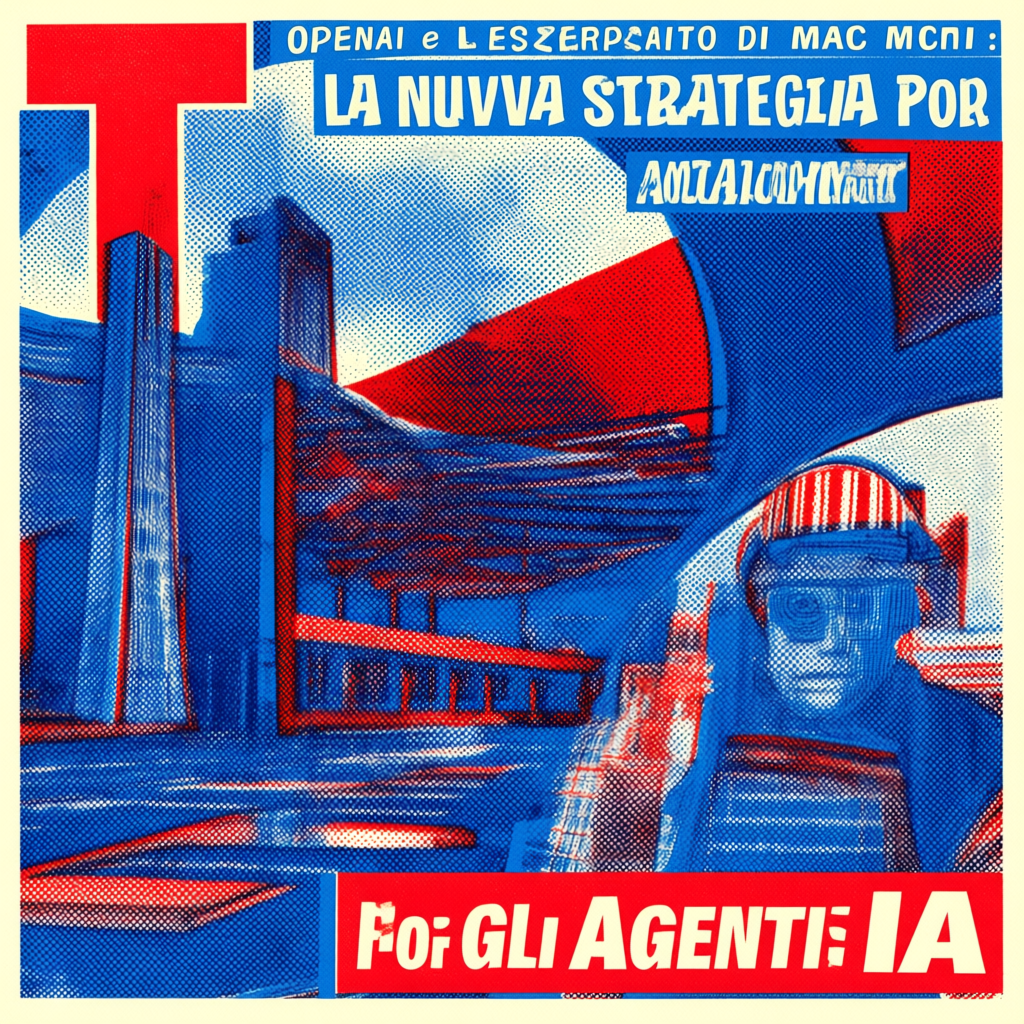
The infrastructure race in artificial intelligence is typically framed as a battle of massive data centers and sprawling clusters of Nvidia H100 GPUs. However, a recent shift in procurement strategy suggests that the next frontier of AI—autonomous agents capable of operating computers like humans—requires a different kind of hardware. Reports indicate that OpenAI has quietly accumulated tens of thousands of Mac mini and Mac Studio computers, signaling a move toward a more heterogeneous infrastructure designed for specific, high-utility workloads.
The pivot toward reinforcement learning
While foundation models are trained on gargantuan GPU arrays, the process of teaching an AI to actually use a computer is a different challenge. This is where reinforcement learning comes into play. To create agents that can navigate a desktop, click buttons, and manage complex software workflows, the AI needs to interact with a real operating system in a cycle of trial and error.
By deploying vast farms of Mac minis, OpenAI can run thousands of parallel simulations. These agents are not merely predicting the next token in a sentence; they are observing screens and executing actions within a native macOS environment. This approach allows the models to learn the nuances of graphical user interfaces (GUIs) without the need for cumbersome emulation, which often fails to capture the precise behavior of professional software.
Why Apple silicon wins the agent race
The decision to favor Apple hardware over traditional PC setups or cloud-only environments boils down to the architecture of Apple silicon. The core advantage is unified memory. In a standard PC, the CPU and GPU have separate memory pools, requiring data to be constantly moved back and forth, which creates bottlenecks during intensive AI tasks.
Apple's unified memory architecture allows the CPU, GPU, and Neural Engine to share a single pool of high-speed RAM. For AI agents, this is transformative. A Mac Studio equipped with an M5 Ultra and 256 GB of memory can comfortably run models with approximately 70 billion parameters. Even larger, sparse models—ranging from 235 billion to 284 billion parameters—can be executed in quantized versions. This capability makes the Mac an ideal node for local inference and the testing of agentic behaviors before they are scaled.
A heterogeneous infrastructure strategy
It is a mistake to view this massive purchase as a pivot away from Nvidia. Instead, OpenAI is building a tiered hardware ecosystem. The heavy lifting of initial model training—the phase where the AI learns the basic structure of language and logic—remains the domain of massive GPU clusters. The Mac fleet serves a specialized purpose: the refinement phase.
This hybrid approach allows for a more cost-effective scaling of agent rollouts. While a single H100 is vastly more powerful for raw computation, a Mac mini is far more efficient for simulating a user's desktop experience. By distributing these tasks across thousands of compact, power-efficient desktops, OpenAI can optimize its spend while accelerating the development of tools like OpenClaw and other agent-based systems.
Market ripples and supply chain pressure
The scale of this acquisition is already being felt in the broader market. Reports suggest that the demand from AI laboratories has extended delivery timelines for high-memory Mac configurations. OpenAI is not alone in this trend; Anthropic is reportedly utilizing similar capabilities by renting equivalent units through Amazon Web Services (AWS) cloud infrastructure.
The adoption of these teams does not imply the substitution of large GPU clusters dedicated to the base training of language models, but rather a specialization for reinforcement learning.
This shift has not gone unnoticed by the industry giants. Nvidia, which has enjoyed a near-monopoly on AI hardware, is now observing a scenario where a more affordable, integrated alternative is gaining relevance for specific workloads. The move proves that for the era of AI agents, the ability to simulate a human-computer interface is just as valuable as raw TFLOPS.
The technical edge of macOS for AI
Beyond the hardware, the software environment plays a critical role. For an AI to learn to control applications, it needs a stable, consistent, and high-performance OS. macOS provides a controlled environment where thousands of instances can be managed. Because the hardware and software are designed in tandem, the overhead for running these simulations is significantly lower than it would be on a fragmented ecosystem of Windows hardware.
This synergy allows OpenAI to execute massive trial-and-error sessions. The agents can interact with visual elements and native software, learning to manage workflows that will eventually be deployed to end-users. The goal is a seamless transition from a model that can tell you how to do something to an agent that can do it for you on your own screen.
Global business implications and the regulatory landscape
For entrepreneurs and enterprises in the USA and UK, this news signals that the AI industry is moving from the Chatbot Era to the Agent Era. The focus is shifting from generative content to autonomous action. Businesses should prepare for a wave of tools that do not just suggest emails or analyze spreadsheets, but actually operate the software within their corporate stacks.
From a regulatory perspective, the rise of OS-level agents introduces new complexities. In the US and UK, where the regulatory approach to AI has been more flexible than in the EU, the primary concern will be security and data privacy. An agent that can click buttons and move files has the potential to bypass traditional security permissions if not properly sandboxed. Companies implementing these agents will need to redefine their internal access controls, as the 'user' is no longer just a human, but a model capable of executing thousands of actions per second.
Furthermore, the shift toward local inference on hardware like the Mac mini suggests a future where AI agents may run locally on company hardware rather than exclusively in the cloud. This could mitigate some of the privacy concerns associated with sending sensitive corporate data to third-party servers, potentially easing the path for adoption in highly regulated sectors like finance and healthcare in the London and New York markets.
FAQ
Is OpenAI replacing Nvidia GPUs with Macs?
No. The Mac minis and Mac Studios are used for reinforcement learning and agent training, while Nvidia clusters continue to handle the primary foundation model training.
Why are Mac minis better for AI agents than standard PCs?
The primary reason is Apple silicon's unified memory, which allows the CPU and GPU to share the same memory space, making it much more efficient for local inference and OS simulations.
How does this affect the availability of Apple products?
The massive procurement by AI labs has reportedly led to longer delivery times for Mac mini and Mac Studio units, particularly those with high memory configurations.
What is the difference between a foundation model and an AI agent?
A foundation model is the core intelligence trained on vast data; an AI agent is a specialized application of that model trained to perform specific tasks, such as navigating a computer interface to complete a workflow.
Sources: Diariobitcoin, Pronetic, Studioglobal ·
Scrivila qui: Susanna, l assistente AI di glacom, ti risponde via email con un approfondimento gratuito.
Nessuna consulenza personalizzata (finanziaria, legale o medica): solo informazione e fonti. Email usata solo per rispondere.
oppure scrivile su: WhatsApp · Telegram · SimpleX · Delta Chat · Email